General articles are free for 24 hours after publish.
Duterte's camp asks ICC to resubmit charges
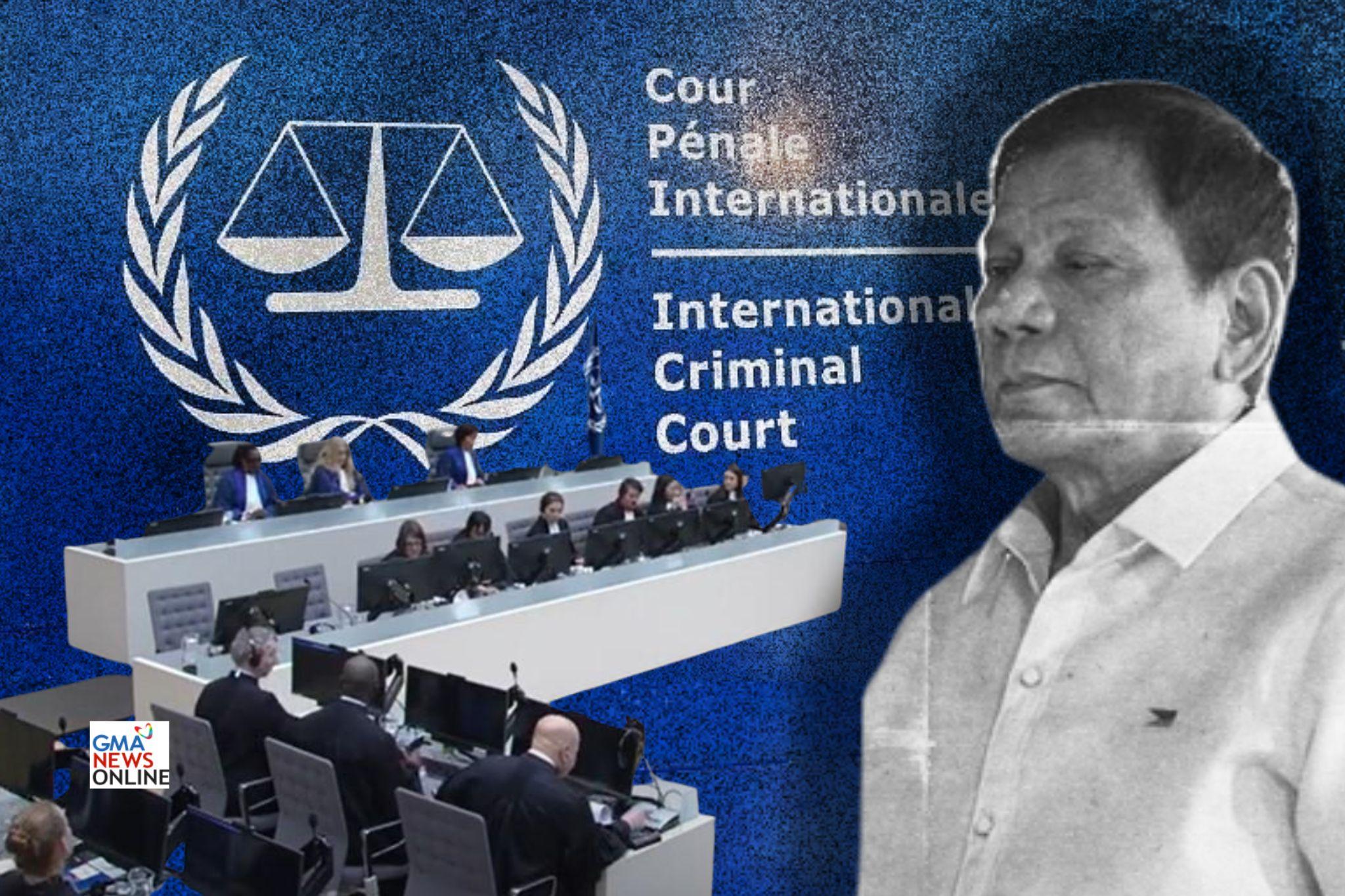
Former President Rodrigo Duterte's legal team has urged the International Criminal Court (ICC) to resubmit the charges document (DCC), citing insufficient detail that allegedly violates his rights. The defense argues the charges are unclear, preventing the accused from formulating a defense strategy.
Former President Rodrigo Duterte's defense team has requested the International Criminal Court (ICC) Trial Chamber III to direct the Prosecution to resubmit the document containing the charges (DCC), arguing that it violates the former official's right to be informed in detail of the nature, cause, and content of the charges against him. In an 11-page document dated August 31, Duterte's team argued that the DCC violates the former official's right to be informed in detail of the nature, cause, and content of the charges against him. The team appealed to the chamber to order the Prosecution to refile a document that frames the charges "in terms of counts with a defined scope, being crimes under the ICC Statute, and with an exhaustive list of underpinning acts." "The accused cannot even begin to make strategic decisions about how to approach this case, because he does not know what case he has to meet," it said. "The Duterte charges are a literal moving target; a non-exhaustive, illustrative list of events whose proof beyond reasonable doubt may or may not trigger liability for thousands of others, and whose evidential value remains entirely unclear." In April, the ICC confirmed the charges against Duterte cover 49 incidents, divided into three counts: Count 1: Murder as a crime against humanity in Davao City during the mayoral period (at least 19 victims, between 2013 and June 2016), through indirect co-perpetration, ordering and/or inducing, and/or aiding and abetting; Count 2: Murder as a crime against humanity of 'high-value targets' across the Philippines during the presidential period (at least 14 victims, between July 2016 and July 2017), through indirect co-perpetration, and/or ordering and/or inducing and/or 25(3)(c) (aiding and abetting); and Count 3: Murder and attempted murder as crimes against humanity in barangay clearance operations across the Philippines during the presidential period (at least 45 victims (43 murders and two attempted murders), between July 2016 and September 2018), through indirect co-perpetration, ordering and/or inducing, and/or aiding and abetting. Duterte's team noted that the Prosecution had submitted a notice of details for eight additional incidents, bringing the total list to 57. According to the defense team, the consistent practice has been for charging documents to be divided into topical headings, usually geographical areas with corresponding time periods, or overarching events. Under each heading, counts are listed with their legal and factual basis. However, the framing of the current DCC is "entirely different and entirely novel," with topical headings elevated to the status of counts allegedly committed over an extended period and across a large geographical area. The defense team stated that a "count" has historically denoted an individual crime under the ICC Statute, while the specific charged acts were relegated to "non-exhaustive and illustrative-only incidents without legal characterization." This novel framing makes it "impossible for the defendant to know what case he has to meet at trial." The defense argued that they would need to be ready to defend against any unlawful killing over a seven-year-plus period. Given the massive volume of disclosed documents (around 5,000 documents at the time of the confirmation decision, now increased by over 400% to over 25,000 items), the defense team claims it is impossible to read them all and be prepared for trial. Furthermore, the defense team highlighted that the current charges place the Trial Chamber in an impossible position. They argued that where there are no pleaded underlying acts but only "non-exhaustive" and "illustrative" examples, the Prosecution can circumvent the requirement to establish the necessary contextual elements to link the charged acts to the charged counts.
Original source
GMA News Philippines