General articles are free for 24 hours after publish.
Cambodia Promotes Digitalization of Buddhist Education Aligned with National Policy
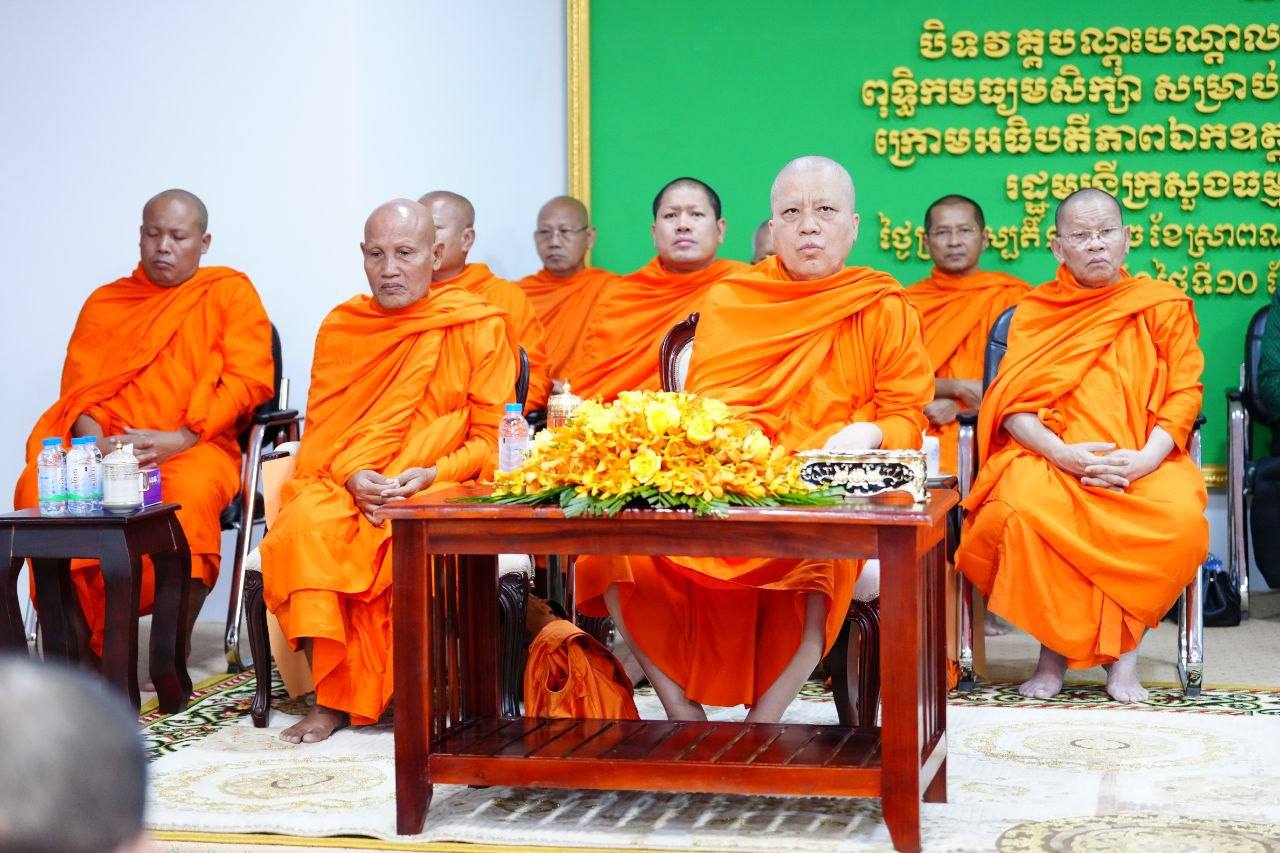
A training course for Buddhist educational administrators concluded in Cambodia, with Minister of Cults and Religion, Cham Borin, emphasizing the necessity of digitalization and adopting new technologies in Buddhist education to align with globalization and the Fourth Industrial Revolution, echoing Prime Minister Hun Manet's 'Pentagon Strategy' focusing on human capital development.
Phnom Penh – A training course for administrators of Buddhist educational institutions concluded on September 10, 2026, at the General Directorate of National Buddhist Education. Minister of Cults and Religion, Cham Borin, stated that in the era of globalization and the Fourth Industrial Revolution, Buddhist education must embrace digitalization and the adoption of new technologies. The minister highlighted the critical role of the General Directorate of National Buddhist Education in providing modern knowledge and skills across all levels of Buddhist education, from foundational to higher and postgraduate studies, mirroring the advancements in secular education. This initiative aligns with the first pillar of Prime Minister Hun Manet's "Pentagon Strategy," which focuses on human capital development. The training aimed to foster innovative leadership within the Buddhist education sector, enhancing participants' capacity to integrate Information and Communication Technology (ICT) into digitalized school management systems. Minister Cham Borin stressed the necessity of improving teacher quality, refining teaching methodologies, deepening curricula, and establishing digital education data management systems integrated with digital school administration for the sector's advancement. He further emphasized the need for continuous professional development for educators, enhancing school infrastructure, and securing financial resources through partnerships with development partners, as state funding alone is insufficient for the rapid growth of Buddhist education. The minister urged participants to create dynamic classroom environments that encourage active questioning, critical thinking, and problem-solving among students. He also called for close collaboration with the Ministry of Education, Youth and Sport to modernize curricula in science, mathematics, foreign languages, and IT, while preserving the moral identity of Buddhist educational institutions. Additionally, he advocated for comprehensive education on the dangers of drugs, gambling, and online scams to contribute to the "Safe Commune Policy." He concluded by stressing that in this technological age, administrators and teachers must continuously engage in self-study and proactively adopt new technologies to keep pace with societal progress.
Original source
CPP Cambodia