General articles are free for 24 hours after publish.
Ninh Binh Establishes World's Largest Delacour's Langur Reserve
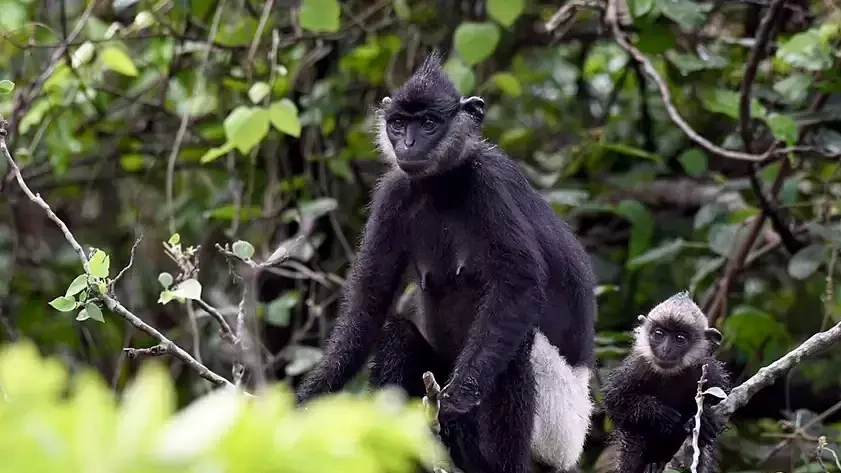
Ninh Binh Province, Vietnam, has established the Kim Bang Delacour's Langur Reserve to protect the world's largest habitat for the endangered Delacour's langur. The reserve is part of a landscape aiming for UNESCO World Heritage status.
Ninh Binh Province in north-central Vietnam has established the Kim Bang Delacour's Langur Reserve, spanning nearly 3,200 hectares of natural forest, primarily limestone mountains, to protect the critically endangered Delacour's langur (voọc mông trắng). The establishment of the reserve is a significant step in safeguarding the species' habitat, which is considered the largest in the world. The area is also part of the "Van Long - Kim Bang - Tam Chuc Cultural and Ecological Landscape" that Ninh Binh Province is nominating for UNESCO World Heritage status. International experts have recognized the region's considerable geological, geomorphological, biodiversity, archaeological, historical, and cultural values. The provincial People's Committee has tasked the Ninh Binh Forest Protection and Special Use Management Board with overseeing the reserve. Management activities will focus on forest protection and restoration, fire prevention, biodiversity monitoring, and wildlife tracking. The Delacour's langur is endemic to Vietnam and has faced severe population decline due to hunting and habitat loss. Current research indicates that the Kim Bang - Tam Chuc area is home to approximately 120-150 individuals, representing over 90% of the remaining wild population. This, combined with the approximately 250-300 individuals in the Van Long wetland, forms a crucial ecological corridor for the species' survival. Conservation efforts have yielded positive results, with the Van Long population growing from around 40 individuals in the early 2000s to its current numbers. The new Kim Bang reserve expands the protected area, further securing the future of this primate. Long-term objectives for the Kim Bang reserve include serving scientific research, environmental education, and the development of ecotourism integrated with biodiversity conservation.
Original source
VnExpress