General articles are free for 24 hours after publish.
Over 2,500 Indigenous Farmers in Ratanakiri Receive Free Vegetable Seeds to Boost Self-Sufficiency
Over 2,500 indigenous farmers in Ratanakiri province, Cambodia, received free vegetable seeds of seven varieties. This initiative aims to enhance food self-sufficiency, reduce household expenses, and improve food safety.
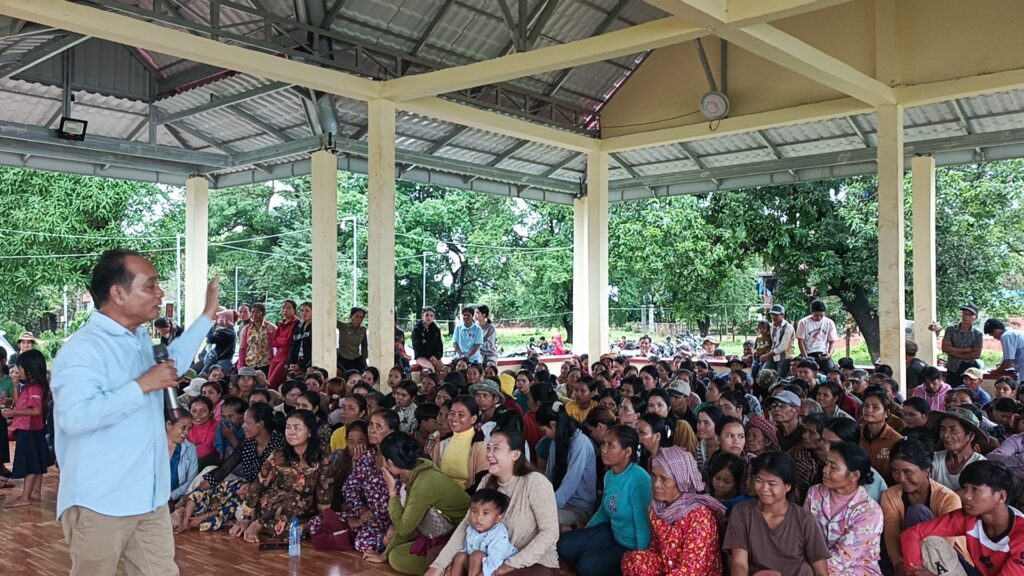
In Ratanakiri province, northeastern Cambodia, 2,508 indigenous farmers from the Kreung and Tompon ethnic groups, comprising 724 households, have received free vegetable seeds of seven varieties. This initiative is led by the Cambodian National Food Reserve Management Committee and aims to promote household consumption, reduce reliance on market purchases, and enhance food safety. The seed distribution took place in Kachon village, with the objective of encouraging residents to grow their own vegetables for daily needs, thereby reducing household expenses and mitigating food safety risks. Mr. Vong Sandap, Secretary of State of the Ministry of Economy and Finance and Head of the Secretariat of the National Food Reserve Management Committee, stated that this initiative is a government-led effort, collaborating with relevant ministries and institutions to help farmers reduce their dependence on the market and strengthen food security within communities. The distributed seeds include Krolon (water spinach), Trolach (eggplant), Non Nong (pumpkin), Trap Sruy (long eggplant), Met (chili pepper), Sandek Kuor (long bean), and Spy Khieaw (cabbage). These seeds can be used for household consumption, and any remaining seeds can be stored and replanted for subsequent years, unlike some hybrid varieties that cannot be saved for continued use. Mr. Vong Sandap further emphasized that self-cultivation is part of managing food safety within communities, allowing residents to better control the source of the vegetables they consume and reduce exposure to products with unclear origins. Mr. Bin Somaly, a member of the technical team, provided guidance to the farmers on seed preparation and cultivation methods. The process involves soaking seeds in warm water, germinating them, growing seedlings in pots, and then transplanting them onto raised beds. The provided seeds are suitable for continuous cultivation, ensuring farmers have a source of seeds for future household use. It is anticipated that encouraging self-cultivation, particularly in fertile areas near rivers, will increase vegetable supply for families, reduce expenditures, and supplement daily nutrition, thereby improving the health and well-being of community members.
Original source
Kampuchea Thmey Local