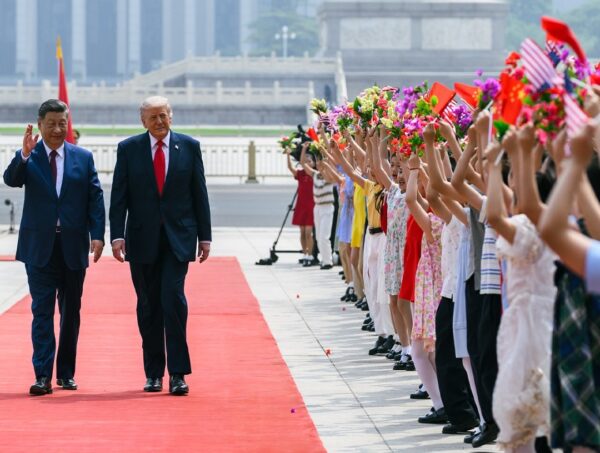
While Trump Sought Business Deals, Beijing Came Prepared to Redefine China-US Relations
President Xi Jinping’s new framework of "strategic stability" in the China-U.S. relationship represents a calculated move by Beijing to define the terms of engagement. By framing competition as subordinate to stability, China seeks to dictate the tempo and scope of the rivalry, outpacing Washington’s conceptual preparation.
This article requires PRO
This article is outside the free access window or is a special report. PRO unlocks it and the full archive.
Related articles
- Indonesia's Climate Diplomacy Questioned Amidst Oil & Gas Deal Linked to Presidential Envoy
Indonesia's decision to award the Natuna D-Alpha oil and gas block to a company linked to Presidential Envoy for Climate Change, Hashim Djojohadikusumo, is raising concerns about weakening its international climate diplomacy. The block, with its high CO2 content, is seen as a potential 'carbon bomb'.
- China's Revised Defense Mobilization Law Expands Reach to Private Sector
China's revised Defense Mobilization Law broadens the scope of wartime mobilization to include private enterprises, legally obligating them to support national military efforts and raising concerns about economic implications.
- Taiwan Crisis: Europe's Stance Hinges on Indonesian Position?
In a potential Taiwan crisis, the stance of European nations towards China could be significantly influenced by the actions of key Southeast Asian players like Indonesia. As Europe struggles to agree on how to frame Beijing's actions, Indonesia's position may shape international decision-making.
- Ciguatoxin in Indonesian Coral Fish: Hidden Threat or Misinformation?
A podcast discussing 'superbugs and poisonous animals' sparked concern in Indonesia, claiming coral fish, especially red snapper over 2kg, contain ciguatoxin. Experts clarify that Indonesian fish on the market are safe, though acknowledge the need for better risk mapping and detection methods for ciguatoxin, which is more prevalent in Pacific regions.