General articles are free for 24 hours after publish.
Vietnam's Industrial Production Surges 11.9% in Eight Months
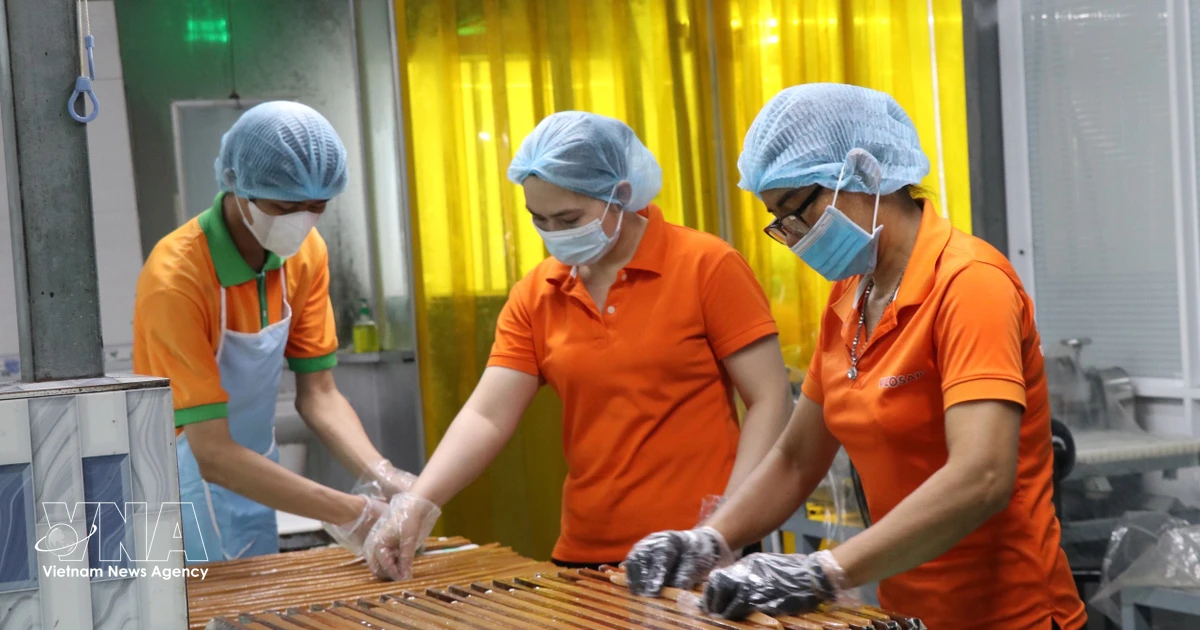
Vietnam's Index of Industrial Production (IIP) saw an 11.9% increase over eight months, driven by new production facilities and scaled-up manufacturing, serving as a strong engine for economic growth. Foreign investment in M&A also showed significant activity.
Vietnam's industrial production has maintained strong growth this year. According to the General Statistics Office (GSO), the Index of Industrial Production (IIP) from January to August increased by 11.9% year-on-year. In July alone, production rose by 0.7% month-on-month and 11.2% year-on-year, pushing the cumulative increase for the first seven months to 8.5% compared to the same period last year. This robust expansion in industrial output is primarily driven by the commissioning of newly operational production facilities and the scaling up of manufacturing by businesses. Notably, in the first five months of 2026, the IIP saw a year-on-year increase of 9.1%, marking the highest growth rate for this period in the past four years, underscoring Vietnam's economic resilience. The government has issued a decree detailing the Law on Commerce and the Law on Foreign Trade Management concerning goods trading and related activities by foreign investors and foreign-invested economic organizations in Vietnam. This aims to further improve the foreign investment environment. Indeed, in the first seven months of 2026, foreign investors conducted 1,815 capital contribution and share purchase transactions in Vietnam, with a total capital exceeding 6.5 billion USD. While the number of transactions decreased by 8.4% year-on-year, their value surged by 61.6%, indicating a trend towards larger-scale investments. Infrastructure development, crucial for supporting economic growth, is also progressing. For instance, Hai Phong city, leveraging its strong foundation in infrastructure and human resources, is expected to serve as a strategic driver in Vietnam's journey towards becoming a maritime nation. Furthermore, on Phu Quoc Island, projects to complete the power transmission network are underway, aimed at supporting the APEC 2027 hosting and ensuring a safe, stable, and reliable power supply. Vietnam is also accelerating its digital economic transformation. Myanmar has called for Vietnam's cooperation in various fields, including digital infrastructure development, cybersecurity, digital transformation, public services, IT, and digital payment systems. In Ho Chi Minh City, digital transformation in the legal profession is not merely about introducing technology but also about creating working methods that ensure technology serves people while lawyers retain control and responsibility for service quality. This is particularly vital in a metropolis with a large-scale economy and diverse legal needs. At the local level, abundant agricultural resources provide favorable conditions for expanding markets through e-commerce. However, the increasing costs of fees, infrastructure charges, and service packages on e-commerce platforms suggest that the era of easy selling and low costs has officially ended for sellers. The night-time economy is also emerging as a new growth driver for tourism. By breathing new life into familiar heritage spaces and meeting the desire of visitors for cultural depth, it contributes to revitalizing local economies. Under Vietnam's one-party system, economic growth is a crucial element in bolstering the legitimacy of the government, and the expansion of industrial production is key to maintaining social stability and development. In its relations with China, Vietnam is expected to continue pursuing a foreign policy that balances economic interdependence with supply chain diversification and geopolitical considerations. Source: VietnamPlus English
Original source
VietnamPlus English