General articles are free for 24 hours after publish.
Philippines Faces Vicious Cycle of Fiscal Woes and Corruption Ahead of SONA
The Philippines faces a critical juncture with an estimated P8.8 trillion lost to corruption between 2016-2025, coinciding with a sharp rise in national debt. Under the Marcos administration, debt has increased by nearly P6 trillion, eroding public purchasing power and public services. Structural reforms remain elusive.
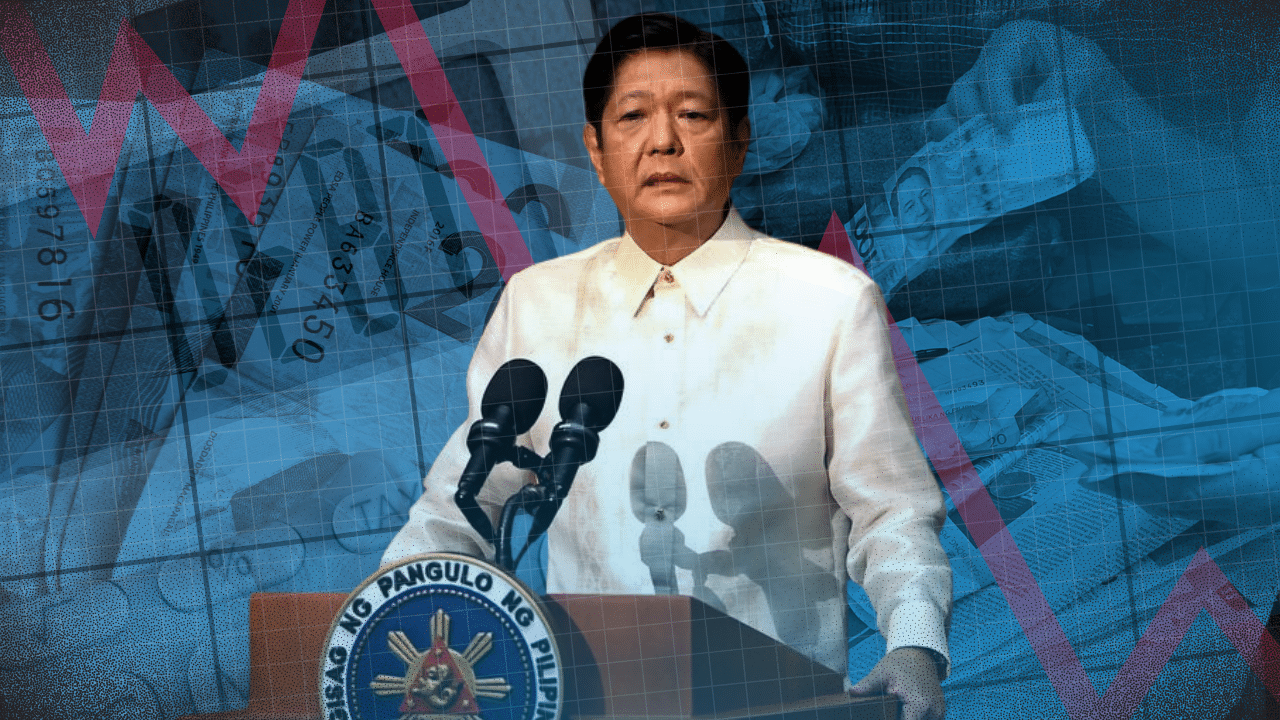
President Ferdinand Marcos Jr.’s State of the Nation Address on July 27 will be delivered against the backdrop of a decade marked by corruption, fiscal mismanagement and widening inequality. Estimates suggest that P8.8 trillion was lost to corruption between 2016 and 2025. Beyond the financial leakage, the figure represents the opportunity cost of classrooms left unbuilt, hospitals underfunded and farmers exposed to traders and import shocks. The central issue for the Sona is whether the administration will move beyond short-term relief and confront the structural links among corruption, rising debt, peso weakness, import dependence and deteriorating public services. When Marcos assumed office in mid-2022, the national debt stood at P12.79 trillion. By the end of May 2026, it had climbed to P18.55 trillion, an increase of nearly P6 trillion during his presidency. The rapid buildup reflects the government’s continued reliance on borrowing to cover fiscal gaps. This approach is reinforced by Presidential Decree No. 1177, which provides for the automatic appropriation of debt-service payments. Although the framework reassures creditors, it effectively locks the Philippines into a debt-first fiscal regime in which repayment obligations compete with education, health, agriculture and other essential services for government resources. The surge in debt has also coincided with peso depreciation, driven in part by the demand for dollars to pay external obligations and imports. Although the peso briefly appreciated in May 2026, its longer-term weakness has raised the cost of servicing foreign debt and reduced household purchasing power. Workers have said that a P85 wage increase cannot offset higher food prices and expenses such as electricity and water bills. At an exchange rate of P63 to $1, a barrel of oil priced at $100 would cost P6,300. The same barrel would cost P4,200 at an exchange rate of P42 to $1 during the Aquino administration. This erosion of purchasing power affects poor and middle-income households most because they spend a larger share of their income on essential goods and services. The administration’s borrowing strategy — with domestic obligations accounting for 67.4 percent of total debt and much of the debt carrying fixed interest rates — has reduced some foreign exchange and interest-rate risks. But the scale of the debt buildup has increased fiscal obligations at a time when households are already contending with higher food prices and weaker real incomes. Households with assets and access to credit are better positioned to absorb these shocks, while low- and middle-income families face greater financial pressure. Debt incurred during the Marcos administration has expanded the government’s fiscal obligations while coinciding with peso weakness, reduced purchasing power and food inflation. This cycle illustrates how debt dependence under PD 1177 can deepen inequality and weaken socioeconomic resilience. Food inflation is among the most visible consequences of the country’s economic vulnerabilities. The Philippines imports about 31 percent of its food supply, creating demand for dollars and exposing domestic prices to exchange-rate movements. Peso depreciation raises the cost of imported rice, meat, sugar, fruits and vegetables. Oil shocks add to these pressures. Higher crude prices raise the cost of fertilizer, trucking and irrigation, which producers and distributors may pass on to consumers. Even the threat of disruption in the Strait of Hormuz can raise insurance and freight costs, contributing to higher food prices. Poor households, which generally have limited savings and few ways to protect themselves from price shocks, bear much of the burden. Middle-income households also lose purchasing power and face a greater risk of falling into poverty. One issue that should be addressed in the Sona is the excessive importation of refined sugar and the increasing use of alternative sweeteners. When converted into cane sugar equivalent, alternative sweeteners are estimated to account for as much as half of sugar consumption. This reduces demand for locally produced sugar and puts downward pressure on domestic prices. The imbalance causes losses for farmers and gives traders greater influence over the market. A balanced approach is needed. The government should support domestic production through cooperatives while regulating imports to protect farmers from unfair pricing. Without such measures, the sugar industry — already weakened by pests and international competition — faces further decline. The Marcos administration has yet to deliver the structural reforms needed to address these problems. Smuggling cases and alleged ghost projects in the Department of Public Works and Highways have not resulted in sufficient prosecutions. The transfer of P60 billion in PhilHealth funds also has not been reversed despite a Supreme Court ruling ordering the funds’ return. These failures undermine public confidence and allow fiscal leakages to continue. The National Food Authority’s minimum support price of P21 per kilogram of palay is ineffective unless the agency can purchase a significant share of farmers’ harvests. With its limited budget, the NFA cannot buy the proposed minimum of 25 percent. Farmers are therefore often forced to sell to traders at prices below their production costs, perpetuating rural poverty. These governance failures have also contributed to declining public confidence in the administration. The estimated P8.8 trillion lost to corruption between 2016 and 2025 represents more than financial leakage. It reflects development opportunities that the country was unable to pursue. The losses can be measured in classrooms that were not built, hospitals that remained understaffed, farmers who received inadequate support and communities that were denied essential infrastructure and services. In education, those resources could have financed tens of thousands of classrooms, eased overcrowding and reduced reliance on double-shift schedules that compromise learning. The government could also have hired more teachers, improved teacher-student ratios and invested in science laboratories, libraries and digital infrastructure. Instead, the education sector continues to contend with shortages, outdated facilities and underpaid personnel. In health care, the lost resources could have helped expand universal health coverage, improve provincial hospitals and ensure access to essential medicines. The transfer of P60 billion from PhilHealth, which the Supreme Court ordered returned, illustrates the consequences of poor fiscal decisions. Rural health units could have been modernized, helping reduce the gap in health care access between urban and rural communities. Instead, millions of Filipinos remain vulnerable to medical costs that can push households deeper into debt. Corruption has also weakened food security and farmer welfa
Original source
Inquirer NewsInfo