General articles are free for 24 hours after publish.
Papua's Venomous White Snake Lacks Antivenom, Posing a Threat
The highly venomous **Micropechis ikaheka**, found in Papua, remains a significant threat due to the lack of a specific antivenom. Its limited range belies a potent venom capable of causing severe health issues.
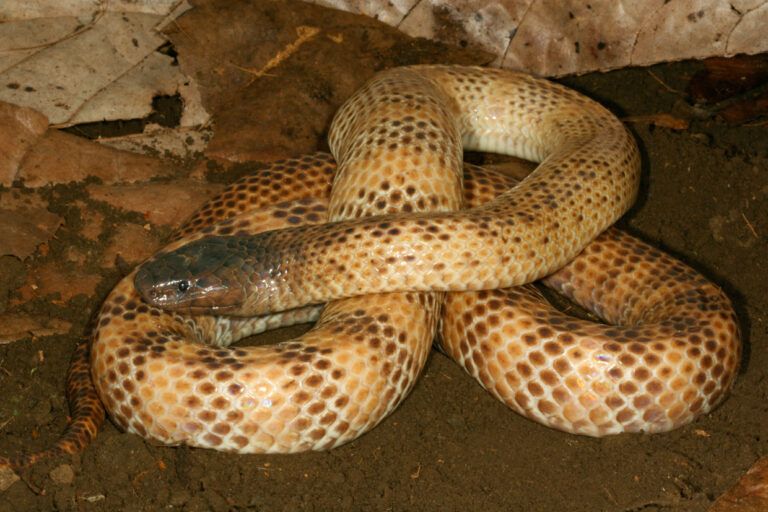
In the humid tropical rainforests of Papua, Indonesia, lives Micropechis ikaheka, a highly venomous snake with a very limited distribution. This species is found in Papua and its surrounding islands, including Waigeo, Batanta, Karkar, and the Aru Islands. First discovered in 1829 by French naturalist René Primevère Lesson, the snake was initially placed in the genus Coluber. After studying its anatomical structure and fangs, it was later placed in its own genus, Micropechis. To date, M. ikaheka is the sole species in this genus. The name “ikaheka” means “earth eel,” referring to its habit of living in damp, hidden places. Its habitat includes swamps, lowland forests, riverbanks, and even decaying piles of coconut husks on plantations. Its body can reach about 2.1 meters in length. It has a cylindrical, muscular body covered in smooth scales that sometimes appear shiny. Its eyes are small, suited to its habit of moving underground or under piles of vegetation. Despite being called a white snake, its body color is not always the same. Some populations have pale white bodies with dark red or brown bands, while others can be solid black. These differences are thought to be related to environmental conditions and evolutionary pressures in different regions. The primary threat posed by this snake lies in the composition of its venom. The venom of M. ikaheka is said to contain neurotoxins, hemotoxins, cytotoxins, and cardiotoxins. This combination can disrupt the nervous system, damage tissues and muscles, cause internal bleeding, and affect heart function. Symptoms can appear within minutes, ranging from difficulty breathing, paralysis, muscle pain, to seizures. To date, no specific antivenom has been proven effective and widely available in Papua. This indicates that the snake's presence remains an unknown risk for local communities and the healthcare system. Source: Mongabay Indonesia
Original source
Mongabay Indonesia