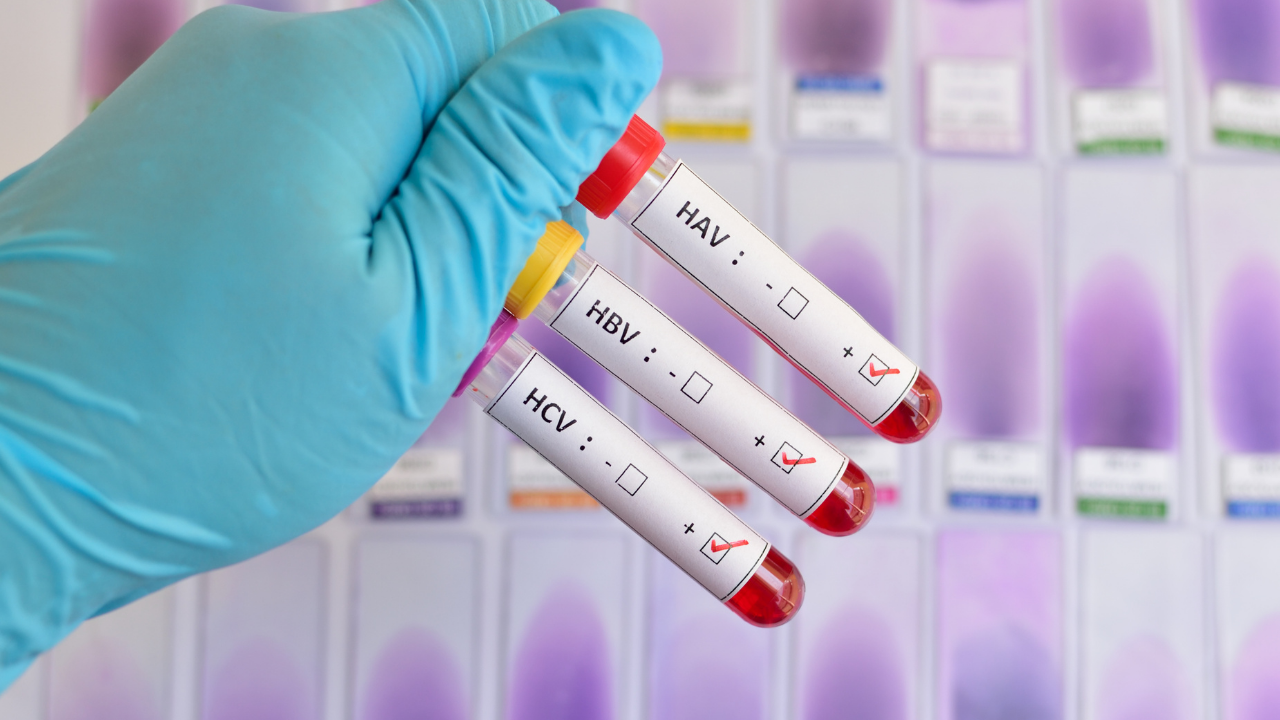
Philippines Faces Hepatitis Funding Gaps, Expert Urges National Support
Health
2026年7月27日
5
Inquirer NewsInfo

General articles are free for 24 hours after publish.

Philippines Faces Hepatitis Funding Gaps, Expert Urges National Support

Share
AI Summary

A liver disease specialist in the Philippines is strongly urging the government to increase national funding for hepatitis prevention, testing, and treatment. Inadequate financing leaves many patients undiagnosed or untreated, leading to preventable deaths.

MANILA, Philippines — A liver disease specialist has urged the national government to expand funding for hepatitis prevention, testing and treatment, warning that thousands of Filipinos die from a largely preventable disease because of inadequate financing. In a statement marking World Hepatitis Day on July 28, gastroenterologist and transplant hepatologist Dr. Janus Ong said the Philippines already has the tools to prevent hepatitis-related liver cancer, but many patients remain undiagnosed or untreated due to gaps in funding. He called on the government to operationalize a fully-staffed national hepatitis program, where every local government unit (LGU) can draw on a common supply of medicines and systems, instead of depending on their meager local budgets. Ong also said the Philippine Health Corp. (PhilHealth) should fully shoulder the coverage of hepatitis testing and treatment so that cost never turns a patient away at the clinic door. Under its case rate packages, PhilHealth provides up to P23,010 for chronic viral hepatitis, up to P20,865 for sequelae of viral hepatitis, and up to P24,765 for congenital viral hepatitis. Early screening for liver diseases, including liver ultrasound and alpha-fetoprotein test, are provided for free under PhilHealth’s Yakap (Yaman ng Kalusugan Program). READ: PH liver center pushed as cancer cases rise “National funding for hepatitis is not charity, nor is it a bottomless ask. It is its foundation: Put it in place, and the counterpart local governments are already willing to provide, finally adds up to a national result,” Ong said. “If we do not fund it, even the best local programs will never achieve elimination,” he added. According to Ong, a health advocate who has worked on primary-care hepatitis testing and treatment programs, national funding would complement, rather than replace, local government initiatives to address hepatitis. He cited the city governments of Quezon City and Taguig, as well as provincial governments of Bataan, Tarlac, and in the Cordillera Administrative Region (CAR) for establishing hepatitis testing and treatment programs using their own personnel and budgets. However, relying solely on local funding creates disparities, as wealthier LGUs are better equipped to sustain such programs than poorer municipalities. “If your chances of surviving hepatitis depend on which barangay you happen to be born in, we will never reach elimination. We will only widen the gap between Filipinos who get saved and Filipinos who get left behind,” Ong warned. Experts attributed the high cases of hepatitis B in the country to the disease being “hyperendemic” in the Philippines, meaning any unvaccinated member of the population is highly susceptible to infection. The primary doses for hepatitis B is included under the National Immunization Program of the DOH. Vaccine shots for hepatitis A are not provided by the government but may be purchased in private clinics and pharmacies for at least P3,000 a shot. There is currently no vaccine to prevent hepatitis C. However, the virus is highly manageable and can be completely cured in most cases using short courses of antivirals. READ: PH, other countries face ‘viral hepatitis’ Ong estimated that 3.4 million adult Filipinos are living with hepatitis B, most of whom remain unaware of their infection. However, many who have already been diagnosed have yet to receive treatment. ”They are not waiting for a treatment to be invented. They are waiting for us to pay for the one we already have,” he said. The physician also warned that delaying investment in early detection and treatment ultimately increases healthcare costs, as patients progress to cirrhosis or liver cancer, conditions that are significantly more expensive and difficult to treat. With only five years remaining before the 2030 global target to eliminate hepatitis as a public health threat, Ong said the Philippines can still achieve the goal if the national government makes hepatitis a funding priority. “Local governments have carried hepatitis this far,” he said. “It is time for the national government to help carry it home.” /apl

0

Original source

Inquirer NewsInfo

原文を読む