General articles are free for 24 hours after publish.
Cambodian Unions: Minimum Wage Talks Must Be Based on Technical Criteria, Not Emotion
Major Cambodian labor unions assert that annual minimum wage negotiations for textile, garment, and footwear workers should be based on seven technical criteria and actual economic conditions, rather than emotional appeals or political maneuvering. They challenge some independent unions' calls for $250, demanding concrete evidence.
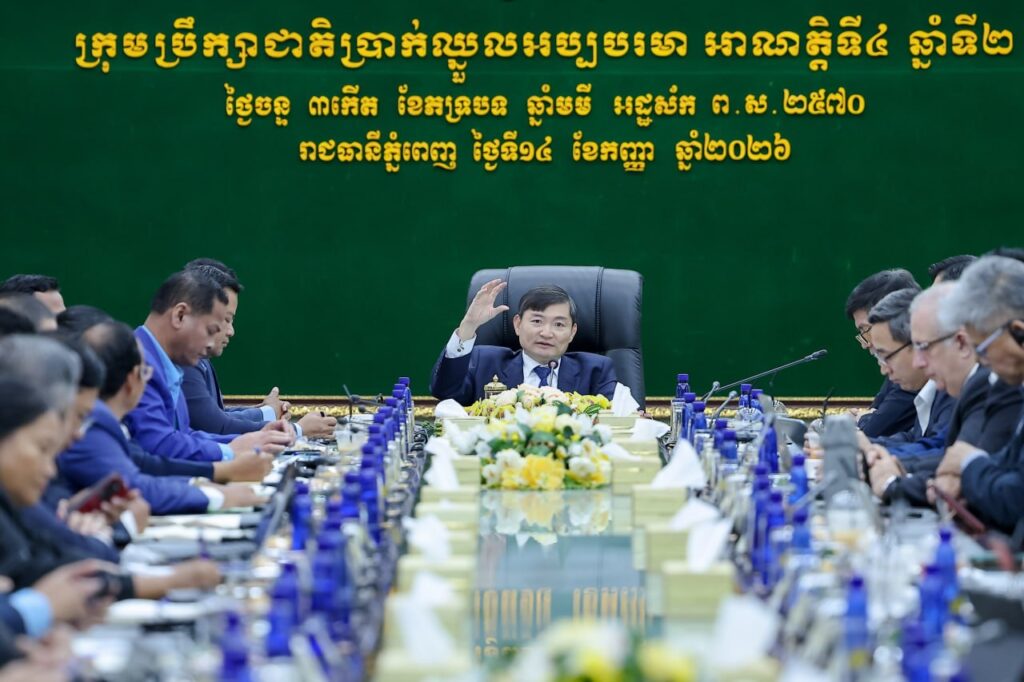
Major labor unions in Cambodia are calling for annual minimum wage negotiations for the textile, garment, and footwear sectors to be based on technical criteria and actual economic conditions, rather than emotional appeals or political maneuvering. This comes as some unions, which refer to themselves as independent, have urged their members to demand a monthly wage of $250, while the National Minimum Wage Council is engaged in ongoing discussions with relevant parties to set the minimum wage for 2027. Mr. Sam Soeun, President of the Cambodian Confederation of Trade Unions (CLTU), stated that the minimum wage negotiation process must be conducted with careful consideration of the economic and social situation, as well as the capacity of the production sector. He emphasized that it should be based on the seven technical judgment criteria set by international institutions for negotiations with relevant parties. Mr. Soeun added that the determination of wage levels should not be based on high emotional demands, political competition between unions, or populism. Instead, it requires a balanced consideration between the living standards of workers, the economic situation, and the production capacity of employers to ensure the sustainability of wage increases. "In wage negotiations, it is not that whoever demands higher is better, and please stop using this demand to deceive workers. I want to see their specific calculations or research reports that led to a demand of $250, and I ask them to publicly present these reports, showing what evidence they are based on and where they collected their information," the union leader said. Meanwhile, Mr. Un Dara, President of the Cambodian Federation of Independent Trade Unions (CFITU), stated that minimum wage negotiations should be conducted with responsibility and based on the common interests of workers, employers, and the national economy as a whole. He criticized some politicians and unions for using this issue for their own narrow political gains. Mr. Dara stressed that any wage demand must have a clear basis and be explainable through economic and social data. Demands made without considering the actual situation can create high expectations among workers but are not guaranteed to be achieved in actual negotiations. "We support wage increases for workers, but the increase must be made with technical basis and actual economic situation. Trade unions should provide responsible information to workers and should not create expectations by demanding high figures without clear basis," Mr. Dara stated. On September 1, 2026, the National Minimum Wage Council, in its fourth mandate (2025-2026), convened a meeting to discuss and determine the minimum wage for workers in the textile, garment, footwear, and travel goods and bags sectors for 2027. During the meeting, important statistics on the seven social and economic criteria were presented to the relevant parties as a basis for their internal discussions to form a common stance for subsequent meetings. The next meetings are scheduled for Monday, September 14, Friday, September 18, Monday, September 28, and the final session on Wednesday, September 30, 2026. Source: Kampuchea Thmey Local
Original source
Kampuchea Thmey Local