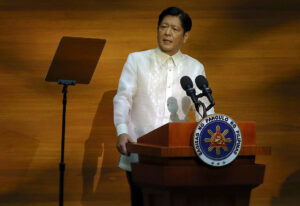
Stakeholders Urge Early Childhood Investment Ahead of SONA
Education stakeholders are urging the government to prioritize early childhood investments to address learning gaps ahead of President Ferdinand R. Marcos Jr.'s State of the Nation Address (SONA). Malnutrition and stunting among young children remain a significant concern.
This article requires PRO
This article is outside the free access window or is a special report. PRO unlocks it and the full archive.
Related articles
- Sara Duterte Asks NBI to Release Gracioso's Lie Detector Test Video
Vice President Sara Duterte urged the National Bureau of Investigation (NBI) to release the video of dismissed policeman Rodulfo Gracioso Jr.'s lie detector test to quell doubts about its authenticity. She also expressed willingness to undergo a polygraph examination herself.
- Government Urges SC: Junk Petition vs BSKE Postponement Law; Election Lawyer Counters
Philippine government agencies urged the Supreme Court to dismiss a challenge to a law extending the term of barangay and Sangguniang Kabataan officials and postponing elections to 2028. Meanwhile, an election lawyer reiterated his plea for the SC to stop the postponement, arguing it infringes on voters' rights.
- ICC Prosecutor Opposes Evidence Disclosure Cap in Duterte Case
The International Criminal Court (ICC) prosecutor has opposed a request by former president Rodrigo Duterte's lawyers to cap the disclosure of evidence in his crimes against humanity trial related to the "war on drugs." The prosecution argues that the disclosed materials are reasonable given the case's broad scope and the defendant's status as a former head of state, and are essential for fulfilling disclosure obligations.
- El Niño Threatens Philippines with Blackouts, Higher Power Bills
The Philippines faces record heat from a 'super El Niño,' with the Department of Energy warning of frequent blackouts and higher electricity bills. Strained coal-fired plants and depleted water for hydropower are concerns, prompting calls for public energy conservation.