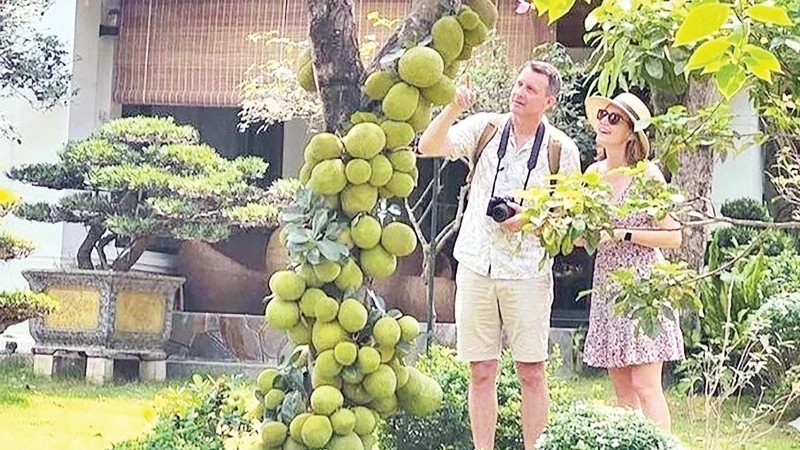
Doai Phuong Jackfruit: A Sweet Success Story Boosting Local Economy in Hanoi Outskirts
In Hanoi's Doai Phuong commune, the fragrant and sweet jackfruit has become a pillar of the local economy. With nearly 70,000 trees producing over 3,000 tons annually, it significantly contributes to farmers' incomes. Local authorities are promoting branding and processed products for sustainable development.
The commune of Doai Phuong in Hanoi is known for its jackfruit, characterized by its distinctive aroma and rich sweetness. Currently, nearly 70,000 jackfruit trees are cultivated across more than 40 hectares in the commune, primarily concentrated in hilly areas and household gardens. Boasting an annual output exceeding 3,000 tons, this fruit has become one of the commune's key crops. The jackfruit from Doai Phuong is distinguished by its stable quality. The flesh is a vibrant yellow, thick, with minimal fiber, and possesses a deep sweetness and natural fragrance. In addition to traditional varieties, local residents also cultivate high-yield types such as the Thai Changai and super-early ripening varieties, meeting diverse market demands. Ms. Ha Thi Tuoi from Phuc Loc village, in her 50s, cultivates jackfruit on approximately 1,000 square meters of garden land, some of which are nearly 70-year-old trees. Each tree yields 60 to 80 fruits per harvest, with an average weight of 5 to 10 kilograms per fruit. Sold at prices ranging from 15,000 to 20,000 VND per kilogram, her jackfruit orchard generates an average annual income of 50 to 80 million VND. Ms. Tuoi notes that jackfruit is well-suited to the local soil conditions, is less prone to pests and diseases, requires moderate care costs, yet yields high economic returns. Many other households have also opted to develop jackfruit cultivation for commercial purposes. Due to relatively stable outlets, traders often come directly to the gardens to purchase the fruit. For households with extensive land areas, income from jackfruit can reach hundreds of millions of VND annually. According to Mr. Nguyen Van Cuong, Chairman of the Doai Phuong Commune Farmers' Association, jackfruit is currently one of the most economically effective crops in the area. Compared to many other fruit trees, jackfruit offers advantages such as ease of care, long lifespan, stable productivity, and suitability for local production conditions. The cultivation of jackfruit also contributes to job creation and stimulates commercial activities within the locality. During the harvest season, many laborers are engaged in picking, transporting, processing, and selling the products. Local authorities are focusing on supporting residents to improve production quality, apply technical advancements in care and product preservation, and encourage the development of safe and sustainable production models to meet the increasingly high demands of the market. Mr. Nguyen The Hung, Chairman of the Doai Phuong Commune People's Committee, stated that the commune identifies jackfruit as one of its advantageous agricultural products. In the coming period, the commune will continue to collaborate with functional sectors to provide support in production techniques, connect product consumption, and gradually build the brand for Doai Phuong jackfruit, thereby providing further impetus for the development of the local agricultural economy. Alongside developing cultivation areas, the commune also aims to exploit added value from jackfruit through processing, building OCOP (One Commune One Product) items, and integrating with experiential tourism development. This is considered a suitable direction for enhancing product value and ensuring stable outlets for the residents.
多角的分析
ドアイ・フォン xã におけるジャックフルーツ栽培は、地域経済の活性化に大きく貢献しています。単一作物の集約化は、生産効率の向上とコスト削減に繋がる一方、市場価格の変動や気候変動、病害虫の発生といったリスクへの脆弱性も高めます。しかし、同 xã では多様な品種の導入や、加工品開発、観光との連携といった多角化戦略を進めており、これは単なる一次産品の生産に留まらず、高付加価値化とリスク分散を図ることで、持続的な経済成長を目指すベトナムの農業政策の方向性と合致しています。特に、OCop(One Commune One Product)のような地域特産品ブランド化の取り組みは、農村部の所得向上と地域活性化の重要な手段となり得ます。
ドアイ・フォン xã のジャックフルーツ産業は、小規模農家が中心ですが、その安定した生産量と品質は、加工業者や輸出業者にとって魅力的な投資対象となり得ます。特に、ブランド化が進み、一定の品質基準が満たされれば、国内外の食品メーカーや小売業者がサプライチェーンに参入する可能性があります。また、体験型観光との連携は、農園への直接投資や関連アグリツーリズム事業への投資機会を生み出すことも考えられます。ただし、投資にあたっては、気候変動リスク、市場価格の変動、そしてベトナム特有の土地利用規制や許認可プロセスなどを慎重に評価する必要があります。
ドアイ・フォン xã のジャックフルーツ栽培は、地域住民、特に農家の生活基盤を支えています。ハ・ティ・トゥイさんの例に見られるように、ジャックフルーツは安定した収入源となり、家族の生活向上に貢献しています。また、収穫期には地域住民に雇用機会を提供し、地域社会の活性化にも繋がっています。しかし、単一作物への依存度が高い場合、自然災害や市場価格の急落は、地域経済全体に深刻な影響を及ぼす可能性があります。そのため、地元当局が進める多角化戦略は、住民の生活の安定化という観点からも重要です。さらに、体験型観光との連携は、地域文化の継承や住民間の交流を促進する可能性も秘めています。
ドアイ・フォン xã の住民、特にジャックフルーツ農家にとって、この果物は生活の糧そのものです。長年育ててきた古木から実る果実への愛着も深く、その甘く芳醇な香りは、彼らの生活に豊かさと誇りをもたらしています。一方で、市場価格の変動や、天候不順による不作への不安も常に抱えています。近年、地元当局が品質向上やブランド化、加工品開発、観光との連携を進めていることは、住民にとって、より安定した収入と、自分たちの産品がより広く認められることへの期待に繋がっています。彼らは、自分たちの手で育てたジャックフルーツが、地域経済を支え、さらには地域を代表する特産品となることを願っています。
背景・歴史的文脈
ベトナムでは、ホーチミン共産党による一党体制の下、経済発展が最優先課題として進められてきました。特に、1986年のドイモイ(刷新)政策以降、市場経済原理の導入と対外開放が進み、目覚ましい経済成長を遂げています。農村部においては、伝統的な農業から、より市場志向型の農業への転換が図られてきました。ドアイ・フォン xã のジャックフルーツ栽培の成功は、こうした中央政府の農業振興政策や、地域住民の起業家精神が結実した一例と言えます。中国との関係においては、経済的には緊密な関係を維持しつつも、領土問題など安全保障面では緊張関係も存在します。このジャックフルーツの事例は、経済成長が社会の安定に寄与する側面を示す一方で、地域間の経済格差や、農村部の所得向上といった課題も浮き彫りにしています。
原文ソース
Nhan Dan