General articles are free for 24 hours after publish.
Japan's Kikai Caldera Shows Signs of Magma Re-injection, Re-evaluating Potential for Super-eruption
Japan's Kikai caldera, a supervolcano responsible for a devastating eruption 7,300 years ago, shows signs of magma re-injection, according to new research. This finding is crucial for understanding the future activity of other supervolcanoes globally.
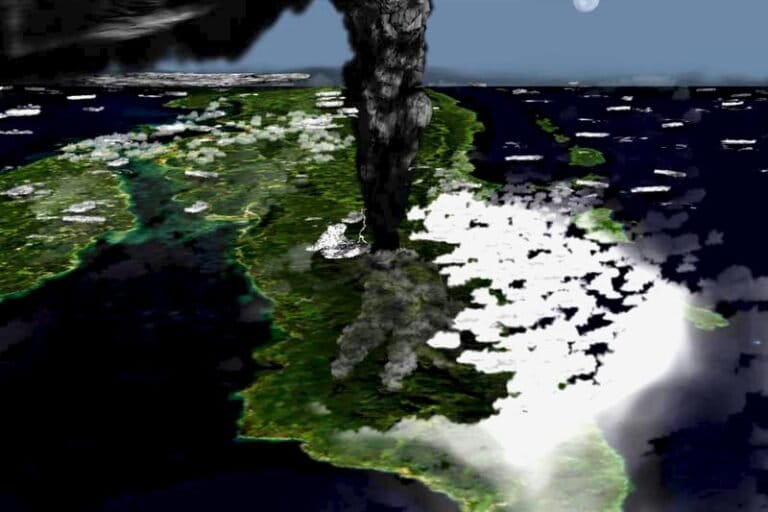
Located off the coast of the Ryukyu Islands in Japan, the Kikai caldera is one of Earth's most powerful volcanoes. Approximately 7,300 years ago, this supervolcano unleashed a devastating eruption, triggering a mega-tsunami that submerged islands in southern Japan. The volcanic ash from this event blanketed nearly all of Japan and even reached South Korea. This eruption formed a massive caldera, measuring about 20 by 17 kilometers. Within this caldera lies an underwater lava dome at a depth of around 600 meters. However, the immense power of that past eruption did not extinguish Kikai's potential. Evidence suggests the volcano's interior is slowly being refilled with magma. On May 17, 2026, Kikai spewed gas and ash to a height of approximately 400 meters, a minor eruption that highlights that a supervolcano, once capable of a super-eruption, is not automatically dormant. A study published in the journal Communications Earth & Environment in March 2026 introduced the "melt re-injection" model. This process describes how new magma naturally enters a large, shallow magma reservoir beneath the caldera. This is believed to be the same magma reservoir that triggered the Kikai-Akahoya eruption thousands of years ago. To detect this magma influx, researchers employed deep-sea seismic refraction surveys. This method measures the speed of seismic waves traveling through the rocks beneath the seabed, allowing scientists to map underground structures. Unlike previous approaches relying on onshore seismic data or geochemical analyses, this new technique enables researchers to identify the flow of fresh magma into the reservoir. The findings at Kikai are significant for understanding other supervolcanoes worldwide, including Yellowstone in the United States and Toba in North Sumatra, Indonesia. Yellowstone, for instance, is known to have a shallow magma reservoir at depths of approximately 3 to 8 kilometers. The research at Kikai offers a new perspective for assessing the future risks associated with these colossal volcanoes. Source: Mongabay Indonesia
Original source
Mongabay Indonesia