General articles are free for 24 hours after publish.
Peso Weakness: Blame Consumption Culture or Structural Issues?
The Philippine peso hit an all-time low, prompting the central bank governor to mention 'consumption culture,' sparking debate. Experts point to structural issues like reliance on private consumption, weak exports, and current account deficits as key factors.
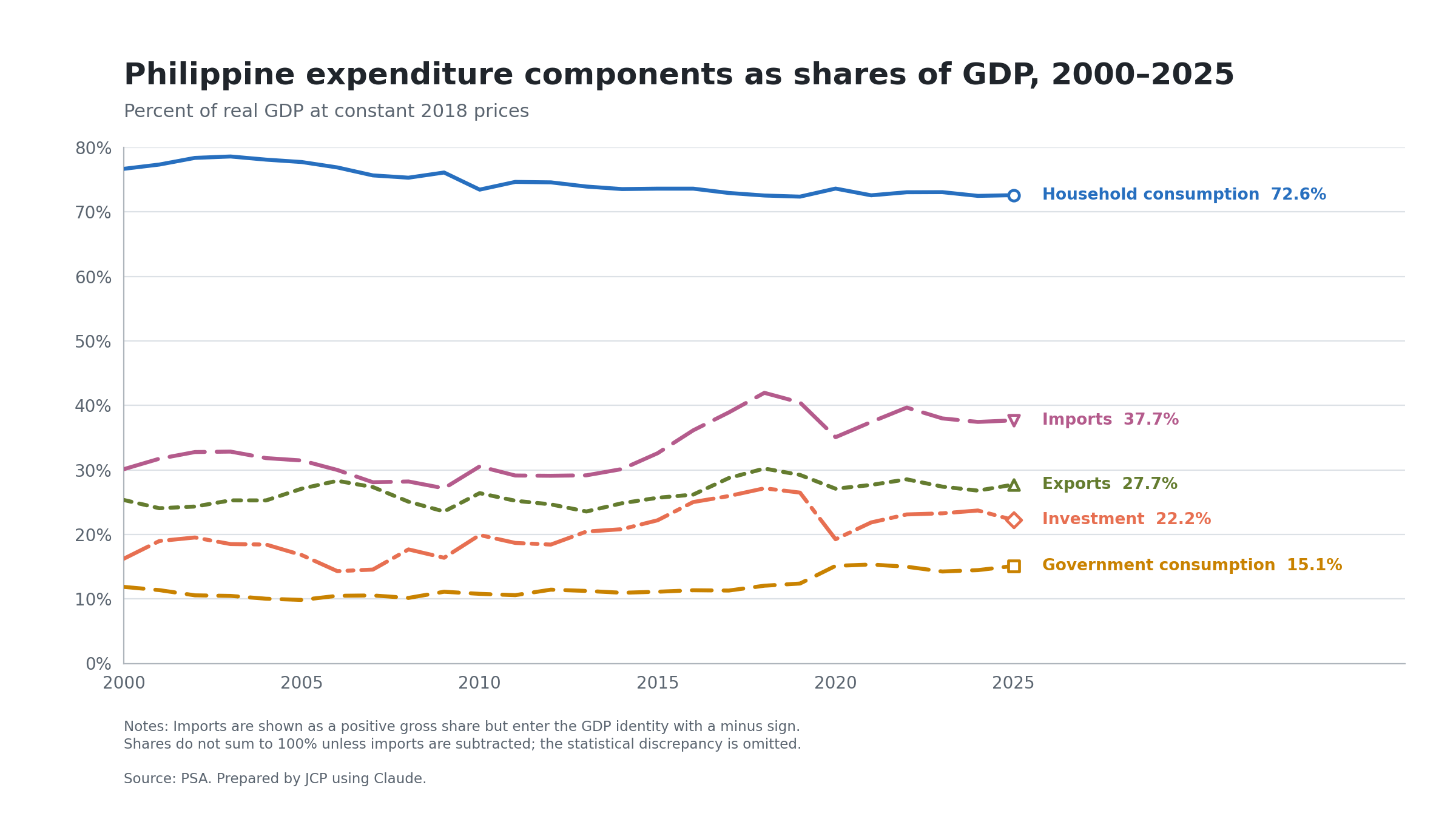
The Philippine peso has hit another all-time low, closing at P62.50 per dollar on September 2, a significant 9% drop from around P57.3 a year ago. Policymakers are increasingly alarmed by this steady depreciation. Bangko Sentral ng Pilipinas (BSP) Governor Eli Remolona Jr. explained that the central bank cannot simply force the peso back to P60. While selling dollar reserves can temporarily strengthen the peso, the BSP must maintain ample international reserves. As of end-July, the country held $103.3 billion in gross international reserves, sufficient for 6.7 months of imports, but this is not an unlimited supply. Remolona emphasized that stronger exports, potentially through initiatives like the proposed Pax Silica or the Luzon Economic Corridor, would bring in more dollars and strengthen the peso. However, he also noted the country's low saving rate, controversially stating, "This is rather difficult to say, but we are boastful. It is called a consumption culture." This remark drew criticism. Labor coalition Nagkaisa argued that basic necessities like food and transportation are not "consumption culture" but survival. Gabriela Women's Party Representative Sarah Elago pointed out that low wages hinder saving. IBON Foundation criticized the comment as "entitled" and indicative of a lack of understanding of the public's daily struggles. The Philippine economy is indeed consumption-driven, with private consumption accounting for about 73% of GDP (2025 projection). However, the national saving rate of 30.1% is lower than that of neighboring countries like Singapore (40%), Vietnam (37%), and Indonesia (35%). This low saving rate correlates with a low investment rate. Furthermore, the Philippines has long faced a current account deficit, meaning dollar outflows for imports and debt payments exceed inflows from remittances and IT-Business Process Management (IT-BPM) sector earnings. This contrasts with many other ASEAN economies that enjoy current account surpluses. Governor Remolona's comments, while potentially poorly worded, likely aimed to highlight the macroeconomic issue of insufficient national savings and the need to boost dollar earnings through exports. He did not suggest individuals should stop saving but rather underscored the need for national-level savings, augmented by exports. Diversifying dollar sources beyond remittances and IT-BPM, which face threats from protectionism and AI, towards areas like tourism is crucial. The article also touches upon the importance of using foreign borrowing for productive investments, criticizing the allocation of public funds to potentially corruptible projects like flood control or multipurpose buildings, which fuels public dissatisfaction. Source: Rappler Business
Original source
Rappler Business