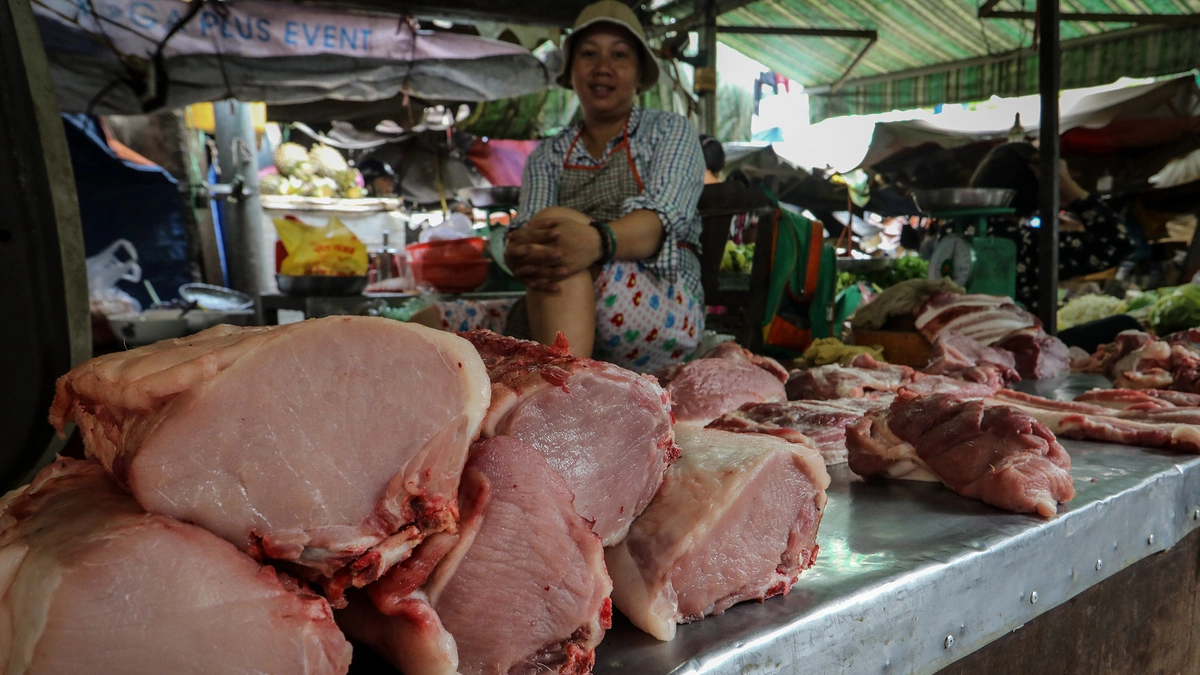
Vietnam's Live Hog Prices Plummet, Retail Costs Remain High, Consumers See No Benefit
Live hog prices in Vietnam have fallen 13-14% from their peak this year, yet retail prices in many traditional markets in Ho Chi Minh City remain largely unchanged, leaving consumers without benefits. Producers are forced to sell early due to rising costs and risk aversion.
Live hog prices across Vietnam have decreased by VND1,000-2,000 per kilogram, reaching VND60,000-66,000 per kilogram. The southern region sees the lowest prices, with Dong Thap and Ca Mau at VND60,000 per kilogram. At the Hoc Mon wholesale meat market in Ho Chi Minh City, top-grade hogs are priced at VND64,000 per kilogram, and second-grade at VND59,000, a 13-14% drop from the early-year peak of VND72,000-74,000 per kilogram. Consequently, wholesale prices for pork cuts have also fallen by VND10,000-20,000 per kilogram, with premium cuts at VND75,000 and second-grade at VND70,000. Factors contributing to the price drop include reduced pork consumption due to hot weather, stable supply, and many farmers opting for early sales to mitigate risks associated with potential diseases. Increased inspections by authorities on livestock conditions and food safety have also prompted some farms to sell their herds early, leading to a short-term supply increase. However, production costs, such as feed prices, have risen, pushing many farmers into losses at the current prices. In addition to domestic supply, pork imports have surged. According to the Ministry of Agriculture and Rural Development, livestock imports reached $2.2 billion in the first five months, a nearly 30% increase year-on-year. Edible meat and offal imports alone exceeded $910 million, up 26%. With domestic pork prices being 30-40% higher than in many regional markets, imported supplies are exerting further competitive pressure. Despite the plummeting live hog prices, consumers are not yet seeing cheaper pork at retail. In traditional markets across Ho Chi Minh City, retail prices remain largely unchanged from the peak of live hog prices earlier in the year. Pork belly is sold for VND150,000-170,000 per kilogram, and shoulder cuts for VND140,000-150,000. Retailers explain that they cannot immediately lower prices because wholesale prices from slaughterhouses have not decreased proportionally, and input costs remain volatile. Industry insiders note that it takes 4-6 distribution stages for a pig to reach the consumer, involving intermediaries like traders, slaughterhouses, wholesale markets, and retailers. Each stage incurs costs and profits, delaying the pass-through of wholesale price reductions to the end consumer. These intermediate costs and profits are estimated to account for 30-40% of the retail price. Therefore, a lag of about 7-10 days is expected for retail prices to adjust to wholesale price trends, provided the downward trend is sustained. This situation has persisted for years, with consumers needing to wait for sustained low wholesale prices to benefit. As the market enters July, a period typically marked by lower pork consumption, live hog prices may face further downward pressure. However, predicting the extent of the decline remains challenging.
多角的分析
ベトナムの豚肉市場における価格の乖離は、単なる需給バランスの問題にとどまらず、流通構造の非効率性とコスト構造の硬直性を示唆している。飼料価格の高騰という生産コストの上昇は、農家の収益性を圧迫し、早期出荷を促すことで一時的な供給過剰を生んでいる。一方で、食肉処理場から小売に至るまでの多段階の流通プロセスは、各段階でのコストと利益乗せにより、卸売価格の低下が小売価格に迅速に反映されることを阻害している。これは、ベトナム経済全体におけるサプライチェーンのボトルネックと、価格伝達メカニズムの不透明性を示しており、インフレ抑制や消費者物価の安定化に向けた構造的な課題を浮き彫りにしている。
豚肉市場の現状は、投資家にとって直接的な収益機会よりも、ベトナムの食品流通・小売セクターにおける構造的リスクを理解する上で重要である。生きた豚の価格が下落しても小売価格に転嫁されない事実は、流通マージンが高い、あるいは価格決定力が一部の仲介業者に集中している可能性を示唆する。これは、食品加工・小売企業への投資において、原材料コストの変動リスクだけでなく、サプライチェーン全体の効率性や価格交渉力を評価する必要があることを意味する。また、輸入豚肉の増加は、国内生産者への競争圧力となると同時に、輸入業者やそれを扱う小売業者にとっては新たなビジネスチャンスとなりうるが、為替リスクや国際的な需給動向も注視する必要がある。
生きた豚の価格が大幅に下落しているにもかかわらず、ホーチミン市内の消費者が依然として高い小売価格で豚肉を購入している状況は、多くの家庭の家計に直接的な影響を与えている。特に、豚肉はベトナムの食卓に欠かせない主要なタンパク源であり、その価格の高止まりは、低所得者層にとって食費の負担増につながる。市場の小売業者が価格調整に慎重な姿勢を示す背景には、中間流通業者との力関係や、価格変動リスクを回避したいという思惑があると考えられる。この価格の乖離は、消費者と生産者の間の情報格差や、流通における透明性の欠如といった社会的な問題も示唆している。
ベトナムの市民、特にホーチミン市のような都市部の消費者は、豚の卸売価格が大幅に下がっても、スーパーマーケットや市場で豚肉が安くなった実感を持てずにいる。これは、日々の食費に占める豚肉の割合が大きい家庭にとって、家計の圧迫要因となっている。多くの市民は、価格が下がったというニュースを聞いても、それが自分たちの財布に反映されないことに不満を感じており、流通経路における不透明さや、中間業者による利益の独占ではないかと疑念を抱いている。特に、物価上昇が続く中で、食料品価格の安定は市民生活の安定に直結するため、この状況は大きな関心事となっている。
背景・歴史的文脈
ベトナムにおける豚肉価格の変動は、過去にも繰り返されてきた構造的な問題である。2019年にはアフリカ豚熱(ASF)の流行により、豚の飼育頭数が激減し、価格が記録的な高騰を記録した。その後、政府によるASF対策と生産回復支援策により、一時的に価格は安定したが、生産コストの上昇や、今回のような気候要因、病気リスクによる早期出荷が価格変動の要因となっている。また、ベトナムの農業セクターは、依然として多くの小規模農家によって支えられており、近代的な生産・流通システムの導入が遅れていることが、価格伝達の非効率性につながっている。一党体制下では、市場原理だけでなく、社会安定や農家保護といった政策的配慮が価格形成に影響を与えることがある。
原文ソース
VnExpress