India Strengthens Ties with Taliban Regime Amid Pakistan Tensions
Politics
2026年7月15日
7
The Diplomat Indonesia

India Strengthens Ties with Taliban Regime Amid Pakistan Tensions

AI サマリー

India is rapidly deepening its diplomatic and economic ties with the Taliban regime, set against rising tensions between Afghanistan and Pakistan. Ministerial exchanges and the reactivation of air freight corridors mark substantive relationship building.

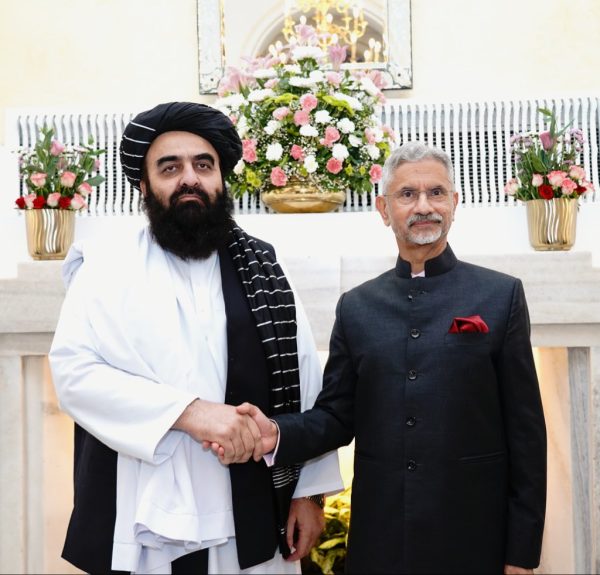
India's diplomatic outreach to the Taliban has increased tremendously over the last year, following the United Arab Emirates’ facilitation of a meeting in Dubai between Indian External Affairs Secretary Vikram Misri and Taliban Foreign Ministry Amir Khan Muttaqi on January 8, 2025. That meeting marked a major diplomatic milestone, as the relationship between New Delhi and Taliban-controlled Kabul began to take a positive turn. Prior to the January 2025 meeting, Indian Ministry of External Affairs Joint Secretary J. P. Singh was the senior-most Indian official to have publicly met with Taliban officials, meeting with Muttaqi and Defense Minister Mohammad Yaqoob in November 2024. Engagement has picked up since, to include telephone diplomacy. The first high-level ministerial call took place last year on May 15 between Indian Minister of External Affairs S. Jaishankar and Muttaqi a few days after the four-day war between India and Pakistan. But engagement has gone beyond phone calls. During the last nine months, four Taliban ministers have visited India. This timeline of growing relations between the Taliban and India coincides with the ongoing conflict between Pakistan and Afghanistan. In October 2025, Muttaqi traveled to India for a six-day visit. It marked the first visit by a senior Taliban minister to India. For Muttaqi’s visit to New Delhi, a U.N. committee temporarily lifted a travel ban on Muttaqi. After his visit, India handed over the Afghan embassy in New Delhi to the Taliban and sent a chargé d’affaires to its former mission in Kabul. Then the Taliban’s senior foreign ministry official, Mufti Noor Ahmad Noor, arrived in New Delhi in January 2026 to assume responsibility as the chargé d’affaires of the Afghan embassy. India’s move came a few months after Pakistan upgraded its diplomatic ties with the Taliban. After Muttaqi, the Taliban Minister of Industry and Commerce Noorudin Azizi, along with a trade delegation, visited India from November 19-25. According to the Indian Ministry of External Affairs, during his visit, Azizi also met Jaishankar. The two sides discussed connectivity, people-to-people exchanges, and bilateral relations. He also held delegation-level talks with Indian Commerce and Industry Minister Piyush Goyal and Minister of State for Commerce and Industry Jitin Prasada. Along with discussing market access, capacity building, connectivity, and trade facilitation, the re-initiation of the air freight corridors on the Kabul-Amritsur and the Kabul-Delhi sectors was also announced. These air freight corridors were officially launched in 2017 but were disrupted in 2020. In December 2025, New Delhi reactivated the Kabul-Amritsar and Kabul-Delhi air freight corridors, which restored a critical trade route between the two countries. Since there is no direct land route for trade between India and Afghanistan, any any such corridor would need to pass through Pakistan, the air freight corridor is critical for India-Afghanistan trade. Trade volume between India and Afghanistan surpassed $1.5 billion during the last fiscal year. The volume could grow as Pakistan’s trade with Afghanistan collapses. During fiscal year 2024-2025, bilateral commerce between Pakistan and Afghanistan grew by 25 percent, reaching nearly $2 billion. Due to ongoing military tensions, which resulted in a border closure, the volume has already fallen to around $1 billion. Amid the decreasing trade between Pakistan and Afghanistan, India seems poised to capitalize on the opportunity to strengthen its economic ties with Afghanistan. Other than Azizi, the Taliban Minister of Public Health Noor Jalal Jalili visited India between December 16 and 21. During his visit, he held a bilateral meeting with Indian Minister of Health and Family Welfare J. P. Nadda. India reaffirmed its commitment to humanitarian assistance and cooperation on healthcare with a particular focus on the long-term supply of medicines. Jalili’s visit came after Mullah Abdul Ghani Baradar, the Taliban’s deputy prime minister for economic affairs and head of the Economic Commission, announced the complete ban on medicines imported from Pakistan. Medicine prices have risen sharply in Afghanistan, leaving some essentials entirely unavailable within a few months of the ban and the closure of Chaman and Torkham border crossings due to the ongoing conflict. Amid this, India has expanded its supply of pharmaceutical goods and medicines to Afghanistan. Taliban Minister of Agriculture, Irrigation and Livestock Mawlawi Ataullah Omari, along with a high-level delegation, visited India between July 7 and 12, marking the fourth ministerial-level visit from Afghanistan to India during the last nine months. This tempo, according to the Indian Ministry of External Affairs, is “reflecting the continued momentum in bilateral engagement.” During his visit, Omari held meetings with Indian Minister of Agriculture and Farmers’ Welfare Shivraj Singh Chouhan and Minister of State for External Affairs and Textiles Pabitra Margherita. These meetings focused on expanding cooperation in trade, livestock, and agriculture. For decades, Pakistan maintained a policy of “strategic depth” in Afghanistan, focused on cultivating a friendly government in Kabul in order to secure its western border. However, since the Taliban’s return to power, Pakistan’s policy seems to have backfired, as the Taliban regime tries to assert its independence. The Taliban refuse to recognize the Durand Line as a permanent international border and reject any notion of Pakistani interference in their internal affairs.

多角的分析

経済的影響

インドとタリバン政権下の أفガニスタン(アフガニスタン)との貿易拡大は、パキスタンとの関係悪化による أفガニスタン(アフガニスタン)の貿易ルートの制約をインドが巧みに利用していることを示唆している。特に、航空貨物回廊の再開は、直接的な陸路が困難な両国間での物流を確保する上で重要であり、インドにとっては أفガニスタン(アフガニスタン)市場へのアクセスを強化する絶好の機会となる。これは、インドが南アジアにおける経済的影響力を拡大しようとする戦略の一環とも考えられる。

投資家心理

インドとタリバン政権との関係強化は、投資家にとって أفガニスタン(アフガニスタン)市場への新たな機会をもたらす可能性がある。特に、インフラ、農業、ヘルスケア分野への投資が期待される。しかし、タリバン政権の統治の安定性や国際的な承認の欠如といったリスクも依然として存在するため、投資家は慎重なアプローチを取る必要があるだろう。パキスタンとの緊張緩和が、 أفガニスタン(アフガニスタン)の経済安定化と投資環境の改善に不可欠となる。

社会的影響

インドとタリバン政権との関係強化は、 أفガニスタン(アフガニスタン)国民、特に医薬品や物資の不足に直面している人々にとっては、生活必需品の供給改善という形で直接的な恩恵をもたらす可能性がある。しかし、タリバン政権の統治下における人権状況や女性の権利に関する懸念は依然として根強く、インドがこれらの問題にどのように対応していくかが、国際社会からの注目を集めるだろう。また、インド国内においても、過去の対立を踏まえ、タリバン政権との関係強化に対する様々な意見が存在する可能性がある。

市民の声

أفガニスタン(アフガニスタン)市民にとって、インドからの医薬品や物資の供給拡大は、パキスタンとの国境閉鎖や輸入制限による生活必需品の不足という喫緊の課題に対する希望の光となる。特に、地方都市や紛争地域に住む人々は、物価の高騰や入手困難な状況に苦しんでおり、インドからの安定した供給ルートの確保は生活の安定に直結する。しかし、タリバン政権の統治下での生活の質や自由度については、依然として不透明感が残る。

背景・歴史的文脈

インドと أفガニスタン(アフガニスタン)の関係強化は、パキスタンとの長年にわたる戦略的競争と、 أفガニスタン(アフガニスタン)におけるタリバン政権の台頭という二つの大きな要因が絡み合って進展している。インドは、パキスタンが أفガニスタン(アフガニスタン)に影響力を持つことを長らく警戒しており、タリバン政権との関係構築を通じて、パキスタンの影響力を相対的に低下させ、自国の戦略的利益を確保しようとしている。2001年のアメリカ同時多発テロ以降、インドは أفガニスタン(アフガニスタン)に多額の援助を行い、インフラ開発や民主化支援に貢献してきたが、タリバン政権の復権により、その関係性は新たな局面を迎えている。特に、パキスタン・タリバン(TTP)の問題を巡る أفガニスタン(アフガニスタン)とパキスタンの対立激化は、インドにとって أفガニスタン(アフガニスタン)との関係を深める絶好の機会となっている。

原文ソース

The Diplomat Indonesia

原文を読む