General articles are free for 24 hours after publish.
Noise Pollution Drives Siamangs Away from Sumatra's Forests: Study
A study in Sumatra reveals that human-generated noise significantly impacts siamang (Symphalangus syndactylus) behavior. Traffic and jackhammer sounds, in particular, cause these primates to travel longer distances and move further away from noise sources.
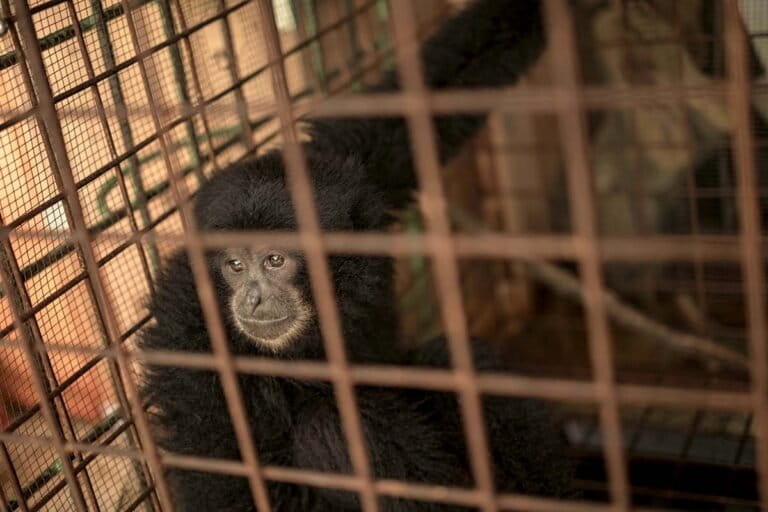
While the lush rainforests of Sumatra, Indonesia, might seem like a sanctuary for wildlife, a recent study suggests that the environment is being compromised for primates like the siamang (Symphalangus syndactylus) due to noise pollution generated by human activities. Siamangs, the largest members of the gibbon family (Hylobatidae), inhabit the forest canopy from lowlands to mountainous regions of Sumatra. However, research published in the journal Ethology in June 2025 by D’Agostino and colleagues indicates that human-generated noise, such as traffic sounds, jackhammers, and loud music, forces these primates to travel longer distances. Researchers observed seven siamang groups across four locations in North Sumatra: Sikundur, Ketambe, Kutapanjang, and Soraya. They conducted playback experiments, exposing the siamangs to four types of sounds: a jackhammer, vehicle traffic, rock music, and as a control, the natural sound of cicadas. Each sound was played for approximately three minutes at a volume close to 90 decibels. The findings revealed that after being exposed to anthropogenic sounds, siamang groups tended to increase their travel distance and move away from the sound source. The most pronounced responses were observed after exposure to traffic noise and jackhammer sounds. In one measurement, siamangs moved an average of approximately 103.86 meters away from traffic noise, compared to about 51.14 meters after hearing the control sound. This study highlights how the acoustic environment, not just the physical space, profoundly affects wildlife behavior. The need for siamangs to travel further to avoid noise could lead to increased energy expenditure and difficulties in finding food or suitable habitats, raising concerns about the long-term impact on their populations. Source: Mongabay Indonesia
Original source
Mongabay Indonesia