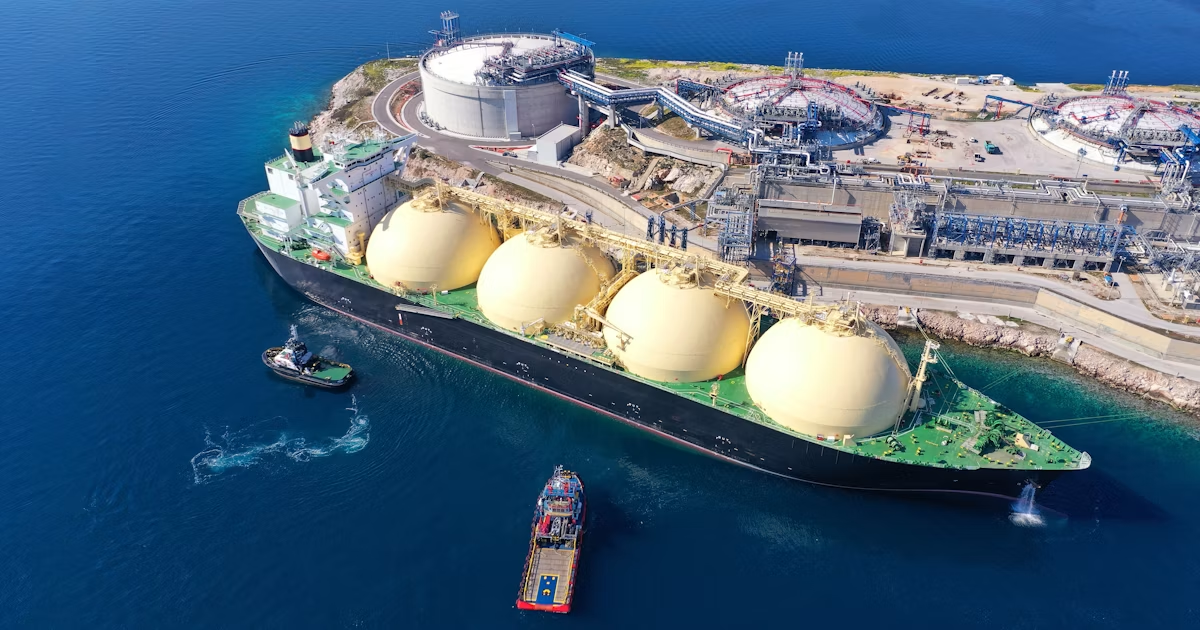
Gas Shortages and High Prices Derail Southeast Asia’s Energy Plans
Infrastructure
2026年8月7日
5
Chiang Rai Times

General articles are free for 24 hours after publish.

Gas Shortages and High Prices Derail Southeast Asia’s Energy Plans

Share
AI Summary

Southeast Asia faces a stark reality as soaring gas prices and global equipment shortages derail ambitious plans for natural gas power expansion. Projections now show less than a third of the originally planned capacity coming online by 2030, forcing a rapid pivot towards energy source diversification.

Southeast Asia is grappling with a harsh reality check concerning its natural gas-powered electricity plans. Originally, the region had ambitious blueprints to fuel its booming economies with natural gas. However, soaring costs and global equipment shortages are forcing a significant pivot in direction. Government officials are now realizing that the old energy playbook is no longer viable. While natural gas will remain a crucial part of the region’s energy mix for years to come, policymakers are shifting their focus towards a much wider array of power sources. Six of the largest power markets in Southeast Asia—Indonesia, Malaysia, Vietnam, Singapore, Thailand, and the Philippines—share a common struggle. Together, their governments aimed to build approximately 53 gigawatts of new gas-fired power capacity by 2030. These projects were intended to be the backbone of their rapidly developing economies. However, recent industry forecasts suggest that only about 14.9 gigawatts will be operational by the end of the decade. This is less than a third of the initially promised capacity, highlighting the vast difference between policy formulation and execution. The core problem lies in the immense difficulty of executing these massive energy projects. A major obstacle is the severe global shortage of essential equipment, particularly gas turbines, which are the heart of modern power plants. Factories are struggling to meet global demand, stretching supply chains thin worldwide. Developers in Southeast Asia have only secured turbines for about 11 gigawatts of planned projects. The remaining projects face long wait times, with some stretching beyond five years for highly specialized machinery. This means a plant planned today might not receive its core components until 2031, potentially stalling billion-dollar projects indefinitely. Beyond equipment, the fuel itself has become a significant headache. The cost of liquefied natural gas (LNG) has been highly unpredictable. Global conflicts and supply chain disruptions have sent natural gas prices on a volatile rollercoaster, posing a serious economic threat to developing nations and making long-term budgeting nearly impossible. Furthermore, securing funding for these massive plants is becoming increasingly challenging. Many global banks and lenders are stepping back from financing fossil fuel projects, redirecting capital towards green energy. This leaves gas projects struggling to find investors. Infrastructure limitations also contribute to project delays. Many Southeast Asian countries lack adequate ports for efficient LNG import and the necessary pipeline networks to transport gas to power plants. Upgrading these complex systems is a slow and costly process. Energy security has re-emerged as a top political priority. Countries are recognizing the high risks associated with complete reliance on imported fuels and are urgently seeking ways to enhance self-sufficiency. While specific project delays for Thailand were not detailed in the original report, the country is undoubtedly affected by these regional trends. Diversifying energy sources and strengthening domestic infrastructure will be critical for Thailand's future energy strategy. Information Source: Chiang Rai Times

0

Original source

Chiang Rai Times

原文を読む