General articles are free for 24 hours after publish.
Quang Ngai Prioritizes Substantive Quality in Education
Quang Ngai Province's Party Committee has outlined a policy to prioritize students' comprehensive development and 'substantive quality' in education, moving away from an achievement-oriented approach. Teacher shortages, regional disparities, and digital transformation were identified as key challenges.
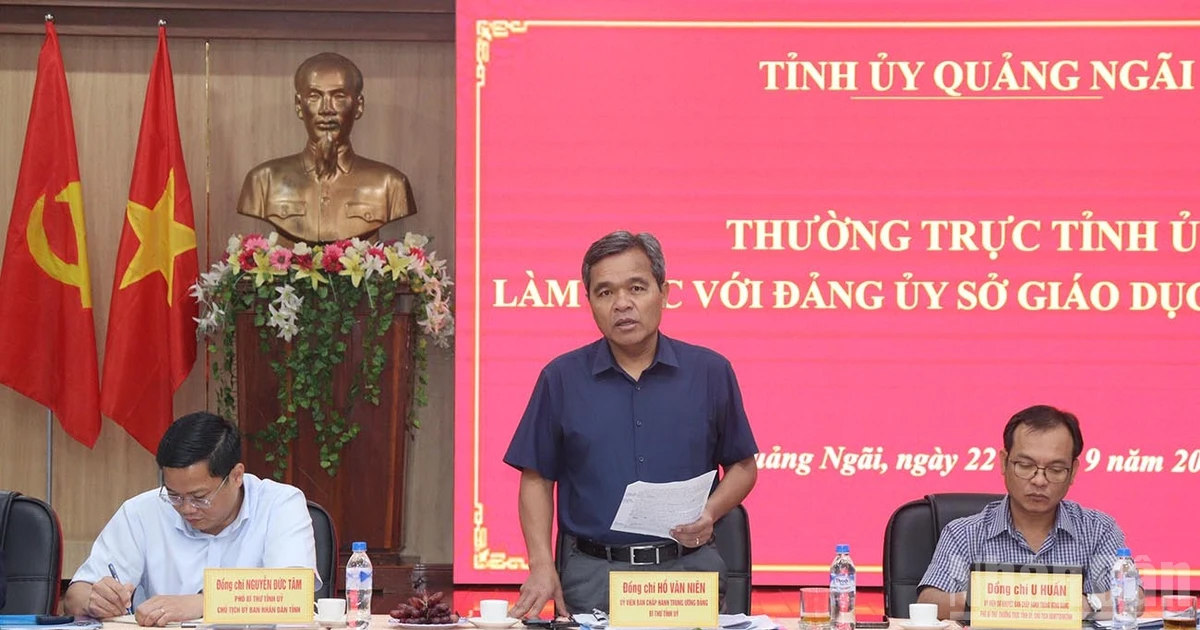
Quang Ngai Province in central Vietnam is prioritizing 'substantive quality' in education over mere achievements, as outlined by the Provincial Party Committee. Secretary Ho Van Nien emphasized the need for comprehensive student development, urging a move away from an exclusive focus on performance metrics. The provincial Department of Education and Training reported initial positive changes following the implementation of a resolution aimed at educational breakthroughs. These include stabilizing the education system post-provincial merger, streamlining school networks, and shifting from traditional educational management to a development-oriented approach. However, challenges persist. These include the slow pace of reform in some educational institutions, significant disparities in educational conditions and quality between advantageous regions and mountainous or ethnic minority areas, a shortage of teachers in certain subjects, and inadequate digital infrastructure and teaching equipment in remote locations. To address these issues, the Department of Education and Training requested support from the Provincial Party Committee regarding educational development strategies, school network investment, teacher and administrator training, school management post-reorganization, education in ethnic minority and border areas, and the allocation of resources and organizational structure. For the 2026-2027 academic year, themed 'Innovation of Thinking - Strong Transformation - Substantive Results,' the province aims to further reform teaching methods, accelerate digital transformation, and leverage information technology to enhance overall educational quality. Secretary Nien acknowledged the efforts made in adapting to new operational models and maintaining educational activities despite geographical challenges and regional disparities. Key tasks for the future include strengthening Party unity and leadership, cultivating politically steadfast and professionally competent educators, and rigorously implementing central and provincial educational policies. He stressed the importance of clear responsibilities ('six clearnesses': clear person, task, time, responsibility, product, authority) and diligent oversight. Furthermore, Nien highlighted the need to innovate teaching and assessment methods to foster students' qualities, abilities, proactivity, and creativity. He also called for improved general and specialized education quality, ensuring that the focus remains on substantive outcomes rather than superficial achievements. Efforts to reorganize public school networks in line with administrative reforms, with particular attention to mountainous, ethnic minority, border, and island areas, were emphasized. The province must ensure that school consolidation does not negatively impact students' learning rights or widen educational gaps. Addressing teacher and administrator shortages, especially in difficult regions, through accurate needs assessment, recruitment, and deployment is crucial. Attracting and retaining teachers in challenging areas, developing school management capabilities, and providing continuous training in professional skills, foreign languages, digital technology, and AI were also identified as priorities. Special attention will be paid to education in border, mountainous, ethnic minority, and island regions. Existing boarding schools are expected to become centers of educational and community excellence. The timely and quality implementation of new boarding school projects in border areas was specifically requested, along with the effective management and utilization of completed facilities. Nien concluded by emphasizing education's broad impact on students, families, and the province's human resources. He urged the Department of Education and Training's Party Committee to demonstrate initiative, decisiveness, and close engagement with grassroots levels to achieve the province's development goals in the new era.
Original source
Nhan Dan