General articles are free for 24 hours after publish.
Bac Ninh Province Continues to Lead Vietnam in Exports
Bac Ninh Province in northern Vietnam maintained its position as the national leader in export value for the third quarter of 2026, underscoring its vital role in economic growth and international trade.
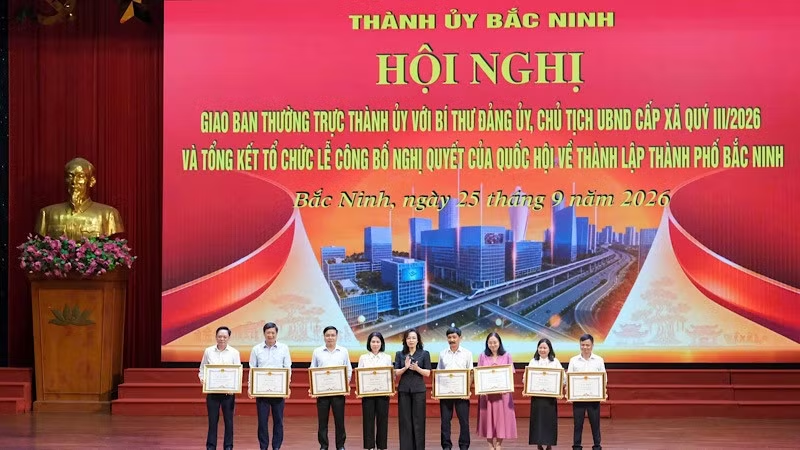
Bac Ninh Province in northern Vietnam has maintained its position as the national leader in export value for the third quarter of 2026, underscoring its continued contribution to economic growth and international trade. On the afternoon of September 25, the Provincial Party Committee held a quarterly meeting with secretaries of Party committees and chairpersons of communes and wards. The meeting also included a summary of the ceremony announcing the National Assembly's resolution on the establishment of Bac Ninh City. During this meeting, it was reconfirmed that Bac Ninh Province continues to lead the country in export value for the third quarter of 2026. This highlights the central role the province plays in Vietnam's economy, particularly in the export sector. Under Vietnam's one-party system, economic growth is a crucial pillar supporting the legitimacy of the state, and expanding exports contributes to achieving this goal through foreign exchange earnings and job creation. Bac Ninh's export leadership suggests the success of its economic strategies, including attracting foreign direct investment (FDI) and concentrating manufacturing industries. In recent years, Vietnam has been increasing its prominence in its economic relationship with China, as part of a broader trend towards supply chain diversification. Regions like Bac Ninh, with their concentration of industrial parks, are thought to be benefiting from these shifts in the global economic landscape. Discussions at the meeting also touched upon the need for import-export tax policies to keep pace with new economic models, challenges in achieving rice export targets, the goal of reaching $10 billion in fruit and vegetable exports, and efforts to enhance the value of agricultural and forestry product exports by controlling supply chains. These points indicate broader challenges and objectives within Vietnam's overall export strategy. Source: Nhan Dan
Original source
Nhan Dan