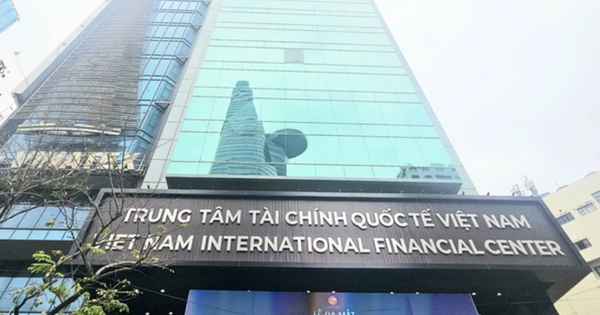
Vietnam Approves International Financial Center Development Plan Through 2035
Infrastructure
2026年7月25日
5
Bao Chinh Phu
Relations
🇻🇳Vietnam🌐United Nations / ASEAN

General articles are free for 24 hours after publish.

Vietnam Approves International Financial Center Development Plan Through 2035

Share
AI Summary

The Vietnamese government has approved a development plan for International Financial Centers (IFCs) based in Ho Chi Minh City and Da Nang through 2035. The plan aims to mobilize and efficiently utilize domestic and international financial resources, fostering economic growth and enhancing Vietnam's position in global financial networks.

The Vietnamese government has approved a development plan for International Financial Centers (IFCs) through 2035. This plan aims to develop the centers into key drivers for mobilizing, allocating, and efficiently utilizing domestic and international financial resources, thereby promoting rapid and sustainable economic growth while improving the quality and efficiency of the economy. It also seeks to gradually enhance Vietnam's position and role in the regional and global financial network. For the 2026–2030 period, the plan targets the comprehensive development of a special legal and institutional framework, governance, operational, and supervisory mechanisms for the IFC in line with international standards, ensuring transparency, safety, and efficiency. During this phase, priority financial products and services will be piloted and launched. Core financial, digital, social, and legal infrastructure supporting the center's operations will also be established and put into operation. The plan further aims to attract major international financial institutions, investment funds, banks, professional market participants, and high-quality financial talent, laying the foundation for the center's sustainable development and deeper international integration in subsequent phases. During the 2031–2035 period, the plan envisions expanding and enhancing a modern financial ecosystem encompassing capital markets, green finance, digital finance, and financial technology (fintech), while increasing the diversity, depth, and connectivity of the IFC. The center is expected to evolve into a major hub connecting international capital flows and establishing a prominent position within the Asia-Pacific and global financial networks. According to the plan, the IFC in Ho Chi Minh City will be developed into a comprehensive and diversified international financial hub, focusing on developing capital markets and providing both traditional and specialized financial services while maximizing synergies among capital raising, investment, payment, issuance, and trading of financial products. Asset management, fund management, green finance, and digital finance, as well as commodity markets and commodity derivatives linked to international trade and logistics, will also be key areas. Meanwhile, the IFC in Da Nang will be positioned as an innovation- and fintech-driven financial hub, focusing on digital assets, digital payments, and asset tokenization. It will also focus on establishing and operating specialized trading platforms and exchanges, financial services linked with innovation, startups, trade finance, supply chain finance, and sustainable finance, and regulatory sandbox mechanisms for testing financial technologies, products, services, and business models. The plan also calls for the development of competitive incentive mechanisms and policies, along with improved access to infrastructure supporting the IFC. Administrative procedures will be standardized and digitized to shorten processing times, improve the quality of public services, and create a more favorable business environment for investors and center participants. The government will develop integrated financial, digital, data, transport, and high-quality urban infrastructure to ensure seamless domestic and international connectivity and support the center's continuous, secure, and efficient operations. The plan also emphasizes the need for the development of a highly skilled workforce for the IFC. It also covers special visa, residency, and incentive policies to attract international experts in finance, technology, and legal services to work at the center.

0

Original source

Bao Chinh Phu

原文を読む