General articles are free for 24 hours after publish.
Rupiah Weakens Ahead of BI Meeting, Investors Adopt Wait-and-See Stance
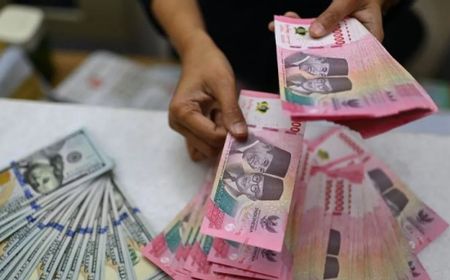
The Indonesian rupiah weakened against the US dollar in Jakarta trading on Tuesday, September 22. Investors have adopted a wait-and-see attitude ahead of the Bank Indonesia (BI) Board of Governors meeting scheduled for the following day, amid global interest rate pressures and persistently high oil prices.
The Indonesian rupiah experienced a weakening trend against the US dollar at the start of trading on Tuesday, September 22, opening down 32 points or 0.18 percent to IDR 17,879 per US dollar from the previous close of IDR 17,847. Market participants have largely adopted a wait-and-see attitude ahead of the Bank Indonesia (BI) Board of Governors meeting (RDG) scheduled for Wednesday, September 23. This cautious stance is identified as the primary driver behind the rupiah's depreciation. Rully Nova, an analyst at Bank Woori, stated, "The weakening of the rupiah is influenced by the domestic wait-and-see attitude of market participants regarding the BI RDG decision tomorrow. Although it is estimated that BI will hold the benchmark interest rate, some countries tend to have raised interest rates and concerns about widening the current account deficit." It is widely anticipated that BI will maintain its benchmark interest rate to sustain the momentum of economic growth. BI's comprehensive policy measures, including the Indonesian Bank Rupiah Securities (SRBI) auction, swap points, and interventions in the bond market, are considered effective in maintaining short-term rupiah stability. However, external pressures remain a significant concern. Global central banks, such as the US Federal Reserve, the Bank of Japan, and the European Central Bank, have each raised their benchmark interest rates by 25 basis points in September 2026. Furthermore, oil prices continue to hover at high levels, exceeding the State Revenue and Expenditure Budget (APBN) assumption of $70 per barrel. This situation poses a risk of pressuring the trade balance and widening the budget deficit. On Monday, September 21, oil prices saw a decline of over 2 percent, driven by hopes for the resumption of US-Iranian negotiations and the anticipated recovery of Saudi crude oil exports. Brent crude futures for November delivery fell to $101.68 a barrel, while West Texas Intermediate (WTI) for November delivery dropped to $93.85 a barrel. Considering these diverse sentiments, Rully estimates that the rupiah will trade within the range of IDR 17,800 to IDR 17,900 per US dollar.
Original source
VOI English