General articles are free for 24 hours after publish.
Mongolia's New Government Sets Ambitious Goals. But Are They Realistic?
Mongolia's new government has unveiled an ambitious state budget and policy agenda, including establishing a sovereign wealth fund, securing energy from China, and building data centers. However, political instability, inflation, and water resource challenges cast doubt on the feasibility of these goals.
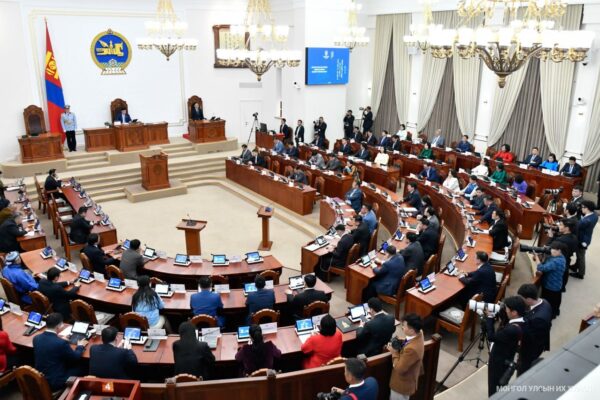
Mongolia's parliament, the State Great Khural, began its autumn session on September 15, with the incumbent government led by Prime Minister Uchral Nyam-Osor proposing one of the largest state budgets in the nation's history. The budget, totaling 41.3 trillion tugrik, includes ambitious goals such as establishing a sovereign wealth fund (SWF), securing energy from China, and building data centers. However, the realization of these goals faces significant hurdles. Mongolia has been grappling with political instability since the ousting of the previous administration in June 2025, and the current government took office only on March 31 of this year. Concerns are mounting among economists that the substantial budget deficit of 2.3 trillion tugrik, amidst an inflation rate of 12.5 percent, will only exacerbate the national debt and necessitate tax increases for businesses and individuals. The budget proposal has already undergone intense scrutiny in parliamentary committees, and a lack of quorum last week prevented a vote. The establishment of a sovereign wealth fund is another key issue. While laws for an SWF were passed under previous administrations, the current trajectory appears to be shifting away from a public welfare model towards a corporate governance structure focused on reforming state-owned enterprises and listing them on capital markets. Critics question whether this pivot will compromise the funding for essential welfare systems that support the elderly, disabled, poor, as well as public education and health – pillars of Mongolian society. Protests by educators and medical workers demanding pay raises in 2025 highlight the potential impact of these policy changes. Energy security is also a pressing concern. Mongolia relies on Russia for over 95 percent of its refined petroleum products, and supply disruptions have led to severe fuel shortages. Consequently, the government is pursuing increased petroleum imports from China and accelerating the construction of the Erdeneburen Hydropower Plant, financed by a Chinese soft loan. This project is currently 40 percent complete and is expected to provide reliable electricity to five provinces upon completion. Furthermore, the initiative to build data centers raises concerns about their energy and water demands. Mongolia's water scarcity is a noted issue, and the significant water consumption of data centers will pose questions of sustainability. Whether these ambitious objectives will translate into improved livelihoods for the Mongolian people or lead to fiscal deterioration and resource depletion remains to be seen, with close attention being paid to the government's future actions and public response. Source: The Diplomat Indonesia
Original source
The Diplomat Indonesia