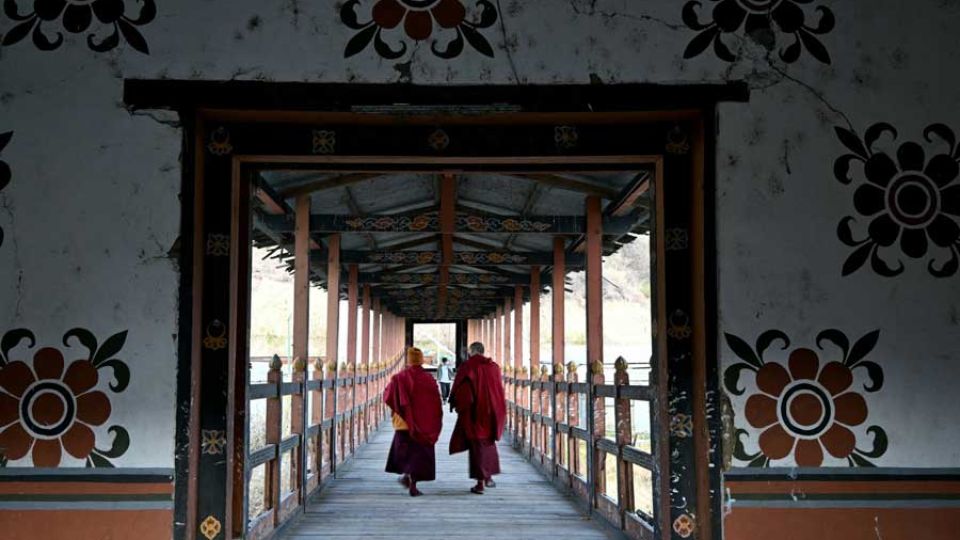
Rituals Take Biggest Share of Household Expenditure in Bhutan
Bhutanese households allocate an average of Nu 27,689 annually to religious and ceremonial activities, with poorer and rural families bearing a proportionally larger burden. Female-headed households also tend to spend more on rituals than male-headed ones.
THIMPHU – Bhutanese households spend an average of Nu 27,689 annually on routine religious and ceremonial activities, according to the Household Consumption and Expenditure Survey (HCES) 2025. A new analysis by the National Statistical Bureau (NSB) shows that the cost of maintaining these traditions is not shared equally. While wealthier households spend more in absolute terms, ritual expenditure accounts for a larger share of the budgets of poorer families. The average, however, masks a wide disparity among households. The median household spends Nu 12,000 annually, less than half the average, indicating that a smaller number of households with high ritual expenses significantly raise the national average. Meanwhile, nearly one-third of households (31.8 percent) reported no ritual spending during the survey period. The findings show that ritual expenditure is not a uniform household expense but varies significantly depending on economic status, location, household characteristics, and social factors. Poorer households carry a heavier burden In absolute terms, ritual spending increases with household wealth. Households in the poorest consumption quintile spend an average of Nu 13,539 annually, while those in the richest quintile spend Nu 45,130, more than three times as much. However, when measured as a share of household consumption, the pattern reverses. The poorest households spend 5.9 percent of their total consumption on rituals, compared with 3.5 percent among the richest households. A similar pattern is observed between rural and urban households. Rural households allocate about 6.4 percent of their consumption to rituals, compared with 2.5 percent among urban households. The report notes that ritual expenditure therefore rises with income in absolute terms but becomes a greater financial burden for households with fewer resources. Female-headed households spend more One of the strongest patterns identified in the study is the difference between male- and female-headed households. Female-headed households spend an average of Nu 32,341 annually on rituals, compared with Nu 24,879 among male-headed households. The difference remains significant even after accounting for factors such as household income, age, education, household size, location, and housing quality. The NSB’s analysis found that male-headed households spend approximately 43 percent less on rituals than female-headed households. The report suggests that household responsibilities and social circumstances may influence this pattern. Female household headship in Bhutan is often associated with circumstances such as widowhood, separation, or the migration of spouses, which may also shape household obligations and social expectations surrounding rituals. Age and education influence spending patterns Age emerged as another important factor affecting ritual expenditure. Households headed by people under the age of 35 spend an average of Nu 16,647 annually on rituals. This rises to Nu 27,860 among those aged 35 to 50, Nu 34,082 among those aged 51 to 65, and Nu 35,472 among household heads aged over 65. The study found that households headed by older individuals tend to spend significantly more on rituals than younger households. Education, meanwhile, showed the opposite trend. Compared with households headed by individuals without formal education, those with primary education spend about 29 percent less on rituals, while households with tertiary-educated heads spend about 54 percent less, after controlling for other factors. The findings indicate that educational attainment is associated with changes in ritual spending behaviour beyond differences in income alone. Western region records higher ritual spending The study also reveals a clear geographical pattern in ritual expenditure, with households in western Bhutan recording higher spending than those in many southern and south-eastern dzongkhags. Haa, Paro, Punakha, and Wangdue Phodrang are among the dzongkhags with higher ritual expenditure, while Chhukha, Samtse, Samdrup Jongkhar, and Tsirang are among those with lower spending. The NSB describes the trend as a “broad west-south gradient in ritual expenditure intensity”. For general ritual activities such as prayers, offerings, and ceremonial services, the difference between the highest- and lowest-spending dzongkhags was Nu 38,851. Health-related rituals, which include prayers and ceremonies performed during illness or misfortune, showed a similar but less pronounced pattern, with a difference of Nu 7,927 between the highest- and lowest-spending dzongkhags. Culture, wellbeing, and household pressure The study also found that larger households tend to spend more on rituals. Households with six or more members spend an average of Nu 38,998 annually, compared with Nu 23,540 among households with one to three members. Interestingly, housing quality, often considered a measure of long-term wealth, was associated with lower ritual expenditure after accounting for income and other factors. The NSB notes that this suggests ritual spending may be more closely linked to a household’s current consumption capacity than to accumulated assets. The findings present a complex picture of ritual expenditure in the country. Religious and cultural practices continue to play an important role in household life, but the financial implications vary widely across society. For many Bhutanese families, rituals are not occasional expenses but part of the rhythm of everyday life. From rimdo and lochoe to sang offerings, butter lamps, and prayers performed during illness or misfortune, religious practices remain deeply woven into household decisions. ANN/Kuensel
多角的分析
ブータンの家計支出における宗教儀礼への高額な支出は、経済発展と伝統文化維持との間の緊張関係を示唆している。特に貧困層や地方の家庭における支出割合の高さは、彼らの経済的脆弱性を浮き彫りにする。これは、所得向上と並行して、宗教的・文化的な義務を果たすための経済的負担が増大していることを意味し、持続可能な経済成長のためには、これらの伝統を維持しつつ、国民の経済的負担を軽減する政策が求められる可能性がある。
このニュースは直接的な投資機会には関連しないが、ブータンの社会経済的構造を理解する上で重要である。投資家は、国民の消費行動が文化や宗教的慣習に強く影響されることを認識する必要がある。特に、伝統や儀礼に関連する産業(例:宗教関連物品、儀式サービス)は、一定の需要が見込まれる一方で、国民の所得水準とのバランスが重要となる。また、宗教儀礼への支出が家計を圧迫する可能性があることは、可処分所得の変動リスクとして考慮すべき点である。
ブータン社会における宗教儀礼への支出は、単なる経済的負担にとどまらず、社会的な結束やアイデンティティの維持に深く関わっている。特に女性世帯主の家庭や高齢者世帯での支出の多さは、社会的な役割や責任、世代間の価値観の違いを反映していると考えられる。一方で、教育水準の上昇に伴う支出の減少は、価値観の多様化や、より合理的な消費行動へのシフトを示唆しており、今後の社会構造の変化を予測する上で注目すべき点である。
プノンペン市民の視点から見ると、ブータンの事例は、カンボジアでも同様に、宗教や伝統行事が家計に大きな影響を与える可能性があることを示唆している。特に、カンボジアでは仏教が国民の生活に深く根付いており、通過儀礼や祝祭日における支出は少なくない。ブータンのように、貧困層や地方の家庭ほど経済的負担が大きくなる傾向は、カンボジアでも共通して見られる課題であり、国民生活の安定化のためには、経済発展と伝統文化の調和が不可欠である。
背景・歴史的文脈
ブータンでは、国家の幸福度を重視する「国民総幸福量(GNH)」の概念が導入されており、経済成長のみならず、文化や伝統の維持、環境保護も重視されている。そのため、宗教儀礼や伝統的な儀式は、国民生活の重要な一部として位置づけられている。しかし、近年、経済発展に伴い、特に都市部や富裕層の間で消費文化が広がりつつある一方で、地方や貧困層にとっては、これらの儀礼への支出が経済的な負担となるケースが増加している。これは、伝統文化の継承と経済的現実との間で生じる構造的な課題と言える。
原文ソース
Phnom Penh Post