General articles are free for 24 hours after publish.
South Kalimantan Faces Water Scarcity Amid Drought and Forest Fires
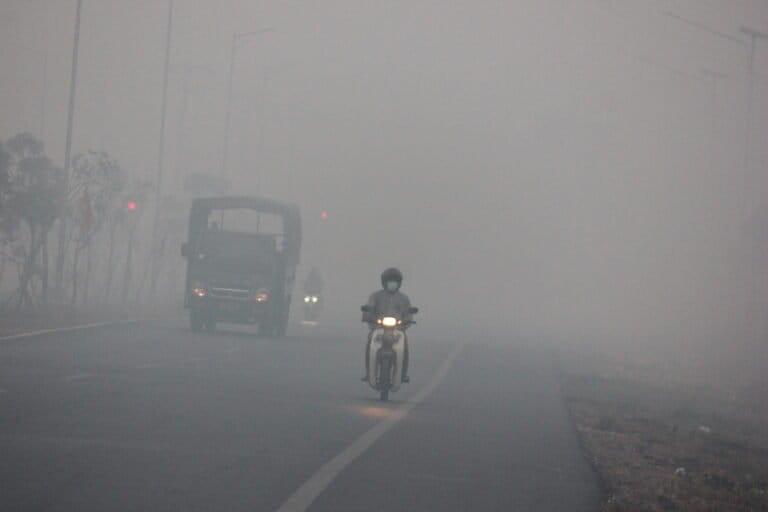
South Kalimantan is grappling with severe water scarcity due to prolonged drought and escalating forest fires throughout August. Residents are forced to share limited water resources between daily needs and firefighting efforts, leading to crop damage.
South Kalimantan, Indonesia, is experiencing a severe drought throughout August 2026. Amidst increasing forest and land fires, water resources are becoming increasingly scarce, forcing a division between the needs of residents and firefighting efforts. The impact is felt by residents like Bambang in Banjarbaru, whose 1.2-hectare farm was engulfed by fire on August 24. Approximately 50 rambutan trees, prepared as retirement provisions, were burnt to ashes. He had spent around Rp3 million to purchase a pump and hose, but the water in the canal near his farm had nearly dried up. Two water-bombing helicopters operating in the vicinity also failed to reach his land. "These plants were for my retirement provisions, but they are all burnt now," he lamented. The Meteorology, Climatology, and Geophysics Agency (BMKG) states that several areas in South Kalimantan have not received rain for over 60 days. In its early warning for meteorological drought for the period of August 21-31, Tanah Laut Regency is on 'Alert' status, while Banjarbaru City and nine other regencies are in the 'Watch' category. Balangan Regency falls into the 'Aware' category. The El Niño phenomenon is also exacerbating the hydrological situation and increasing the risk of land fires. Water scarcity is further hindering the handling of forest and land fires. The government is paying special attention to the Riam Kanan Dam, which has several strategic functions. Besides being a source of water for firefighting, the dam supports a hydropower plant with a capacity of around 30 megawatts, irrigation, fisheries, and water supply for the Regional Drinking Water Company (PDAM). Water extraction for fire handling is feared to add pressure to community needs. PT Air Minum Intan Banjar, the regional drinking water company, recorded significant changes in customer consumption after many residents' wells dried up. The number of customers increased from around 117,000 in July to 122,000 in mid-August. The average monthly consumption per customer also rose from 12 cubic meters to approximately 13-14 cubic meters.
Original source
Mongabay Indonesia