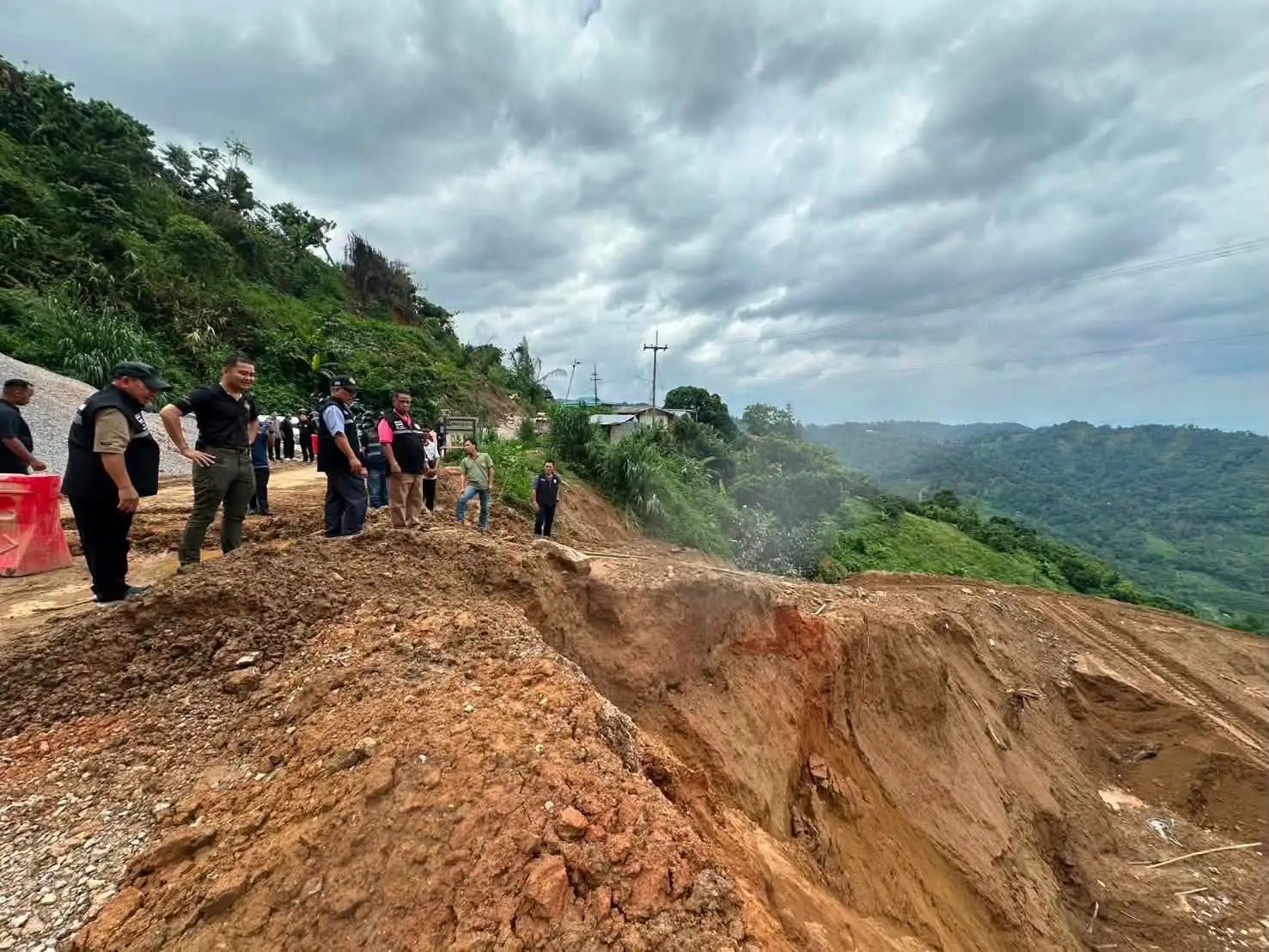
Major Road Collapse in Chiang Mai Cuts Off Mountain Route
A significant road collapse occurred on Doi Laem in Mae Ai District, Chiang Mai, severing a key mountain route. Authorities have closed the road and advised the use of a bypass, prioritizing safety in a region prone to natural disasters.
CHIANG MAI – A major road in northern Chiang Mai has completely collapsed, cutting off a vital mountain travel route. The sudden land cave-in happened on Doi Laem, located in the rural Mae Ai District of the province. Due to the serious structural damage, no regular vehicles can safely pass through the main public mountain road. This heavily damaged section of the highway normally connects Ban Doi Laem and the neighboring Ban Pang Ton Dua. Officials have firmly warned the general public that the main mountain path is strictly closed to all normal traffic. However, local drivers with small cars can still carefully navigate a temporary dirt bypass right through the village. Ban Doi Laem is officially classified by experts as a high-risk geographic zone for severe natural disasters. Heavy seasonal rains frequently trigger sudden flash floods and highly dangerous mudslides in this steep mountainous area. The remarkably steep mountain terrain makes the local soil highly unstable during periods of prolonged harsh weather. During the heavy rainy season, water naturally rushes down these steep mountain slopes at truly alarming speeds. When this heavy, fast-moving water flow meets the naturally weak topsoil, the unstable ground simply gives way. This highly dangerous combination creates life-threatening conditions for absolutely anyone living or driving in the mountainous region. Local environmental experts frequently monitor this specific region for sudden changes in soil moisture and hidden earth movement. Unfortunately, the highly unpredictable nature of heavy tropical storms makes it incredibly difficult to prevent sudden road collapses. The local provincial government continuously searches for long-term engineering solutions to safely stabilize the vulnerable mountain highways. Sadly, the rural Doi Laem community is certainly no stranger to deep heartbreak and severe natural destruction. Not too long ago, on September 10, 2024, a massive mudslide violently struck this same geographical area. According to major disaster reports from The Bangkok Post, the devastating weather event quickly claimed six local lives. That horrific natural disaster left deep emotional scars on the quiet, close-knit mountain community in northern Thailand. Emergency rescue teams worked tirelessly for several days to clear thick mud and carefully recover the missing victims. Local government authorities strongly advise all passing travelers to completely avoid the heavily damaged route if at all possible. If you must travel locally today, you must strictly follow the officially approved, smaller village bypass dirt routes. Drivers should always check live weather updates from the Thai Meteorological Department before planning any dangerous mountain trips. Professional road repair crews are currently assessing the deep surface damage, but safe structural rebuilding will undoubtedly take time. The deeply unstable surrounding soil means that heavy construction machinery must always operate with extreme daily caution. Until the damaged mountain road is fully secured, public community safety will rightfully remain the absolute top priority.
多角的分析
道路崩落による物流の寸断は、地域経済に直接的な打撃を与える。特に、農産物の輸送や観光客の移動が制限されることで、地域産業の停滞が懸念される。長期的な復旧には多額の費用と時間がかかるため、地域経済への影響は長期化する可能性がある。政府による迅速な支援策と、代替輸送ルートの確保が急務となる。
今回の道路崩落は、インフラの脆弱性を示す事例であり、投資家にとってはリスク要因となり得る。特に、タイ北部のような山岳地帯におけるインフラ投資や、それに関連する事業への投資には、自然災害リスクを考慮した慎重な判断が求められる。復旧工事に関連する建設セクターには一時的な投資機会が見込まれるものの、全体としては地域経済の不確実性が高まる。
ドイ・レム地域は、過去にも土砂崩れで6人の犠牲者を出した地域であり、住民は自然災害の脅威に常に晒されている。今回の道路崩落は、住民の生活基盤を脅かし、孤立感を深める可能性がある。緊急物資の供給や医療アクセスの確保が課題となる。また、観光客の減少は地域住民の生計にも影響を及ぼすため、コミュニティの精神的なケアと経済的支援が不可欠である。
この道路崩落は、バンプー・ドイ・レムとバンプー・パン・トン・ドゥアの住民の日常生活に直接的な影響を与えている。特に、通勤・通学、物資の輸送、医療機関へのアクセスなどが困難になる。村を迂回する未舗装路は、悪天候時にはさらに通行が困難になる可能性があり、住民の不安は大きい。長引く復旧作業により、地域住民の生活様式や経済活動への影響は避けられない。
背景・歴史的文脈
タイ北部の山岳地帯、特にチェンマイ県メーアイ地区は、急峻な地形と季節的な豪雨により、土砂崩れや鉄砲水といった自然災害のリスクが常に高い地域である。過去にも同様の災害が発生しており、2024年9月10日には、このドイ・レム地域で大規模な土砂崩れが発生し、6名の死者を出した。この出来事は、地域住民に深い悲しみと、自然災害の脅威に対する強い認識を植え付けた。今回の道路崩落は、こうした過去の災害の教訓にもかかわらず、依然としてインフラの脆弱性が残されていることを示している。地方政府は、長期的かつ持続可能なインフラ安定化策を模索し続けているが、気候変動による異常気象の増加や、地形の不安定さが、その取り組みを複雑化させている。
原文ソース
Chiang Rai Times