General articles are free for 24 hours after publish.
OVP confidential fund spending questioned in impeachment trial over lack of receipts, use of aliases
In the impeachment trial of Philippine Vice President Sara Duterte, a state auditor testified that no receipts were submitted for the liquidation of the P125 million confidential fund in 2022, and questioned the use of aliases for informant payments. The trial has entered a new phase.
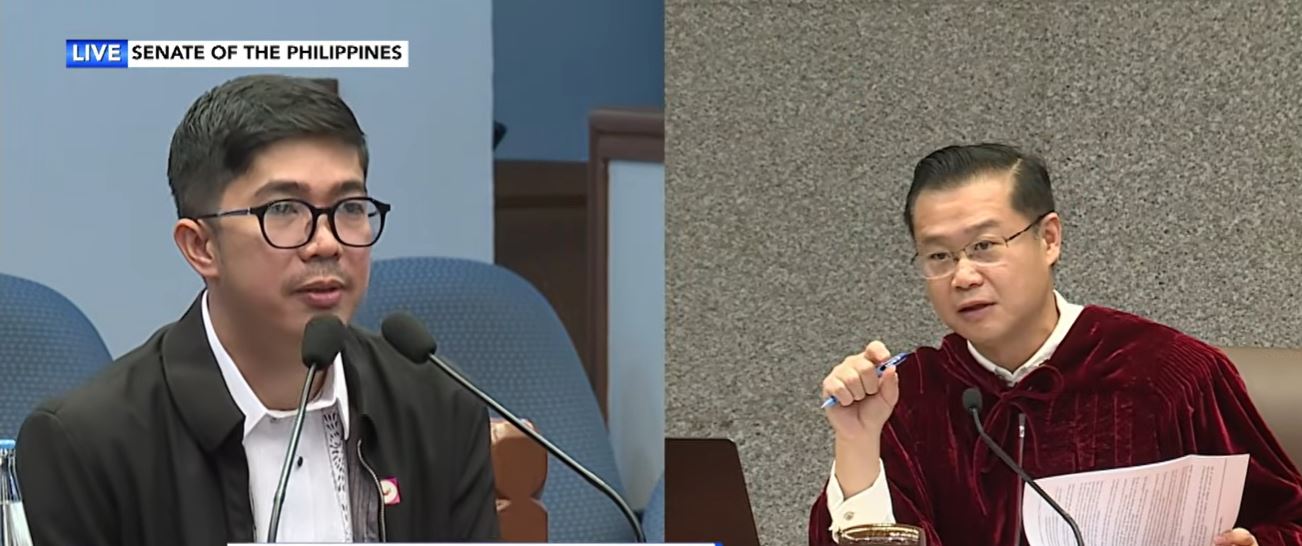
For the third straight trial day, state auditor and lawyer Roderick Wamil took the witness stand as a prosecution witness in the impeachment trial of Vice President Sara Duterte, this time to answer the queries of senator-judges. Prosecution Wamil opened his Wednesday testimony by revealing that the OVP did not submit a single receipt or sales invoice when it liquidated its P125 million confidential fund allocation in 2022. Likewise, Wamil maintained that the Notice of Disallowance issued by the Commission on Audit ordering the OVP to return P73 million since it failed to properly justify the disbursement of the said confidential fund allocation spent within 11 days of December 2022 is enforceable and final, unless the Supreme Court issues a Temporary Restraining Order to stop its implementation. Wamil made the position amid questioning from senator-judge Imee Marcos, a known ally of the Vice President. During the questioning of Senate President Sherwin Gatchalian, Wamil also testified that the certification issued by Colonel Raymund Lachica of the Vice Presidential Security and Protection Group does not make the OVP’s confidential fund disbursement compliant with Joint Circular 2015-01, which governs the use of such funds. Lachina’s certification did not show that OVP's confidential fund spending yielded meritorious information gathered by informants paid for such information, he said. Wamil, however, said that the use of codenames or aliases for recipients of confidential funds is neither allowed nor prohibited by the 2015-01 Joint Circular. Defense Defense counsel Kristine Ferrer refused to stipulate or agree that the acknowledgment receipts (ARs) submitted by the OVP for the liquidation of its P375 million worth of confidential funds it disbursed in 2023 as common evidence with the prosecution, arguing that they should be allowed to compare their copy of the ARs first with the prosecution’s copy of the same. Ferrer also opposed the prosecution’s motion for the Senate impeachment court to take judicial notice of certain House justice and good government and public accountability panel inquiries and hearings on the budget use of the OVP under Vice President Duterte, saying these proceedings, including the documents gathered from those proceedings, should be subjected to cross-examination by the defense team. Impeachment court Day 13 started with senator-judge Raffy Tulfo raising a possible conflict of interest on the part of defense counsel Michael Poa, given that Poa used to be a DepEd Undersecretary and spokesperson during Duterte’s tenure. This was the period when the DepEd met with COA officials in 2023 to issue an audit query rather than an audit observation memorandum on DepEd’s use of confidential funds. Presiding officer Francis "Chiz" Escudero ruled that there is no conflict of interest in Poa serving as legal counsel for the Vice President in the impeachment trial, despite his participation in the 2023 meeting. Escudero said Poa is not a respondent in the impeachment case. Senator-judge Risa Hontiveros questioned the health of the OVP’s informants, given that the office failed to submit documents showing the success of information gathering and/or surveillance activities to support the acknowledgment receipts for around P69 million of its confidential fund allocation in 2022 that were spent for payments of rewards in cash, various goods, and medicines to informants. The Senate impeachment court also granted three motions put forward by the prosecution, namely: The court said there is no reason to exclude Lascañas’s affidavit and the findings of the House inquiries into the budget use of the Vice President and her offices, since marking them as evidence for the prosecution does not yet amount to accepting them as evidence on the part of the Senate court. Escudero said the Senate court will only rule on the admissibility of each piece of evidence when both the prosecution and the defense have already made the formal offer of evidence. —With reports from Giselle Ombay and Sundy Locus/LDF, GMA News
Original source
GMA News Philippines