Can Tho City Faces Urgent Need for Transportation Infrastructure Development Post-Administrative Realignment
Infrastructure
2026年7月30日
5
Nhan Dan

General articles are free for 24 hours after publish.

Can Tho City Faces Urgent Need for Transportation Infrastructure Development Post-Administrative Realignment

Share
AI Summary

Following administrative realignments in Can Tho City, Vietnam, deteriorating transportation infrastructure is hindering economic development in newly expanded areas. Narrow rural roads and aging bridges are significantly increasing logistics costs and impeding local economic growth, necessitating urgent infrastructure upgrades.

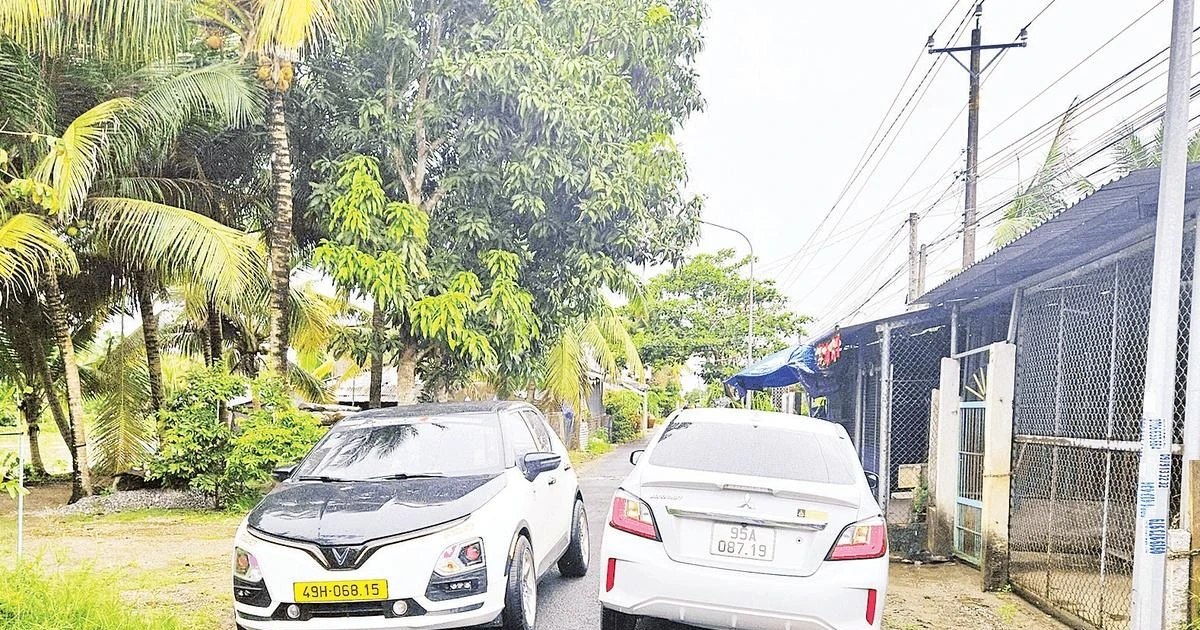
In Can Tho City, located in Vietnam's Mekong Delta, the development of transportation infrastructure has become an urgent priority for the newly integrated, wider areas following administrative realignments. In particular, the Vĩnh Tường commune in the western part of the city faces significant obstacles to logistics, production, and the exploitation of local potential due to its aging road network and vulnerable bridges. Vĩnh Tường commune, formed by the merger of the former Vĩnh Trung and Vĩnh Tường communes, spans over 6,700 hectares and is home to more than 31,000 residents. However, its transportation infrastructure has not kept pace with development demands. The commune is connected to National Highway 61 and 61C by only two main routes. Many rural roads have deteriorated over years of use, and most bridges are small, low-load capacity steel structures. Sections of roads leading to the commune center are cracked and muddy, with numerous potholes. Narrow bridges, barely wide enough for one car, experience severe shaking when vehicles pass. This inadequate infrastructure not only reduces connectivity but also increases logistics costs, directly impacting the competitiveness of agricultural products. Local residents and logistics providers have voiced concerns about the difficulties in transportation caused by narrow roads and bridges. Nguyễn Chí Thành, who frequently transports goods into the commune, described the travel as "very tiring" due to narrow roads and small bridges, making it difficult, especially when meeting oncoming traffic. He hopes for road expansions to facilitate smoother goods transport. Nguyễn Xuân Giàu, a delivery employee for Điện máy Xanh, stated that each delivery to the area takes a long time because of small bridges and narrow roads. Nguyễn Văn Thích, a resident of Vĩnh Tường, explained that the bridge over the market, a vital local route, is severely degraded and has load restrictions. His one-ton truck, which used to cross directly, now has to take a detour, increasing the distance from about 10 km to nearly 20 km. Each trip now takes an additional one to two hours, raising fuel costs and overall transportation expenses. Mr. Thích also pointed out that weak bridges and narrow roads not only affect the sale of agricultural products but also pose potential safety risks to students and residents. Addressing Infrastructure Bottlenecks in Remote Areas Nguyễn Hồng Quân, Secretary of the Vĩnh Tường Commune Party Committee, highlighted that the road from Vị Thủy commune to the commune center, a crucial artery, has been severely degraded over about 4 km. "Residents have complained extensively. This is the main road, but it's currently in a heavily degraded state. We sincerely hope for early upgrades to facilitate convenient travel for residents and ensure smooth vehicle access to the commune center," he said. According to Mr. Quân, in addition to the main artery, the bridge over Vĩnh Tường market and the Sông Ngang bridge are both small steel structures with load restriction signs. The market bridge, in particular, no longer allows cars due to severe shaking, forcing goods to be transferred by three-wheeled vehicles, significantly reducing the commercial capacity of the commune's central area. Nguyễn Tấn Nhơn, Deputy Director of the Can Tho Department of Agriculture and Rural Development, identified weak transportation infrastructure as the biggest bottleneck for economic development. Trucks cannot access production areas, transport costs for agricultural products are rising, and the development of commerce, services, and ecotourism is hindered. Without synchronized infrastructure investment, the region will struggle to achieve its growth targets and new rural development goals. Trần Lê Trung, Deputy Director of the Can Tho Department of Construction, noted that despite its location between National Highways 61 and 61C, Vĩnh Tường lacks a complete external connecting axis. The small-scale internal road system and low-load capacity bridges increase logistics costs, reduce attractiveness to investors, and limit the formation of concentrated production areas. In response to these new development demands, Vĩnh Tường commune has proposed investments in key projects, including roads such as Kênh Xáng Nàng Mau, Kênh 13.000, Kênh Gốc Mít, Kênh Tư Đỏ, and a bridge across Vĩnh Tường market, along with inter-regional connecting roads. Trương Cảnh Tuyên, Chairman of the Can Tho City People's Committee, has instructed local authorities to urgently review rural development plans, align them with strategic routes such as Provincial Road 925B and Provincial Road 927B. He has also tasked relevant departments with surveying and proposing solutions for repairing and reinforcing weak bridges, prioritizing urgent repairs to ensure traffic safety and meet the transportation needs of residents.

0

Original source

Nhan Dan

原文を読む