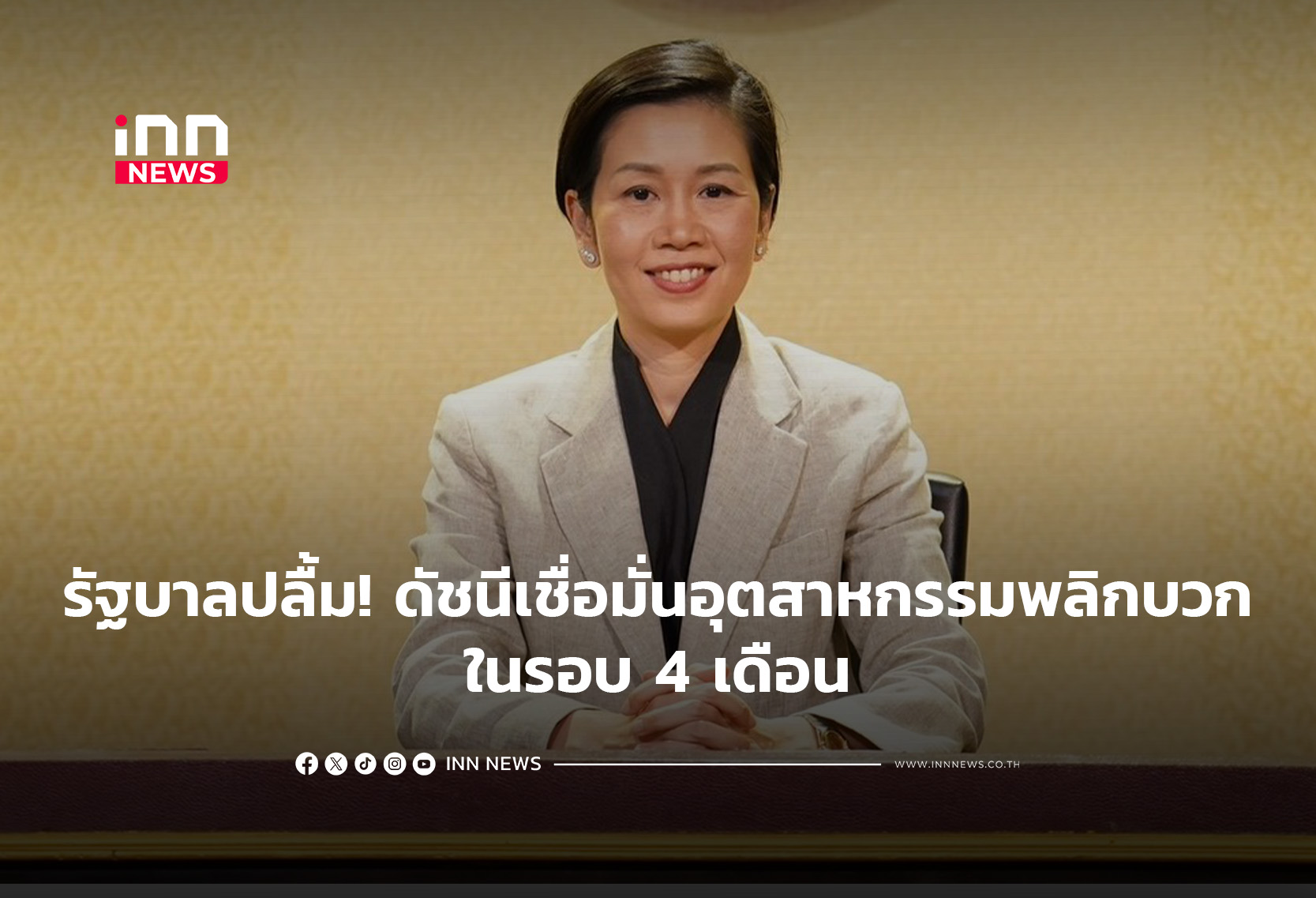
Thai Industrial Confidence Index Turns Positive After 4 Months, Boosting Government Economic Policy Hopes
Thailand's industrial confidence index rose to 88.2 in June, marking the first positive reading in four months. Government economic stimulus measures are credited with boosting consumer purchasing power and corporate investment. The Constitutional Court's approval of a 400 billion baht decree for energy crisis response and transition further bolsters optimism for economic recovery.
The industrial confidence index in Thailand has turned positive for the first time in four months, reaching 88.2 in June 2024, according to the latest survey by the Federation of Thai Industries (FTI). This upturn reflects growing confidence in the government's economic policies among the private sector. The improvement in industrial confidence is attributed to two key government initiatives. The 'Thai Chuan Thai Plus' (Thailand Helps Thailand Plus) measure aims to alleviate the cost of living, thereby boosting public purchasing power and stimulating economic circulation. This has supported sales of consumer goods, food, beverages, and SMEs, with cumulative spending reaching over 64.546 billion baht as of July 9. Another significant measure is 'Thailand Fastpass,' which expedites investment through the Board of Investment (BOI). This initiative has already facilitated 25 projects worth a total of 223 billion baht, with a target of achieving 1 trillion baht in actual investments within the year. The program also includes conditions for technology transfer and skills development for Thai workers through the 'Skill Bridge' project. "The positive shift in the confidence index is proof that the government's policies are not just rhetoric but are yielding tangible results by increasing purchasing power for citizens and aiding private sector investment decisions," stated Ms. Ratchada Thanadirek, Government Spokesperson. Furthermore, the Constitutional Court's unanimous decision on July 9 to uphold the legality of a royal decree authorizing the Ministry of Finance to borrow 400 billion baht for energy crisis mitigation and energy transition was another piece of good news. This funding will be used to sustainably reduce energy costs for households and businesses. Prime Minister Prayut Chan-o-cha emphasized that the use of these funds must strictly adhere to the decree's objectives. Projects include promoting rooftop solar installations for households, supporting electric vehicles (EVs) and charging stations, developing energy storage systems, and enhancing worker skills for the new energy industry. A dedicated committee will oversee project details, with the ultimate goal of reducing reliance on foreign fossil fuels, strengthening energy security, and stimulating the domestic clean energy supply chain. "The government will simultaneously address short-term livelihoods and long-term energy infrastructure development under a framework of strict and transparent fiscal discipline, ensuring Thai citizens and businesses can compete sustainably," Ms. Ratchada concluded. Source: INN News
多角的分析
製造業景況感指数の4ヶ月ぶりのプラス転換は、タイ経済の回復基調を示唆する重要な兆候である。政府が実施している「タイを助けるタイ・プラス」による消費刺激策は、国民の購買力を高め、特に生活必需品や中小企業セクターの売上を下支えしている。また、BOIを通じた投資手続きの迅速化は、外資および国内投資の呼び込みに成功しており、2230億バーツという具体的な投資実績は、経済成長への期待を高める。4000億バーツのエネルギー関連借入金の憲法適合性確認は、エネルギーコスト削減と持続可能なエネルギーへの移行を加速させるための財政的基盤を強化するものであり、インフレ抑制と産業競争力向上に寄与すると考えられる。
タイ製造業の景況感改善と政府の経済・エネルギー政策への期待は、投資家にとってポジティブなシグナルである。特に、4000億バーツ規模のエネルギー関連資金は、再生可能エネルギー分野、EV関連産業、およびそれらを支えるインフラ(充電ステーション、エネルギー貯蔵)への投資機会を創出する可能性がある。BOIによる投資手続きの迅速化と1兆バーツ目標は、直接投資(FDI)にとって魅力的な環境を提供し、タイを東南アジアにおける製造拠点としての地位をさらに強化するだろう。ただし、財政規律の維持と資金の透明性ある執行が、投資家からの信頼を維持する上で不可欠となる。
製造業景況感の改善は、雇用機会の増加や所得向上を通じて、タイ国民の生活実感に間接的ながらも好影響を与える可能性がある。特に「タイを助けるタイ・プラス」による消費刺激策は、低所得者層の購買力を支え、日々の生活必需品の購入を容易にすることで、直接的な恩恵をもたらす。また、エネルギーコストの削減は、家計の負担を軽減し、特に地方や低所得世帯の生活を支援する。さらに、エネルギー産業への投資は、新たなスキルを持つ労働者の需要を生み出し、教育・訓練機会の拡大につながる可能性がある。しかし、これらの政策が経済格差の是正にどこまで寄与するかは、今後の実施状況にかかっている。
製造業の景況感が回復に向かっていることは、多くのタイ国民にとって朗報と言えるだろう。「タイを助けるタイ・プラス」のような政策は、日々の生活費の負担を軽減し、食料品や日用品の購入を助けてくれる。また、エネルギー関連の支出が抑えられれば、家計に余裕が生まれ、他の支出に回すことができるようになる。さらに、企業への投資が活発になれば、新たな雇用が生まれ、特に若者にとっては将来への希望につながる。しかし、これらの恩恵が全国民に行き渡るかどうか、特に地方の住民や非正規雇用の人々にも恩恵が及ぶかが今後の注目点となるだろう。
背景・歴史的文脈
タイ経済は、COVID-19パンデミックからの回復途上にあったが、世界的なインフレ、エネルギー価格の高騰、および国内の政治的不確実性により、製造業は長らく低迷していた。特に2023年後半から2024年初頭にかけて、消費の低迷と輸出の伸び悩みから、製造業景況感指数はマイナス圏で推移していた。国民生活への影響は、物価上昇による購買力の低下や、中小企業の資金繰り悪化として現れていた。このような状況下、タイ政府は経済活性化策として「タイを助けるタイ・プラス」のような消費刺激策や、投資促進策を打ち出してきた。また、エネルギー価格高騰への対応と、長期的なエネルギー安全保障および環境問題への対応として、エネルギー移行を推進するための財政措置が急務となっていた。今回の景況感指数回復は、これらの政府の施策が一定の効果を上げ始めたことを示唆している。
原文ソース
INN News