General articles are free for 24 hours after publish.
Philippine Peso Hits New Record Low on Stronger Dollar
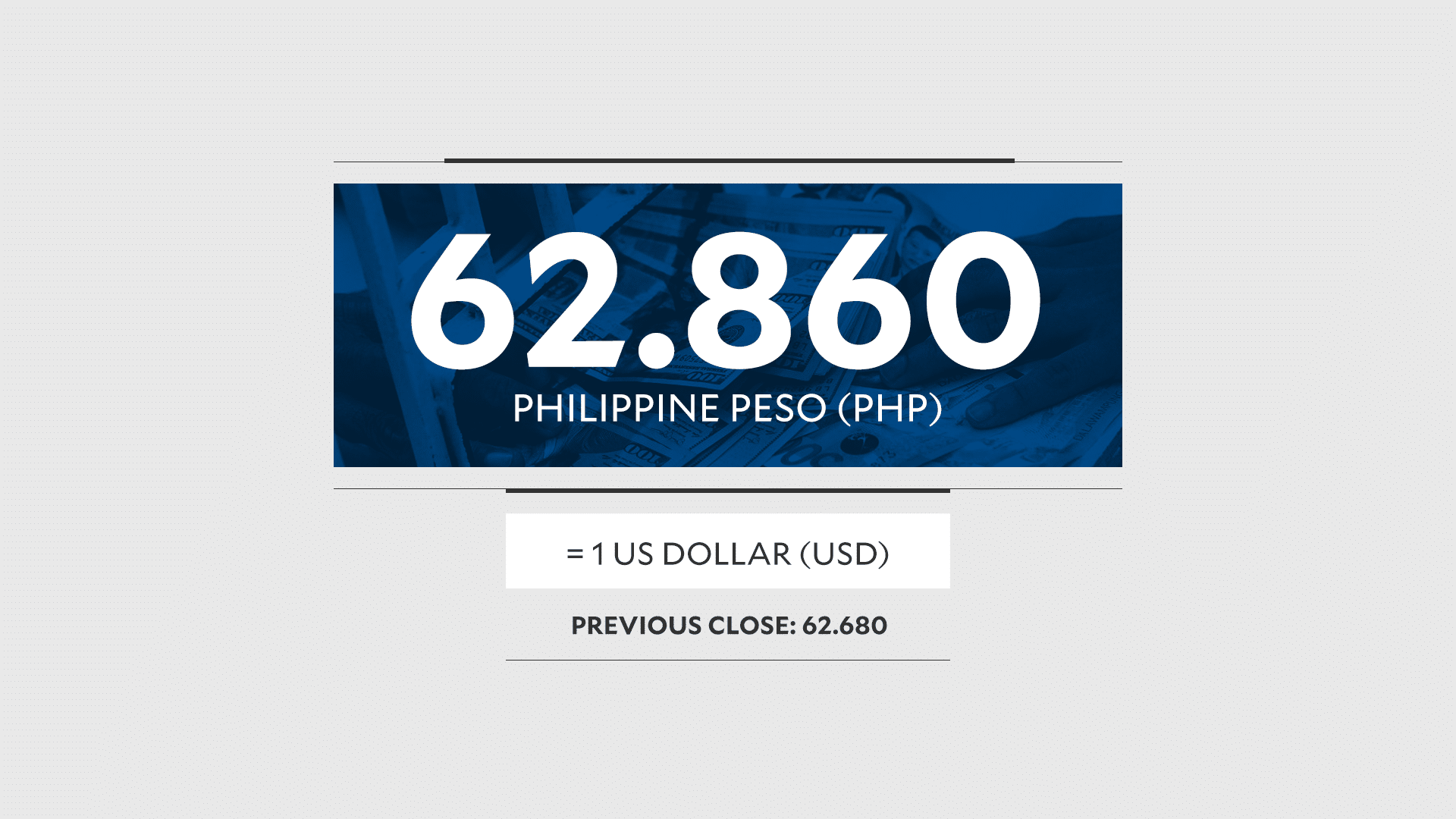
The Philippine peso extended its record-breaking slide on Monday, closing at 62.86 per dollar. Expectations of further interest rate hikes by major central banks bolstered the dollar, accelerating the peso's depreciation. This trend raises concerns about rising import costs and inflationary pressures on the Philippine economy.
MANILA, Philippines — The Philippine peso extended its record-breaking slide on Monday, closing at 62.86 per dollar. This surpassed the previous record-low close of 62.68 set on September 11. The currency touched an intraday low of 62.875 before paring some losses. The primary driver behind the peso's depreciation is the heightened expectation of further interest rate hikes by major central banks, including the U.S. Federal Reserve. As these economies raise their interest rates, the dollar strengthens, exerting selling pressure on emerging market currencies like the peso. The Bangko Sentral ng Pilipinas (BSP), the country's central bank, has been implementing intermittent rate hikes to combat inflation and stabilize the currency. However, with global interest rates continuing to rise, it has become challenging for the BSP's monetary policy alone to curb the peso's decline. The weakening peso could further exacerbate domestic inflation in the Philippines by increasing import costs. Price hikes for essential goods, particularly energy and food items, are a cause for concern as they directly impact the daily lives of citizens. While remittances from overseas Filipino workers (OFW) are a crucial source of foreign exchange for the Philippine economy, and a weaker peso can enhance the dollar value of these remittances, the country's high import dependency and the uncertainty of the global economic landscape cast a shadow over the overall economic outlook. Geopolitical risks, particularly concerning the South China Sea, are also cited as potential factors that could strengthen investor risk aversion and contribute to peso selling. For Japan-Philippines relations, exchange rate fluctuations are a constant consideration for trade and investment.
Original source
Inquirer Business