General articles are free for 24 hours after publish.
Vietnam's Audit and Inspection System: Balancing Centralization and Decentralization Amidst Challenges
Vietnam is strengthening its audit, inspection, transparency, and accountability mechanisms to ensure the efficient operation of its political and administrative systems. However, challenges such as increased workload for audit agencies and underdeveloped digital infrastructure have emerged following the reorganization of local governments. Experts emphasize the urgent need for institutional reform, digitalization, and talent development.
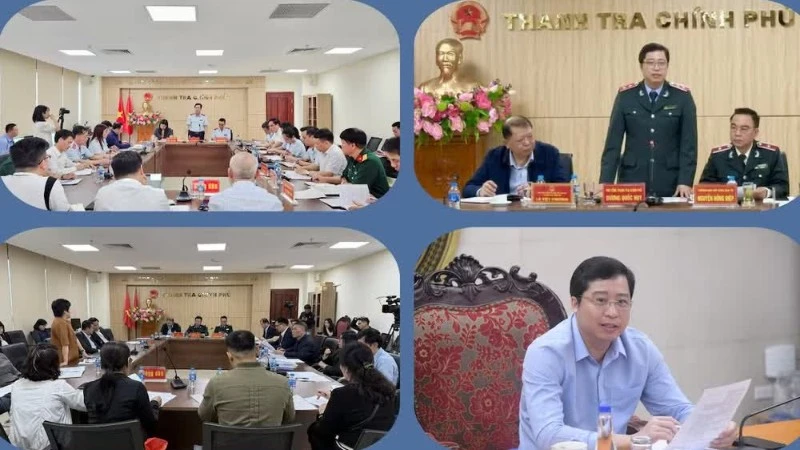
Vietnam is enhancing its audit, inspection, transparency, and accountability mechanisms to ensure the efficient operation of its political and administrative systems, a directive from General Secretary and President To Lam. The Government Inspectorate (Thanh tra Chính phủ), responsible for state management of inspection, handling citizen complaints, and preventing corruption and negativity nationwide, has focused on institutional reform to ensure uniformity and consistency in the organization and operation of inspection in the new context. This provides a legal basis for the operation of the two-tiered local government system in handling citizen complaints, accusations, and corruption prevention. The Government Inspectorate has organized over 50 training courses, equipping more than 16,000 officials with professional knowledge in inspection, citizen complaint handling, and corruption and waste prevention. This has helped address difficulties and challenges arising in the implementation of the two-tiered local government system within the Inspectorate's state management domain. In its core role, from June 1, 2025, to May 31, 2026, the Government Inspectorate conducted 68 inspection rounds, issuing 56 inspection conclusions. These uncovered significant economic violations, recommending the recovery of VND 7,714.9 billion (approximately $30 million) and 45.9 hectares of land for the state budget. The Inspectorate has resolutely directed inspections towards projects facing difficulties, delays, or risks of loss and waste. Within 55 days, the entire sector completed a widespread thematic inspection of 563 challenging projects, contributing to the removal of bottlenecks and the circulation of land and assets to serve national economic growth. However, alongside these achievements, the operation of the two-tiered local government model presents challenges for inspection work. The workload for provincial inspection agencies has increased significantly due to organizational streamlining. Many localities now manage larger territories and a greater number of commune-level administrative units, intensifying pressure on inspection, citizen complaint handling, and corruption prevention efforts. Furthermore, digital infrastructure, databases, and supporting tools for inspection activities are not yet fully synchronized or modernized. In some areas, inspection and supervision remain uncoordinated, particularly at the grassroots level. Tran Dang Vinh, Head of the Legal Affairs Department at the Government Inspectorate, stated that to enhance the quality and maximize the role of inspection in the new era, continuous research and comprehensive institutional improvement are needed. This includes reforming decentralization and coordination mechanisms, accelerating digital transformation, building shared databases, and improving the quality of inspection officials. Inspection work must evolve from a primarily administrative and vụ việc (event-driven) approach to a more strategic, predictive, and preventive one, capable of early detection of violations to meet the demands of national governance and development. Trinh Van Toan, Head of the Propaganda and Mass Mobilization Department of the Government Inspectorate's Party Committee, emphasized the crucial role of top leadership in party committees and units regarding inspection and examination, especially in practicing the principle of "being close to the people." Recent results in handling citizen complaints demonstrate that when leaders are truly committed with the highest sense of responsibility, issues are resolved early and at the grassroots, grievances are addressed promptly, and social trust is consolidated, contributing to a solid socio-political foundation for rapid and sustainable national development. Source: Nhan Dan
Original source
Nhan Dan