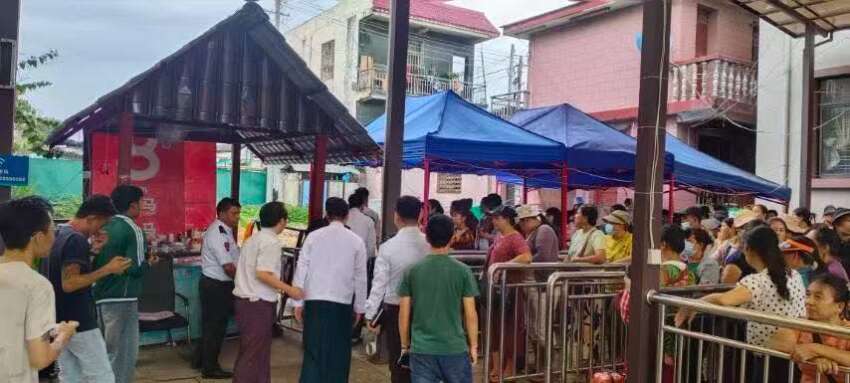
At China-Myanmar border town Muse, military-affiliated departments are forcibly collecting 43,000 Kyats and 50 Yuan per person from Myanmar workers going to work in China
Security
2026年7月8日
2
Khit Thit Media
Relations
🇲🇲Myanmar🇨🇳China

At China-Myanmar border town Muse, military-affiliated departments are forcibly collecting 43,000 Kyats and 50 Yuan per person from Myanmar workers going to work in China

AI サマリー

Yangon, July 7 In Muse, a border town in northern Shan State, Myanmar, military junta-affiliated departments and security organizations are reportedly coercing Myanmar workers who are going to work in China, threatening

Yangon, July 7 In Muse, a border town in northern Shan State, Myanmar, military junta-affiliated departments and security organizations are reportedly coercing Myanmar workers who are going to work in China, threatening them in various ways and forcibly collecting 43,000 Myanmar Kyats and 50 Yuan per person, according to investigations by border sources and affected workers. Myanmar workers intending to work in China come from various states and regions across the country, including Yangon and Mandalay. To enter China, they are required to apply for a "Weekly Card" (Border Pass), which allows for a 6-night, 7-day stay, issued by the Immigration Department in accordance with the bilateral agreement. However, workers report that when obtaining this card, departments under the military junta are levying money in stages for various reasons, in addition to the officially set card fee. "Although the Immigration Department's card fee is only 1,000 Kyats for one card, we have to pay all departments like SSSC, SRF, border guards, regional police, SB, and CID. We also have to pay 50 Yuan for anti-human trafficking. If we don't pay, they won't issue the card and will delay it for various reasons," said a Myanmar worker waiting to go to China from the Muse border. Currently, each worker is reportedly forced to pay 1,000 Kyats (card fee) to the Immigration Department, 10,000 Kyats to SSSC (Special Investigation Bureau), 10,000 Kyats to SRF (Military Security Affairs), 5,000 Kyats to border police, 5,000 Kyats to the regional police station, 5,000 Kyats to SB (Special Investigation Police Force), 5,000 Kyats to CID (Criminal Investigation Department), and 50 Chinese Yuan for the anti-human trafficking and suppression team. At the Shinpaw Gate and Immigration offices on the Muse border, over 200 "Weekly Cards" are reportedly issued daily. Applicants for the card must possess their original identification card and a Smart Card (UID), and there are age restrictions: 35 years and above for men, and 27 years and above for women. "More than 200 people get cards issued per day. Since they are collecting money from all of them, they are earning hundreds of thousands of Kyats in a single day. This money does not go into the state treasury but goes directly into the personal interests of the responsible officials and officers of the departments," said a border source. According to information obtained, the amount of money collected daily from an average of 200 workers amounts to approximately 8.6 million Myanmar Kyats and about 10,000 Chinese Yuan. Over a month, the total collected is estimated to be over 25.8 million Myanmar Kyats and around 300,000 Chinese Yuan. Border sources state that these funds do not enter the state treasury and are illegally collected for the personal benefit of officials and officers under the military junta.

多角的分析

経済的影響

直接の経済ニュースではありませんが、治安と司法の信頼は地域経済の土台です。職場での暴力や未成年者保護への不安が強まると、夜間営業、観光、雇用、地域サービス業のリスク認識が高まります。

投資家心理

投資家目線では、個別事件よりも法執行の予見可能性が焦点です。加害者への対応が曖昧になれば、ローカルビジネスの統治リスクや従業員保護の弱さとして評価されやすくなります。

社会的影響

ヤンゴン、7月7日 ミャンマー北部のシャン州、中国・ミャンマー国境のムセ市において、中国へ働きに行くミャンマー人労働者に対し、軍政傘下の各部署…という事実は、地域の人々にとって抽象的な人権論ではなく、働く場所や夜間の移動をどこまで信用できるかという問題です。Khit Thit Mediaの報道は、労働者と当局の対応を継続して見せる必要があります。

市民の声

市民にとっては、自分や家族が被害に遭った時に公正な手続きへアクセスできるのかが最大の関心です。地域団体が声を上げることで、事件の風化を防ぎ、被害者側の孤立を和らげる意味があります。

背景・歴史的文脈

このニュースは、ミャンマーの地域社会で法の支配と弱者保護がどこまで機能しているかを映す事案です。暴力事件そのものに加え、女性団体や市民社会が司法手続きを求めて声を上げている点が重要です。軍政下では警察・司法への信頼が揺らぎやすく、個別事件が地域の不安や統治への不信に直結します。

原文ソース

Khit Thit Media

原文を読む