Cambodia Urges Thailand to Respect International Borders, Calls for Legal Resolution of Disputes
Security
2026年6月29日
7
Phnom Penh Post
Relations
🇰🇭Cambodia🇹🇭Thailand

Cambodia Urges Thailand to Respect International Borders, Calls for Legal Resolution of Disputes

AI サマリー

Cambodia has strongly urged Thailand to respect the internationally recognized border, established by treaties over a century ago, against unilateral claims and domestic maps. The nation advocates for peaceful resolution through legal mechanisms rather than force or political pressure.

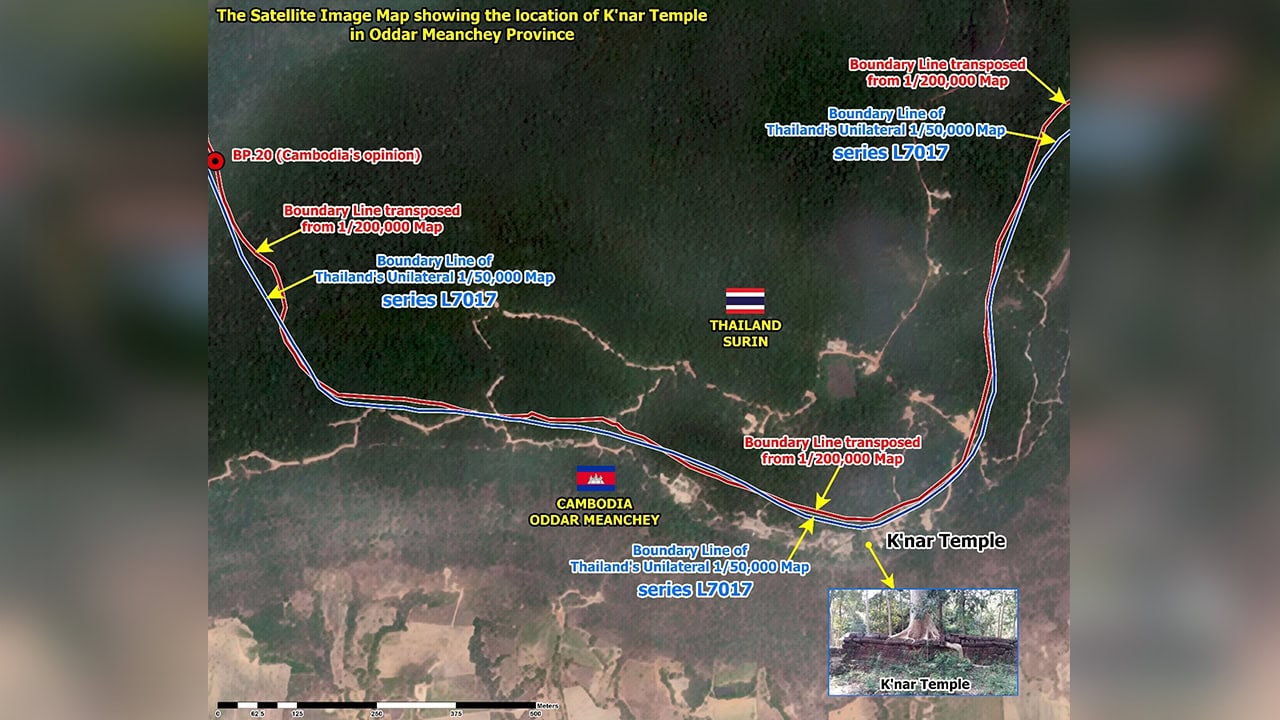
International borders cannot be rewritten by political convenience, military occupation or unilateral cartography. They derive their legitimacy from treaties, internationally recognised boundary instruments and the rule of law. That principle is essential not only for Cambodia and Thailand but for the stability of the international order itself. The Cambodia–Thailand boundary was not created yesterday. It was established more than a century ago through the Franco-Siamese Treaties of 1904 and 1907, the work of the Franco-Siamese Boundary Delimitation Commission, official boundary records and the internationally recognised 1:200,000-scale maps. These instruments collectively defined a legally recognised international boundary that has long been accepted under international law. Yet today, Thailand increasingly seeks to rely on unilateral actions and domestically produced maps to challenge that settled boundary. The irony is striking. Thailand’s own unilaterally produced Series L7017 map — the very map Bangkok has repeatedly invoked in support of its territorial narrative — places Khnar Temple, Tamone Thom Temple, Ta Krabei and several other ancient Khmer temples on the Dangrek Mountains inside Cambodian territory. Although Cambodia has consistently maintained that the L7017 map possesses no legal status because it was produced unilaterally and was never accepted by both States, the map nevertheless reveals an inconvenient truth: even Thailand’s own cartographic evidence contradicts many of the claims advanced today. This is not a question of choosing between two competing maps. The legal boundary does not derive from Thailand’s L7017 map. Nor does it depend on unilateral interpretations made decades after the frontier had already been internationally delimited. Rather, Thailand’s own map simply reinforces what the legally recognised boundary has demonstrated all along. When both the internationally recognised boundary map and Thailand’s own military map independently place the same Khmer temples within Cambodian territory, it becomes increasingly difficult to justify claims based on political rhetoric or unilateral reinterpretation. International law does not permit states to acquire sovereignty through unilateral assertion. It cannot manufacture legal title by producing domestic maps. Nor can military occupation, administrative practice or political declarations alter an internationally established frontier. This is why international courts have consistently attached primary legal weight to treaties, agreed boundary commissions and mutually accepted delimitation instruments — not to maps created by one party alone for its own purposes. Cambodia’s position has remained remarkably consistent. Cambodia relies on the internationally established boundary, the historical treaties, the official maps prepared by the Franco-Siamese Boundary Delimitation Commission and international law.Cambodia has repeatedly called for disputes to be resolved peacefully through legal mechanisms rather than through force, unilateral actions or political pressure. Thailand should do the same. Respecting international boundaries is not a concession to Cambodia. It is an obligation owed to international law itself. Indeed, honouring legally established borders protects every nation, large and small. If States were free to reinterpret boundaries whenever politically convenient, no international frontier would remain secure. The issue therefore extends beyond a handful of ancient temples. It concerns whether internationally recognised boundaries continue to matter. It concerns whether treaties remain binding. It concerns whether the rule of law prevails over unilateral action. Thailand has an opportunity to demonstrate its commitment to these principles. Rather than advancing claims that are contradicted even by its own cartographic records, Thailand should reaffirm the integrity of the internationally established boundary, respect existing legal instruments and resolve any remaining differences through peaceful legal processes grounded in international law. History has already drawn the boundary. The law has already recognised it. The responsibility now is simply to honour it. Roth Santepheap is described as a geopolitical analyst based in Phnom Penh. The views and opinions expressed are his own.

多角的分析

経済的影響

タイによる国境線の再解釈の試みは、両国間の経済関係、特に国境地域での貿易や投資に不確実性をもたらす可能性がある。歴史的な条約と国際法に基づく既存の国境線が尊重されない場合、投資家はリスクを回避するためにカンボジアやタイへの投資を慎重になる可能性がある。また、紛争がエスカレートすれば、観光業にも影響が出かねない。

投資家心理

投資家にとって、国境紛争は直接的なリスク要因となる。法的に確立された国際境界線が一方的な主張によって覆される可能性は、投資環境の予測可能性を低下させる。特に、インフラ開発や資源開発に関わるプロジェクトは、国境問題の不安定さから影響を受ける恐れがある。カンボジアが国際法を遵守し、平和的解決を求める姿勢は、投資家への安心材料となりうるが、タイの行動次第では不透明感が増す。

社会的影響

国境紛争は、国境地域に住む人々の生活に直接的な影響を与える。土地の所有権、移動の自由、そして文化的なつながりが脅かされる可能性がある。カンボジアが国際法と歴史的条約に基づく境界線を主張することは、これらの地域住民の権利と生活様式を守ろうとする試みと見ることができる。タイの主張が通れば、国境を越えたコミュニティの分断や、住民の不安が増大する懸念がある。

市民の声

カンボジア市民にとって、国境問題は国家主権と尊厳に関わる問題である。タイによる一方的な主張は、歴史的な経緯や国際法を無視するものとして受け止められかねない。市民は、政府が国際法に基づき、平和的かつ毅然とした態度で国境問題を解決することを期待している。特に、歴史的に両国間で係争となっている地域に暮らす人々は、安定した生活環境を求めている。

背景・歴史的文脈

カンボジアとタイの国境線は、20世紀初頭の仏暹条約によって画定された。これらの条約と、それに続く境界画定委員会の作業は、両国間の国際法上の境界を確立した。しかし、両国間には歴史的に領土を巡る紛争が度々発生しており、特にダンレック山脈周辺の地域は、古代寺院の存在などから係争地となっている。タイが近年、一方的に作成した地図を根拠に領有権を主張する動きは、こうした歴史的背景の中で、国際法に基づく既存の境界線への挑戦と見なされている。

原文ソース

Phnom Penh Post

原文を読む