China Leverages Historical Anniversaries to Showcase Military Might
Diplomacy
2026年7月9日
5
The Diplomat Indonesia

China Leverages Historical Anniversaries to Showcase Military Might

AI サマリー

China is subtly linking recent military activities, such as missile launches and naval transits, with historical anniversaries. This strategy aims to evoke national pride and highlight military modernization, with official channels often maintaining a distance while social media and commentary draw the connections.

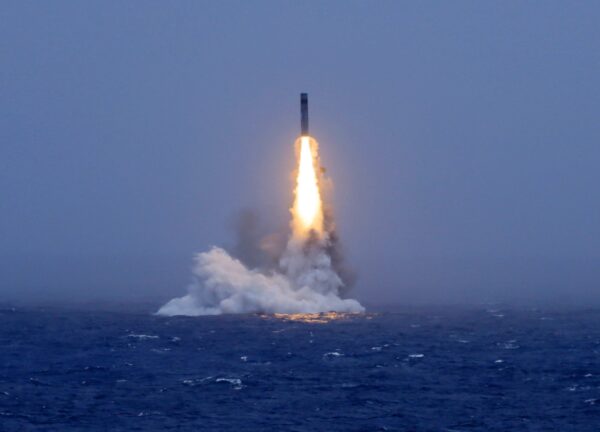
On July 6, the People’s Liberation Army Navy (PLAN) launched a submarine-launched ballistic missile (SLBM) into the Pacific Ocean. The launch received considerable coverage, but what followed the next day provided significant context. A single social media post linked the missile test to a pivotal historical event. The China Aerospace Science and Technology Corporation (CASC), the likely maker of the SLBM, posted an image on Weibo to commemorate the 89th anniversary of the Marco Polo Bridge Incident. The graphic visually connected the July 6 missile test to the incident that began the Second Sino-Japanese War and World War II in the Pacific. The Marco Polo Bridge Incident of July 7, 1937, initially a small skirmish near Beijing, was initially viewed as a localized clash. However, Japan's hardline Imperial Army faction used it as a pretext to expand operations into northern China, initiating an eight-year war. In China, the date has long marked the start of the "War of Resistance Against Japanese Aggression," a foundational element of the country's modern national story. CASC's anniversary poster fused this history with a contemporary message. The artwork depicted the Great Wall (symbolizing China's enduring state), resistance fighters (representing the Chinese people and their sacrifices), and the July 6 launch (demonstrating China's military modernization and capability), along with the number '77' for the anniversary. The slogan "Never Forget History, Strive to Build National Strength" (勿忘历史,奋斗图强) was prominently featured. CASC's graphic clearly presented China's wartime suffering and its current military power as interconnected chapters. The Chinese Communist Party (CCP) regularly draws on memories of the War of Resistance to reinforce narratives of national unity and the party's achievements. CASC's merging of wartime imagery and the missile launch aligns with the "national rejuvenation" narrative, pairing memories of suffering with displays of strength, suggesting that military modernization guards against a repeat of past humiliation. Other recent PLAN activities have lent themselves to a similar narrative. On September 18, 2024, the aircraft carrier Liaoning, along with escorts, transited between Japan’s Yonaguni and Iriomote Islands en route to the Philippine Sea. This transit occurred during the Liaoning's 12th year of commissioned service. Its movements near Japanese waters coincided with the anniversary of the Mukden Incident (September 18, 1931), which justified Japan's invasion of Manchuria. This incident holds a similarly central place in Chinese memory as the beginning of "imperial Japan's invasion of China" and China's national resistance. In fact, China officially changed the start date of the War of Resistance from July 7, 1937, to September 18, 1931, in 2017. Chinese state media did not connect the 2024 Liaoning transit and the Mukden Incident anniversary. State media detailed and challenged Japanese characterizations of Liaoning’s operations, downplaying the transit as "in accordance with the annual training plan." This framing of military operations as routine avoids a provocative narrative, allowing Beijing to dispute Japanese objections to PLA actions. Online Chinese commentary, however, made the connection between the events. Nationalist commentators and ordinary users noticed the timing and treated it as further proof of China's growing edge over Japan. While historical anniversaries may not drive the timing of PLA activity, as official statements suggest the SLBM launch and carrier transit occurred per PLA schedules, history serves as a useful amplifier. PLA activity paired with historically significant anniversaries becomes a vehicle for highlighting a once-humiliated China that has grown strong and self-reliant under CCP leadership. Official channels maintain distance, leaving online commentary and other media to connect the dots. For observers, the lesson is not that the PLA schedules operations around historical anniversaries. Rather, military demonstrations can take on additional meaning when integrated into the CCP's wider narrative of national rejuvenation.

多角的分析

経済的影響

中国の軍事力誇示は、長期的な経済成長と国家安全保障の維持という両輪を重視する経済政策と連動している。軍事近代化への投資は、先端技術開発を促進し、関連産業への波及効果も期待される。一方で、軍事的な緊張の高まりは、地域経済への不確実性をもたらし、特にサプライチェーンの安定性や投資環境に影響を与える可能性がある。国際社会からの制裁や貿易制限のリスクも、経済成長の持続可能性に対する懸念材料となる。

投資家心理

中国の軍事活動と歴史的記念日の連携は、地政学リスクを投資判断の重要な要素として浮上させる。特にアジア太平洋地域への投資を検討する投資家は、地域紛争のリスク、貿易摩擦の可能性、およびそれらがもたらす経済的影響を慎重に評価する必要がある。軍事力誇示は、中国国内のナショナリズムを刺激する一方で、国際的な信頼や透明性に対する懸念を増大させ、長期的な資本の流れに影響を与える可能性がある。

社会的影響

中国共産党は、歴史的苦難の記憶と軍事力の誇示を組み合わせることで、国民の愛国心を高め、国内の結束を強化しようとしている。これは、特に若年層の間で、国家への誇りと忠誠心を醸成する効果を持つ。しかし、このナラティブは、歴史認識を巡る近隣諸国との摩擦を深める可能性があり、地域社会の分断を招くリスクも孕んでいる。SNS上での愛国主義的な言説の活発化は、多様な意見の表出を抑制する可能性も指摘される。

市民の声

中国の軍事力誇示と歴史的記念日の結びつきは、国民の愛国心を刺激する一方で、その背景にある歴史認識や政治的意図に対する複雑な感情を生む可能性がある。特に、近隣諸国との関係悪化や、軍事費増大に伴う国内経済への影響(例えば、社会福祉や生活必需品への投資が後回しにされる可能性)は、一般市民の生活実感に直接的な影響を与えうる。SNSでの言説は、党のプロパガンダを強化する一方で、異なる視点を持つ人々との間の摩擦を生むことも考えられる。

背景・歴史的文脈

中国が軍事活動と歴史的記念日を結びつける戦略は、過去の「国恥」とされる出来事を現代のナショナル・アイデンティティ構築に利用するCCP(中国共産党)の長年の手法に基づいている。1937年の盧溝橋事件は、日本による中国侵略の始まりとして、1931年の柳条湖事件と共に、中国のナショナリズムの象徴となっている。CCPは、これらの歴史的出来事を、国民の団結を促し、党の指導の下での「国家再興」という物語を強化するための道具として利用してきた。特に、近年は軍事力の近代化と並行して、こうした歴史認識を強調することで、国内の支持基盤を固め、対外的な影響力を誇示する狙いがある。

原文ソース

The Diplomat Indonesia

原文を読む