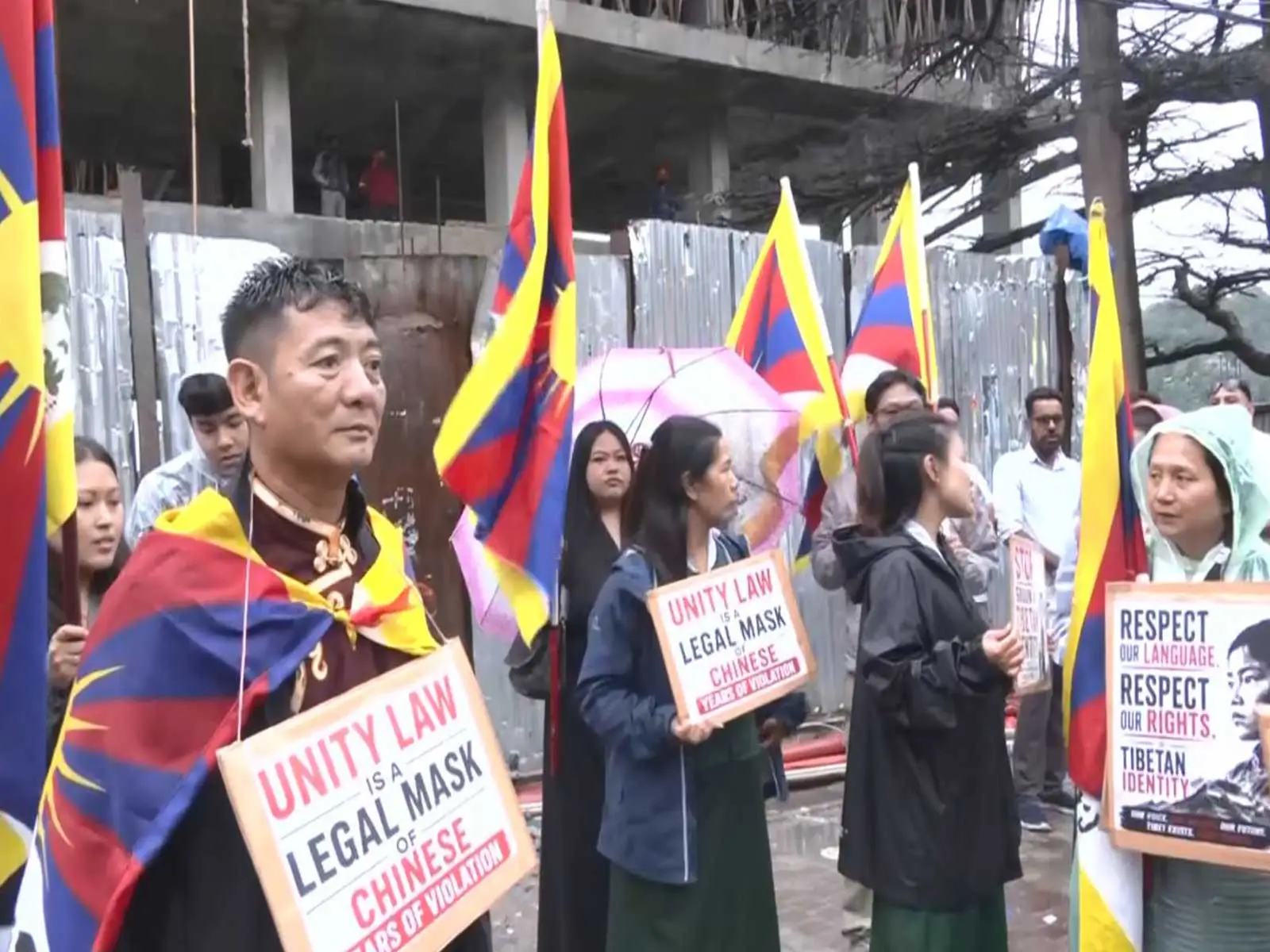
China's New Ethnic Unity Law Legalizes Forced Cultural Assimilation
China's new Ethnic Unity Law, effective July 1, 2026, faces sharp criticism for promoting forced cultural assimilation. While Beijing states the law protects national cohesion, critics argue its emphasis on Mandarin-only schooling and political loyalty threatens minority languages and traditions, pushing for a singular national identity.
Home - China - China’s New Ethnic Unity Law Legalizes Forced Cultural Assimilation BEIJING – China’s New Ethnic Unity Law took effect on July 1, 2026, and it’s drawing sharp criticism because it reads less like a neutral unity policy and more like a legal push for forced cultural assimilation. Beijing says the law protects national cohesion, but the language around Mandarin-only schooling, political loyalty, and tighter control over minority life tells a different story. For Tibetans, Uyghurs, Mongols, and other communities, the concern is simple: when the state decides what counts as unity, minority languages, faith, family traditions, and local identity can all come under pressure. The new rules also raise fears far beyond China’s borders, especially for people who speak out overseas, as seen in other cases of CCP internal security policies. The real issue is whether this law protects diversity or legalizes its slow erosion. The details show why critics see it as a major shift, and why it matters now. China’s Law on Promoting Ethnic Unity and Progress is built around one central idea: all ethnic groups should move closer to a single national identity under the leadership of the Communist Party. In official terms, that means strengthening the “community of the Chinese nation,” a phrase the government uses to describe a shared political and cultural identity across all 56 ethnic groups. The law does still use the language of equality and mutual respect. However, its direction is clear. It puts unity, common identity, and national progress above visible difference, local autonomy, and separate cultural expression. That shift matters, because once sameness becomes the goal, diversity starts to look like a problem to be managed instead of a reality to be protected. The law leans hard on the idea of the “community of the Chinese nation,” which means a single national family bound together by common language, loyalty, and political purpose. In plain English, the state is saying that ethnic identity should fit inside a larger Chinese identity, not stand apart from it. That framing changes the whole conversation. Instead of asking how different communities can preserve their own languages, customs, and beliefs, the law asks how they can be drawn closer together and made more alike. Ethnic unity, in this context, does not mean space for difference. It means reducing difference until it is less visible and less politically important. The law also ties ethnic harmony to progress, another loaded term. Progress sounds neutral, but here it means moving toward the state’s preferred model of culture, language, and public life. For minorities, that can feel less like inclusion and more like being folded into a mold someone else designed. When the state defines unity, it also gets to define what counts as division. For readers trying to follow the official logic, the basic message is simple: Language is where the law becomes easiest to see. Mandarin Chinese is positioned as the main language of instruction and administration, which means schools and public offices are expected to treat it as the default. That affects preschool, primary school, and higher education, where minority languages can be pushed into a secondary role. In practice, this matters most in core subjects. If Mandarin becomes the main language for math, science, history, and government paperwork, minority languages lose ground fast. Children may still hear their home language at home, but the language of exams, official forms, and career advancement becomes something else. This is not a sudden break from the past. It follows a long policy trend in China, where state language rules have steadily favored Mandarin in classrooms and public life. For more background on the broader pattern, see China’s religious regulation policies, which show how state control often spreads across institutions at the same time. The law also reaches beyond schools. Public agencies, and in some cases private firms, are expected to give Mandarin and Chinese characters greater prominence in signs, notices, and services. That makes minority languages harder to see in everyday life, even when they are still spoken in homes and villages. The biggest problem is not just what the law says, but how broadly it says it. Terms like ethnic division, unity, and progress are wide open to interpretation. That gives officials a lot of room to decide what counts as harmful speech, unacceptable behavior, or a threat to harmony. That kind of wording is risky because it turns ordinary expression into something that can be reclassified as disloyal. A teacher, writer, religious leader, or parent could be accused of crossing a line simply by promoting language, customs, or ideas that officials think slow down integration. The law’s own logic makes room for that kind of pressure. Critics also worry about the effect on people living outside China, especially after Reuters reported on overseas concern over the law. If the state can label broad categories of speech or activism as harmful to ethnic unity, then the law can stretch far beyond schools and government offices. That’s why the wording matters so much. A narrow law tells people what they cannot do. A vague law tells officials how far they can go. China’s New Ethnic Unity Law pushes far past formal equality. It treats difference as something that must be managed, narrowed, and folded into a single approved identity. That is why critics see it as more than a policy on unity; they see it as a blueprint for assimilation. The pressure shows up in ordinary places. A classroom, a village sign, a family dinner, a wedding, or a religious gathering can all become sites where the state decides which traditions look acceptable and which ones need to be trimmed back. For a closer look at how this logic has played out in Tibet, see China’s religious regulation in Tibet. When schools, museums, and public offices are told to reflect Han norms and state-approved history, minority culture can start to look like a display case instead of a living way of life. A language may still appear on a wall plaque, but if children are taught in Mandarin and tested in Mandarin, that language loses real power. It becomes decorative. The same pattern can shape religion and custom. A local festival may still happen, but only after officials strip out the parts they see as “backward” or politically sensitive. A museum can praise ethnic heritage while quietly presenting it as something from the past, useful for tourism or ceremony, not for daily life. That split matters because it changes how people see themselves. If your prayers, clothing, songs, or calendar are treated as symbolic at best, you are being told where you fit in the hierarchy of culture. The message is simple, and it lands hard: keep the costume, lose the authority. Cultural difference does not disappear overnight. It gets reduced to a performance until p
多角的分析
中国政府は、民族統一法を通じて国内の経済的・社会的分断を減らし、より均一な国家経済圏を形成しようとしていると考えられる。標準中国語の普及は、全国的なビジネスコミュニケーションの円滑化や、労働市場における流動性を高める狙いがある。しかし、少数民族の言語や文化が衰退することで、地域固有の産業や伝統的な経済活動が失われるリスクも伴う。これは、長期的には経済的多様性を損ない、イノベーションの源泉を狭める可能性も否定できない。
この法律は、中国国内の投資環境において、特に少数民族地域への投資や、それらの地域と関連するビジネス展開において、新たなリスク要因となり得る。企業は、従業員の言語や文化への配慮、そして政府の解釈次第で「民族の分裂」と見なされかねない言動への監視を強化する必要に迫られるだろう。一方で、国内市場の一体化が進むことで、大規模な国内消費市場へのアクセスが容易になるという側面もある。投資家は、この法律がもたらす短期的な混乱と、長期的な市場統合の可能性の両方を慎重に見極める必要がある。
この法律は、中国国内の社会構造に大きな影響を与える可能性がある。少数民族の言語や文化が「同化」されることで、彼らのアイデンティティが希薄化し、社会的な疎外感が増大する恐れがある。例えば、少数民族の子供たちが、自分たちの母語で教育を受ける機会を失い、標準中国語のみで学習を進めることは、彼らの自己肯定感や、家庭とのつながりに影響を与えるだろう。また、地域社会の慣習や祭りが、国家の基準に合わせて「修正」されることで、伝統的な生活様式が失われ、社会的な摩擦を生む可能性も指摘されている。
この法律は、少数民族だけでなく、中国全土の市民の生活にも影響を及ぼす。標準中国語の優先は、非少数民族の市民にとっても、公の場での言語使用や文化表現のあり方に間接的な影響を与える可能性がある。また、「民族の分裂」や「進歩」といった曖昧な言葉の定義は、市民の言論や行動に対する当局の介入を容易にし、社会全体の自由度を低下させる懸念がある。特に、SNSなどでの発言が監視され、政治的な忠誠心が厳しく問われるようになることで、市民は自己検閲を強いられる状況に置かれるかもしれない。
背景・歴史的文脈
中国における民族問題は、建国以来、中央政府による統一政策と少数民族の自治・文化維持との間で緊張関係が続いてきた。特に1980年代以降、経済発展とともに少数民族地域への漢民族の移住が進み、言語や文化の変容が加速した。2000年代以降、新疆ウイグル自治区やチベット自治区での人権問題が国際的に注目される中、中国政府は「中華民族共同体」の意識醸成を強化し、愛国主義教育や標準中国語教育を推進してきた。今回の民族統一法は、こうした長年の政策の流れを法制化したものと見られる。
原文ソース
Chiang Rai Times