General articles are free for 24 hours after publish.
Vietnam Advances DNA Identification for War Martyrs' Remains, Emphasizing System-Wide Effort
Vietnam's Deputy Prime Minister inspected the implementation of DNA identification technology for war martyrs' remains, stressing the necessity of the entire political system's involvement. Over 1,700 remains have been recovered and are undergoing identification.
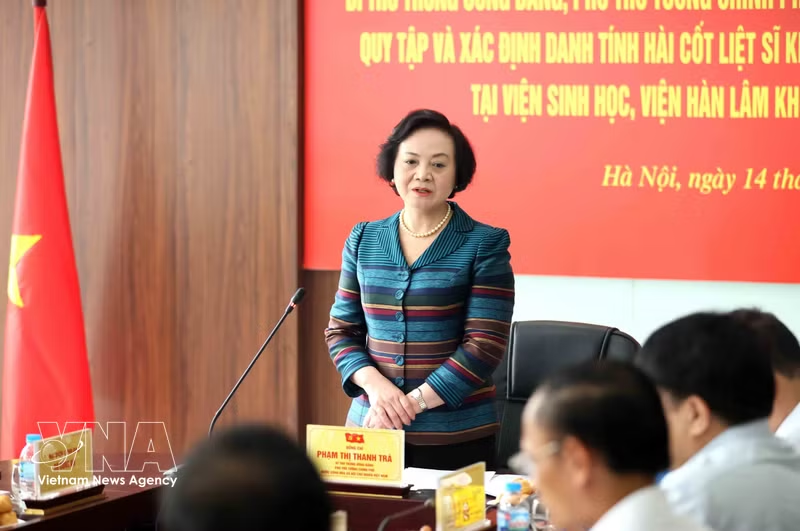
Deputy Prime Minister Pham Thi Thanh Tra inspected the implementation of DNA identification technology for war martyrs' remains on September 14, visiting the Centre for DNA Identification under the Institute of Biology of the Vietnam Academy of Science and Technology, and the Military Institute of Forensic Medicine under the Military Medical Department of the Ministry of National Defence. The initiative aims to identify the remains of war martyrs that have remained unidentified for many years and return them to their families. To date, over 1,700 war martyrs' remains have been recovered and are undergoing identification through DNA testing. Specifically, DNA testing has begun for over 1,000 unidentified war martyrs at Thanh Hoa's Ham Rong cemetery. Vietnam lost many soldiers in the First Indochina War and the Vietnam War (known in Vietnam as the anti-American war), and many of their remains are still unidentified. Identifying these remains is considered a national priority, not only as a sign of respect for the fallen soldiers and their families but also to deepen the solemn significance of War Invalids and Martyrs’ Day. The Deputy Prime Minister emphasized that the success of this endeavor requires the cooperation of relevant ministries, local governments, and every citizen. This reflects a typical stance within Vietnam's one-party system, calling for the mobilization and coordination of the "entire political system" to address national issues. While Vietnam continues its economic growth, addressing the legacy of past wars remains a crucial policy concern from the perspective of social stability and consideration for national sentiment. Overseas Vietnamese communities also actively participate in these commemoration activities, contributing to fostering national unity.
Original source
VietnamPlus English