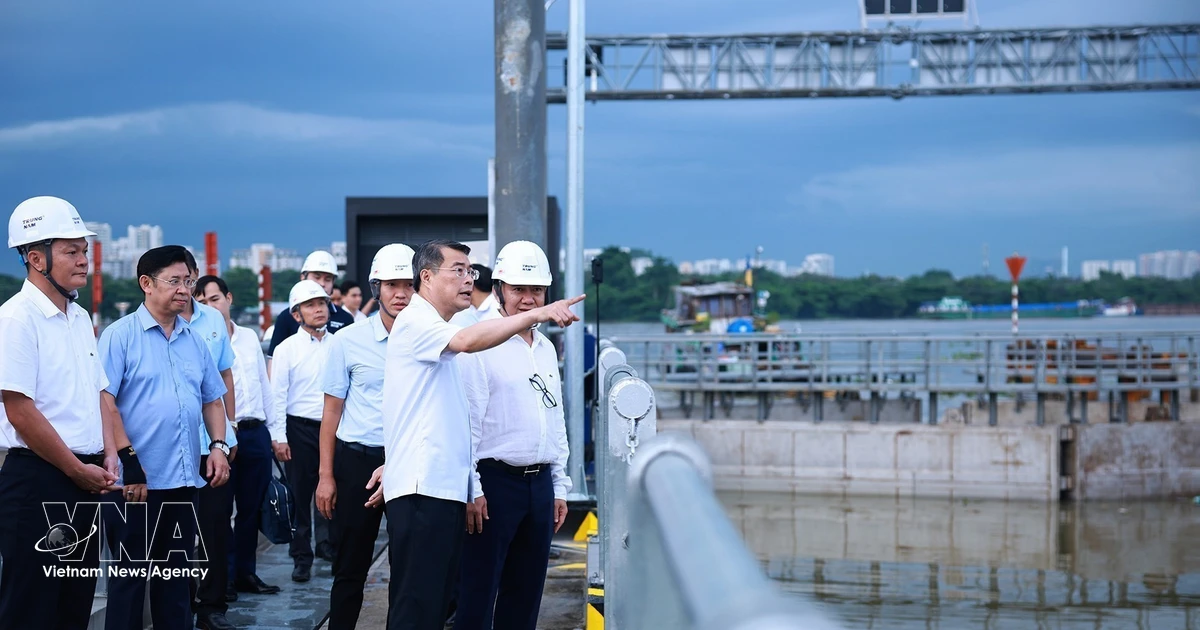
Ho Chi Minh City Focuses on Infrastructure for Multi-Polar Economic Growth
Ho Chi Minh City is aiming for a transition to a multi-polar economic structure, moving beyond simple urban expansion through infrastructure investment. While a new growth cycle for the property market is anticipated, talent development and international cooperation are also being promoted.
Read up to 3 eligible full articles per Japan day (JST) for free
Create a free account to open up to 3 eligible full articles per Japan calendar day (JST). Headlines and summaries remain available across ASEAN 7.
Related articles
- Ho Chi Minh City Accelerates Land Clearance for Key Infrastructure Projects
Ho Chi Minh City is accelerating land acquisition for the Ho Chi Minh City-Moc Bai Expressway and the Ben Luc-Long Thanh Expressway-Rung Sac intersection. The Moc Bai expressway project is nearing 99% land clearance completion.
- Ho Chi Minh City Embraces New Growth Space: Transformation Through Urban Renewal and Infrastructure Investment
Ho Chi Minh City is undertaking a radical reform of its urban governance to address long-standing issues and build a new development cycle. The city is shifting towards people-centric, results-oriented development, moving from 'management' to 'development creation.' This includes resolving 'frozen' projects, creating public spaces, and investing $30 billion in infrastructure.
- Ho Chi Minh City Proposes 50% Subsidy for Infrastructure Costs in Apartment Renovation Projects
Ho Chi Minh City has proposed a plan to subsidize part of the infrastructure development costs for renovation and reconstruction projects of old apartment buildings, aiming to improve urban landscapes and living environments.
- Ho Chi Minh City Mobilizes Social Resources for Transport Infrastructure Development
Ho Chi Minh City is intensifying the mobilization of social resources beyond public budgets to address transport infrastructure bottlenecks and boost economic growth. The city aims to accelerate investment through Public-Private Partnerships (PPP), Transit-Oriented Development (TOD) models, and underground space development.