General articles are free for 24 hours after publish.
Indonesian Wildfires Force School Closures Across Malaysia's Sarawak
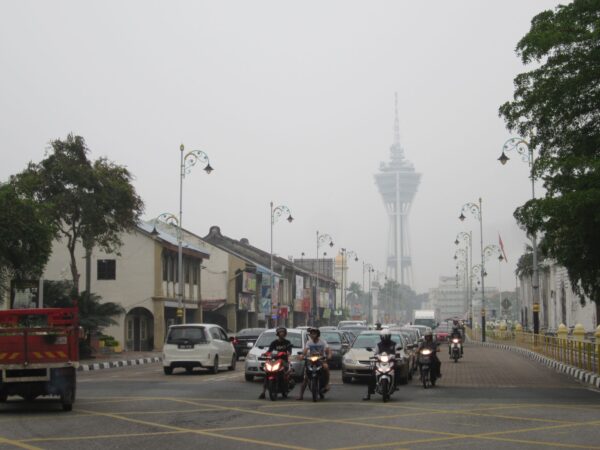
Severe haze from ongoing wildfires in Indonesia's Sumatra and Kalimantan has blanketed Malaysia's Sarawak state, pushing air pollution levels into hazardous territory. Over 600 schools have closed, shifting to online learning, and an emergency was declared, significantly impacting daily life.
Wildfires have raged for weeks across swathes of Sumatra and Kalimantan, exacerbated by a particularly severe dry season. Hundreds of schools across the Malaysian state of Sarawak have closed their doors because of hazardous haze from ongoing wildfires in neighboring Indonesia. Sarawak, which runs along the north of the island of Borneo, is currently under a pall of air pollution that is among the worst it has seen this decade. On September 3, Malaysian authorities declared an emergency in Serian Division, a region in the southwest of Sarawak bordering Indonesia, after air pollution levels hit critical levels. "The government will continue to monitor developments from time to time and ensure that all necessary actions are implemented immediately, including mitigation measures and the dissemination of information and health advice to the public," it added. Under the emergency measures, government and private offices in the town of Serian will be closed, as well as plantations, construction sites, and quarries. The Sarawak Disaster Management Committee also announced a three-day cloud-seeding operation that was subsequently extended. On Friday, authorities also announced that 647 schools across 12 districts, including Serian and the state capital Kuching, will close their doors this week, moving lessons to an online format. A further 54 primary schools and nine secondary schools in Bintulu Division further to the east will also shut their doors due to haze, the Sarawak Education Department announced on Saturday. The Sarawak Disaster Management Committee formally requested the declaration when the Air Pollutant Index (API) in Serian soared into dangerous territory, peaking at 519 on Friday. The Malaysian government considers API levels above 300 to be "hazardous" to human health, while readings beyond 500 justify the announcement of an emergency declaration. The Malaysia Meteorological Department told Channel News Asia (CNA) that this is Sarawak’s "worst" haze episode since 2019. The deteriorating air quality has disrupted daily life across Sarawak. According to CNA, "outdoor events, including carnivals, community runs and sporting activities, have been cancelled, while poor visibility has disrupted some flights." "Transboundary haze" has become a seasonal crisis in large parts of Southeast Asia, in line with the expansion of agricultural monocultures such as palm oil, maize, paper pulp, and sugar. These are compounded by vehicle and industrial emissions and naturally occurring dry-season forest fires. This year, the main cause is the wildfires that have raged for weeks across Indonesia’s Sumatra and Kalimantan regions, exacerbated by a particularly severe dry season. The Ministry of Forestry says that wildfires burned at least 202,010 hectares of land from January to July, around half of which took place in the month of July. The ASEAN Specialized Meteorological Centre reported on Friday that "moderate smoke plumes were … observed to emanate from hotspots in the southern parts of Kalimantan and the southern and central parts of Sumatra." There have also been reports of fires in South Papua, which has not traditionally seen many dry season fires. One environmentalist told CNA that this was likely "linked to land clearing in food estate and energy project areas." While bordering areas of Sarawak have been hardest hit by the poisonous haze, the pollution has also spread to Sabah and peninsular Malaysia, Brunei, and as far as the Philippines. On Friday, Singapore also announced it would start providing daily haze advisories from Friday evening, after the 24-hour air quality readings entered the unhealthy range for the first time since 2023. Indonesian authorities suspect that most of the fires in Kalimantan and Sumatra were deliberately set by individuals or companies for various purposes, Forestry Minister Raja Juli Antoni said last week. "It is almost certain that the cause is deliberate burning, not wildfires, whether carried out by individuals, ordinary farmers, or corporations," Raja told a press conference on September 1, the Jakarta Globe reported. Rizal Irawan, a senior official at the country’s Environment Ministry, told Reuters that the authorities were investigating 19 companies that it believes may be linked to the wildfires, and said that it would investigate who might be responsible. "Regardless of the cause, strict liability applies whenever a fire occurs within a concession area," he said. While API readings in Serian have dropped since the state of emergency came into effect – the reading as of press time was 162, in the merely "very unhealthy" zone – Indonesian authorities say that there is no immediate relief on the horizon. Raja said that the month of September is expected to mark a critical period in efforts to contain fires due to intensifying El Niño conditions. "We must remain extremely vigilant because, for me, September is when the real battle begins," Raja said, according to the Jakarta Globe. "September is the peak of El Niño, so we have to stay alert."
Original source
The Diplomat Indonesia