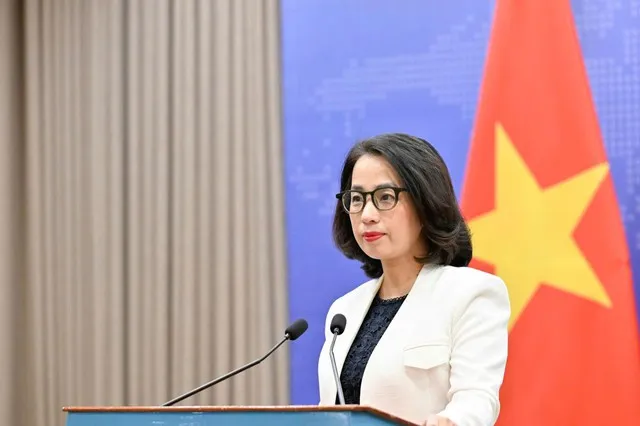
Vietnam Responds to US Tariff Imposition: "Does Not Fully Reflect Efforts Against Forced Labor"
Vietnam's Ministry of Foreign Affairs has countered the US imposition of a 12.5% tariff, stating it fails to fully reflect the country's efforts to prevent forced labor. Vietnam emphasized its compliance with ILO conventions and the enactment of decrees banning goods produced by forced labor, urging the US to adjust tariffs based on reality.
This article requires PRO
This article is outside the free access window or is a special report. PRO unlocks it and the full archive.
Related articles
- Vietnam Seeks Diversified Funding to Achieve Lower Interest Rates
Vietnam's economy faces challenges in lowering interest rates solely through bank lending due to increased year-end capital demand. Experts emphasize expanding funding from stock markets and international sources, alongside improving credit ratings, as key to sustained rate reduction.
- Vietnam's Dien May Xanh Nears $4 Billion Revenue Mark on Apple Product Surge
Vietnam's leading electronics retailer, Dien May Xanh, achieved its highest monthly revenue in September. Cumulative revenue from January to September neared $4 billion (VND 99.46 trillion), with Apple products, particularly iPhones, contributing 20% of the total sales.
- Panama Ready to Serve as Gateway Connecting Vietnam to Latin American Economies
Panama's President, during an official visit to Vietnam, expressed readiness for Panama to become a 'gateway' connecting Vietnam to Latin American markets, aiming to strengthen bilateral trade and investment. This signals potential for deepened economic cooperation.
- Hanoi Giftshow 2026 Opens Doors for Handicrafts and Fine Art Products
The Hanoi Giftshow 2026, scheduled for October 8-11, will feature 500 booths from 230 businesses, cooperatives, and production facilities. The event aims to boost exports and international business exchange through the exhibition and promotion of handicrafts, fine art products, and gifts, with an emphasis on digitalization and the integration of online and offline channels.