General articles are free for 24 hours after publish.
Cambodia Promotes "Responsible Business Practices" Ahead of LDC Graduation
As Cambodia prepares to graduate from Least Developed Country (LDC) status in December 2029, it is intensifying efforts to promote "Responsible Business Practices (RBC)" to meet the evolving demands of the international market and enhance competitiveness and decent work.
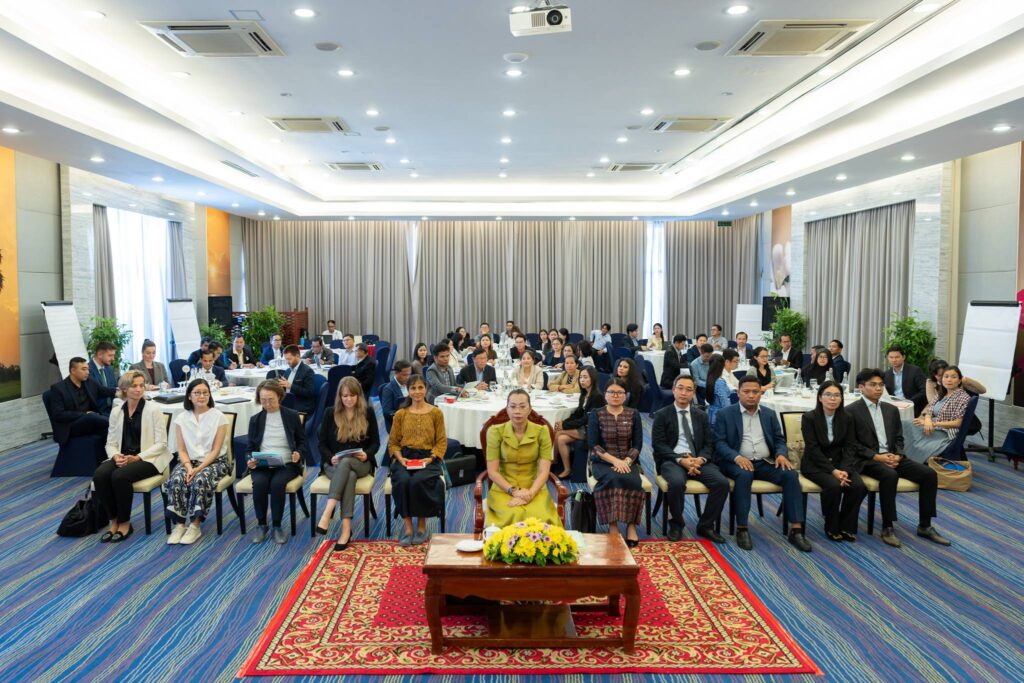
The Ministry of Labour and Vocational Training is intensifying efforts to promote "Responsible Business Practices (RBC)" as Cambodia prepares to graduate from Least Developed Country (LDC) status in December 2029. This initiative aims to enhance competitiveness and ensure decent work in the face of evolving international market demands. During a high-level dialogue on "Cambodia's Graduation from LDC Status: Promoting Responsible Business Practices (RBC) for a Smooth Transition and Decent Work," held on September 18, 2026, in Phnom Penh, Mrs. Sovann Vannarat, Secretary of State of the Ministry of Labour and Vocational Training, emphasized the importance of this transition. Mrs. Vannarat stated that Cambodia is scheduled to graduate from LDC status in December 2029, a significant developmental achievement. However, she noted that alongside this pride, Cambodia must prepare for changes in trade conditions and increasingly stringent international market requirements. She stressed the need to transform the challenges of this transition into opportunities for strengthening the resilience and competitiveness of enterprises and for creating decent work. She further elaborated that RBC should not be viewed merely as a legal obligation or a cost burden for businesses, but rather as a strategic factor for increasing productivity, building investor and buyer confidence, and maintaining employment stability. When implemented effectively, legal compliance will become a competitive advantage, making Cambodia an attractive investment destination and supply source. Cambodia's experience of over two decades in the garment, footwear, travel goods, and bag sectors has demonstrated that adherence to labour laws can support and promote trade, enhance confidence from international buyers, and contribute to the promotion of decent work. To expand this success, Small and Medium-sized Enterprises (SMEs) require technical support, technological training, and access to finance for modernization and deeper integration into international value chains. Mrs. Vannarat underscored that Cambodia's competitiveness must be built on the foundation of productivity, added value, and decent work. The promotion of workers' rights is a necessary prerequisite for building a resilient and sustainable economy, earning the trust of investors and international buyers. Mr. Sok Kinal, Vice President of the Cambodian Federation of Employers and Business Associations (CAMFEBA), highlighted the importance of RBC and the collaboration between the government, employers, and stakeholders in strengthening competitive capacity and seizing new economic opportunities. Ms. Helen Kirsch, Representative of the International Labour Organization (ILO), added that promoting workers' rights, social protection, skills, and responsible business practices are essential for Cambodia to continue its path towards inclusive, sustainable, and resilient development.
Original source
Kampuchea Thmey Local