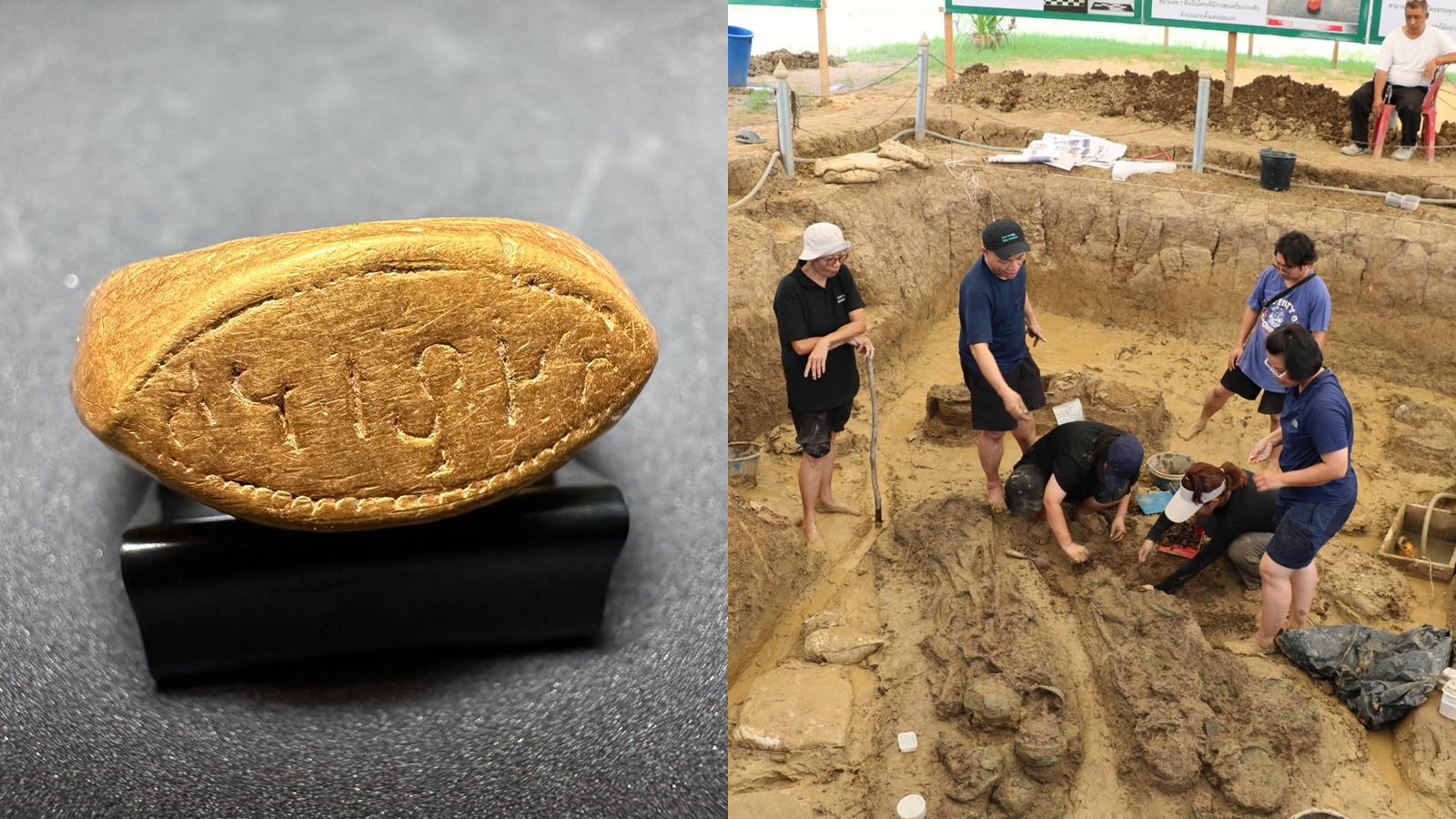
2,000-Year-Old Burial Site Reveals Affluent Ancient Phetchaburi Community
An archaeological excavation in Phetchaburi, Thailand, has unearthed a 2,000-year-old burial site, revealing an affluent prehistoric community connected to regional trade networks. Artifacts suggest social stratification and extensive international trade.
What began as the accidental discovery of a bronze drum beneath a rice field has become one of Thailand’s most significant archaeological excavations in recent years. Months after archaeologists broke ground at the Don Yai Thong archaeological site in Ban Don Phlap, Ban Lat district, Phetchaburi, the picture emerging from the excavation is no longer about a single artefact. Instead, it tells the story of an affluent prehistoric community connected to regional trade networks stretching from present-day Vietnam to India some 2,000 years ago. The excavation began in February after a metal detector identified what turned out to be Phetchaburi’s first bronze drum. Archaeologists from the Fine Arts Department initially set out to recover two bronze drums. As they excavated layer by layer, however, they uncovered far more than expected. Beneath the soil lay a prehistoric cemetery containing eight human skeletons, pottery, bronze ornaments, glass and stone beads, gold jewellery and, eventually, six Dong Son-style bronze drums – ceremonial objects associated with the Bronze Age culture centred in northern Vietnam. The arrangement of the burials offered the first clues about the people buried there. All eight skeletons were laid with their heads facing northeast and accompanied by grave goods. Bronze vessels were placed near the head, body and feet, while many of the deceased wore ornaments including anklets, stone and glass beads, and bronze head coverings. Gold jewellery was also found, including rings, a bracelet and a pendant, with one gold bracelet still encircling the arm of a skeleton. Archaeologists believe the cemetery was used more than once. Four skeletons on the southern side appear to have been buried at the same time, while those to the north may represent successive burials, with earlier graves disturbed to make room for later ones. The bronze drums themselves also appear to have formed part of the burial ritual. Rather than being placed separately, they were laid on the same level as the bodies before being covered with pottery. Their position suggests they were intentionally incorporated into funeral ceremonies rather than buried as isolated objects. The discoveries point to people of considerable social standing. Bronze drums were prestigious objects across mainland Southeast Asia and are widely regarded as symbols of authority and ceremonial power. The quantity of gold jewellery, bronze ornaments and imported beads found alongside the burials suggests the individuals interred at Don Yai Thong were members of an elite community. The artefacts also reveal that Phetchaburi was far from isolated. The bronze drums closely resemble examples found at the ancient city of Khu Bua in neighbouring Ratchaburi, while the gold ornaments share stylistic similarities with finds from Chumphon and Surat Thani that reflect Indian artistic influence. Glass beads resemble those discovered at Khao Sam Kaeo in Chumphon, one of Southeast Asia’s earliest international trading ports. Perhaps the clearest evidence of those overseas connections emerged only recently. As archaeologists raced to recover fragile remains before the rainy season could damage them, they uncovered two additional gold rings. One proved especially remarkable. The ring bears an inscription in ancient Brahmi script, one of the earliest writing systems of the Indian subcontinent. Specialists have tentatively read the inscription as “Pusarakhitasa”, meaning “belonging to Pusarakhita” or “protected by the Pushya star”. Based on the inscription and the style of the ring, researchers believe its owner may have been a merchant connected to Indian trade networks. The discovery strengthens growing evidence that communities in what is now Phetchaburi participated in maritime trade linking the Gulf of Thailand with India nearly two millennia ago, during a period when the region was becoming part of a wider commercial world. For archaeologists, however, many questions remain unanswered. The poor condition of the skeletons, caused by acidic soil and groundwater, has made it impossible to determine the age or sex of those buried. Researchers hope future scientific analysis, including studies of dental remains, will reveal more about the people who once lived there. For now, the excavation at Don Yai Thong has transformed a quiet rice field into one of Thailand’s most important prehistoric sites. What first appeared to be the discovery of a single bronze drum has become a rare glimpse into an elite community whose wealth, beliefs and overseas connections survived beneath the soil for two thousand years.
多角的分析
この発見は、2000年前のタイ(プーケット)が、単なる地域的な交易拠点ではなく、インド亜大陸との直接的な海上交易ネットワークの一部であったことを示唆している。これは、当時の東南アジア経済が、現代よりもはるかに広範で、高度に統合されていた可能性を示唆する。金細工や輸入されたビーズの存在は、この地域のエリート層が国際貿易を通じて富を蓄積し、その富が地域社会の階層化に寄与していたことを示している。これは、現代のグローバル経済における富の集中と類似した構造を持つと言える。
この遺跡発見は、直接的な投資機会をもたらすものではないが、タイの歴史的・文化的な深さを浮き彫りにする。これは、タイの観光産業、特に文化遺産ツーリズムにとって潜在的な価値を持つ。長期的には、このような発見がタイの文化遺産保護への投資を促進し、より広範な文化産業への関心を高める可能性がある。
この埋葬遺跡は、2000年前のプーケット社会における明確な階級差を浮き彫りにしている。エリート層は、青銅の太鼓や金細工といった富と権威の象徴を埋葬品として所有していた一方で、一般の人々の埋葬状況については情報が限られている。これは、現代タイ社会にも見られる経済的格差や社会階層の存在を想起させる。また、古代の交易ネットワークへの参加は、当時の人々が現代とは異なる形でグローバル化の恩恵を受けていたことを示唆しており、現代のタイ人のアイデンティティ形成にも影響を与える可能性がある。
この発見は、タイ国民、特にプーケット周辺の住民にとって、自分たちの土地に眠る豊かな歴史への誇りを高める機会となるだろう。2000年前から脈々と続く交易の歴史は、現代のタイが国際社会で果たす役割を考える上での歴史的な連続性を示す。一方で、遺跡の保存や管理、そして将来的な観光開発が、地域住民の生活にどのような影響を与えるかという懸念も生じる可能性がある。
背景・歴史的文脈
タイ・プーケット県で発見された2000年前の埋葬遺跡は、東南アジアにおける古代の交易ネットワークと社会構造を理解する上で重要な手がかりとなる。この地域では、紀元前1千年紀後半から、青銅器の製造と使用が広がり、特にドンソン文化(紀元前1000年頃~紀元後1世紀頃)は、儀式用の青銅の太鼓を特徴とする。プーケットの遺跡から出土したドンソン様式の太鼓は、この文化がタイ中部まで広がっていたことを示唆している。また、金細工やブラフミー文字の inscription が刻まれた指輪の発見は、この地域がインド亜大陸との海上交易ルート上に位置していたことを裏付けている。この交易は、香辛料、貴金属、ガラスビーズなどを交換するもので、東南アジアが古くからグローバルな商業世界の一部であったことを示している。
原文ソース
Khaosod English