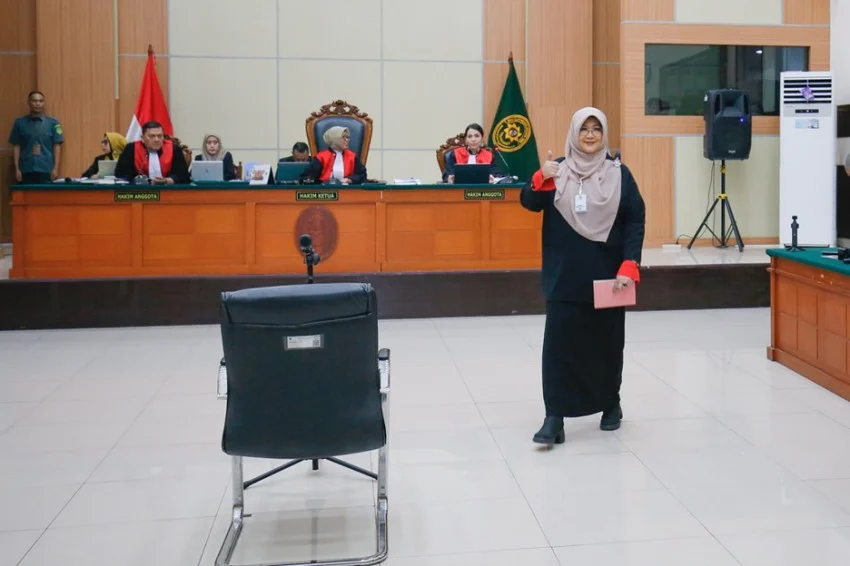
Doctor Tifa Charged with 'Deepest Insult' to President Jokowi
Indonesian prosecutors have charged Doctor Tifa, alleging her actions constituted the 'deepest insult' to President Jokowi. While specific details of the alleged insult and its legal basis remain unclear, the case is likely to spark debate on criticism of public figures.
This article requires PRO
This article is outside the free access window or is a special report. PRO unlocks it and the full archive.
Related articles
- Doctor Tifa Raises Funds by Selling Books to Face Jokowi's Diploma Lawsuit
Doctor Tifa has launched a fundraising campaign by selling books to cover legal costs associated with a lawsuit challenging President Joko Widodo's academic credentials. This initiative highlights growing political interest in Indonesia and the diverse ways citizens engage with public discourse.
- Jokowi's Diploma Lawsuit: Dokter Tifa Claims "No Sponsors, Only Allah"
In the ongoing lawsuit challenging President Jokowi's academic credentials, plaintiff Dokter Tifa has declared that she has no sponsors, with "only Allah" as her backer. This statement has drawn attention, hinting at the political and social undercurrents of the legal challenge.
- Jokowi's Diploma Case: Dokter Tifa Accompanied by 25 Lawyers at First Hearing
The first hearing in a defamation case concerning Indonesian President Joko Widodo's academic credentials took place at the East Jakarta District Court. The defendant, Dokter Tifa (Tifauzia Tyassuma), appeared with a legal team of 25 lawyers. The court announced it would allow media live streaming, with exceptions for certain witness testimonies.
- Doctor Tifa Ready for First Hearing in Jokowi's Diploma Case, Backed by 25 Lawyers
Doctor Tifa, the plaintiff in a lawsuit challenging President Joko Widodo's academic credentials, is preparing for the first court hearing. She will be supported by a legal team of 25 lawyers. The case has garnered significant attention in Indonesian political circles.