Vietnam Accelerates Key Infrastructure for Nuclear Power Projects
Politics
2026年7月30日
5
VietnamPlus English

General articles are free for 24 hours after publish.

Vietnam Accelerates Key Infrastructure for Nuclear Power Projects

Share
AI Summary

Vietnam is accelerating infrastructure development for its nuclear power projects, with a total investment of approximately VND 6.7 trillion (USD 255 million) allocated for land acquisition, compensation, construction, and management. The goal is to complete land handover procedures by the end of 2025, signaling a renewed focus on nuclear energy as part of its long-term energy security and economic growth strategy.

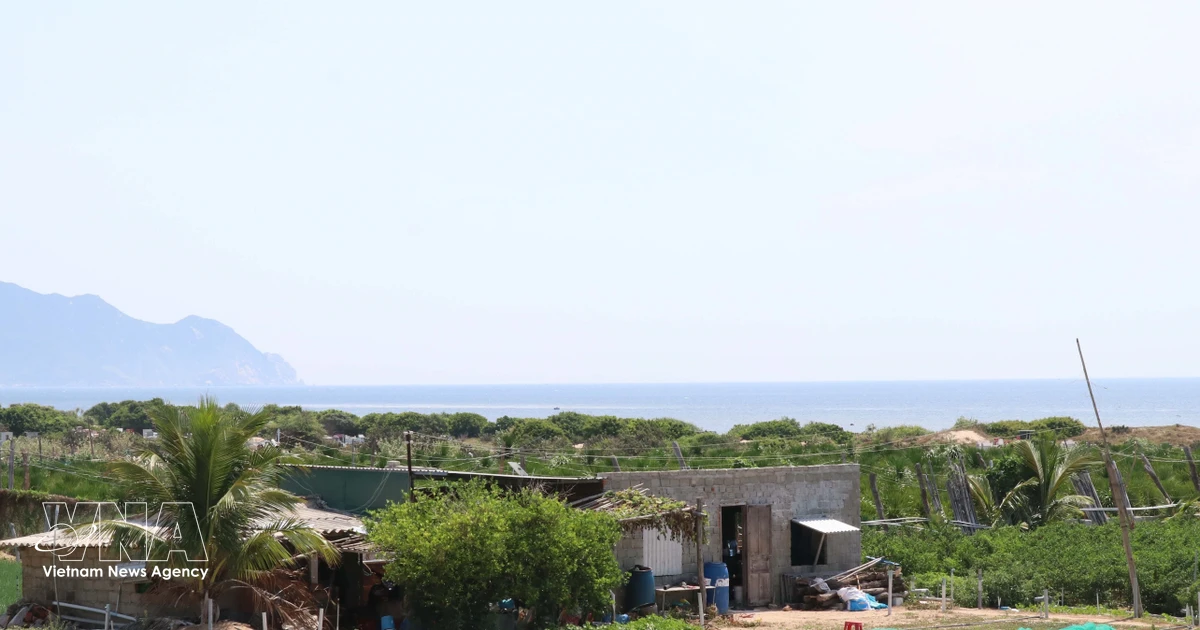
Under the resolution, the Ministry of Finance will continue to lead the appraisal process, with the Minister of Finance serving as chairman of the appraisal council for the pre-feasibility study report of the project’s adjusted investment policy, as assigned by the Prime Minister in Notice No. 21/TB-VPCP dated January 11, 2026. According to the Khanh Hoa provincial People’s Committee, the resettlement and site clearance project carries a total investment of about 6.7 trillion VND (about 255 million USD). Of the total, approximately 5.28 trillion VND is earmarked for compensation and site clearance, around 1.15 trillion VND for construction and equipment, and nearly 287 billion VND for project management, consultancy, other expenses and contingencies. Building upon the previous groundwork, local authorities are working with the projects' investors to review and adjust planning schemes, eyeing to complete land handover procedures at the end of December 2025. To maximise the EVFTA's long-term benefits, Vietnamese businesses are recommended to move beyond relying on tariff incentives and instead invest in technology, green transformation, data governance and traceability. Looking beyond 2026, economists argue that Vietnam's focus should shift from achieving a single year of double-digit growth to creating conditions for sustained high growth over the 2026-2030 period and beyond. As Vietnam made a commitment to net-zero emissions by 2050 at the 26th United Nations Climate Change Conference (COP26), hydrogen – particularly green hydrogen – is seen as a strategic solution for decarbonising sectors that are difficult to electrify, including heavy industry, long-distance transport, shipping and aviation. Sun PhuQuoc Airways announced that the Dong Hoi–Cam Ranh route will begin operations on August 16, 2026, using Airbus A320neo aircraft with a capacity of around 200 passengers. The service will operate three round trips a week, on Tuesdays, Fridays and Sundays. With the current trading band of +/- 5%, the ceiling rate applicable for commercial banks during the day is 26,586 VND/USD, and the floor rate 24,054 VND/USD. The reform strategy, approved under Decision 1413/QD-TTg, envisions a more balanced financial market structure with stronger links between its banking, capital and insurance sectors, in line with the country’s target of high growth by 2045. The plan seeks to develop a balanced and modern financial market that is closely integrated with regional and global markets, strengthens the mobilisation and allocation of domestic and foreign capital, and enhances the market’s role as a key provider of medium- and long-term capital for the economy and as a major driver of sustained high economic growth. Unlike many manufacturing industries that rely on concentrated sources of raw materials, the recycled paper supply chain depends on a fragmented network of individual collectors, collection points, baling stations, traders and recycling mills. TikTok Vietnam, a popular short-video platform, has joined hands with the Central Coordination Office of the National Target Programme and the Centre for Agricultural Trade and Environmental Promotion to enhance the rural economy through e-commerce. China has become the main growth engine for Vietnam's shrimp exports, offsetting weaker sales to the US as exporters navigate trade uncertainty, high shipping costs and tougher market requirements. To make sure the restructuring delivers a genuine shift in Vinacomin’s development model, Party General Secretary and State President To Lam called for the urgent completion of a substantive, tightly focused restructuring plan for the 2026-2030 period. Co-hosted by the Vietnam Trade Office in Australia, the Australia-Vietnam Investment and Logistics Council, and the Northern Vietnam Steel Structure Association, the gathering drew business representatives, industry bodies, and experts in construction, inspection, legal affairs, and logistics. Minister Counsellor at the Vietnamese Embassy in China Hoang Van Tuan described VIS 2026, to be organised by the Ministry of Industry and Trade, as an important initiative to strengthen connections between Vietnamese enterprises and international importers, distributors and business partners. Deputy Prime Minister Nguyen Van Thang asked Zug and Swiss financial and technology firms, including Crypto Valley, to strengthen cooperation with Vietnam by promoting expert exchanges, providing policy advice on crypto asset market regulation, supporting the development of digital asset market infrastructure, and fostering business links in the fields of blockchain and innovation. According to a WB letter dated July 1, 2026, the proposed lending portfolio includes around 24 projects with an estimated total value of 9.3 billion USD, mainly covering transport, energy, climate-resilient infrastructure and budget support. With the current trading band of +/- 5%, the ceiling rate applicable for commercial banks during the day is 26,571 VND/USD, and the floor rate 24,041 VND/USD. Under a blueprint issued on July 27, 2026, the capital city aims to have 500 businesses and organisations participating in or connected to the scheme by 2028. It also targets 1,000 products on dedicated digital storefronts or linked online platforms, with at least 80% of products carrying traceability information or suitable identification codes. Bac Ninh province has set a 2030 goal for all State-owned enterprises to adopt modern, digital corporate governance as part of a sweeping restructuring to boost efficiency and transparency. Under the province's master plan for 2021–2030 with a vision to 2050, An Giang will prioritise investment in five strategic sectors: strategic infrastructure; processing industries and clean energy; trade, services, logistics and border-gate economy; high-quality tourism; and high-tech agriculture, ecological development and the circular economy. Vietnam has consistently attached importance to the conservation and sustainable use of aquatic resources, the fulfilment of international obligations, and the promotion of regional and international cooperation in accordance with international law, particularly the 1982 United Nations Convention on the Law of the Sea (UNCLOS). Copyright, VietnamPlus, Vietnam News Agency (VNA) Editor-in-chief, Mr. Tran Tien Duan.

0

Original source

VietnamPlus English

原文を読む