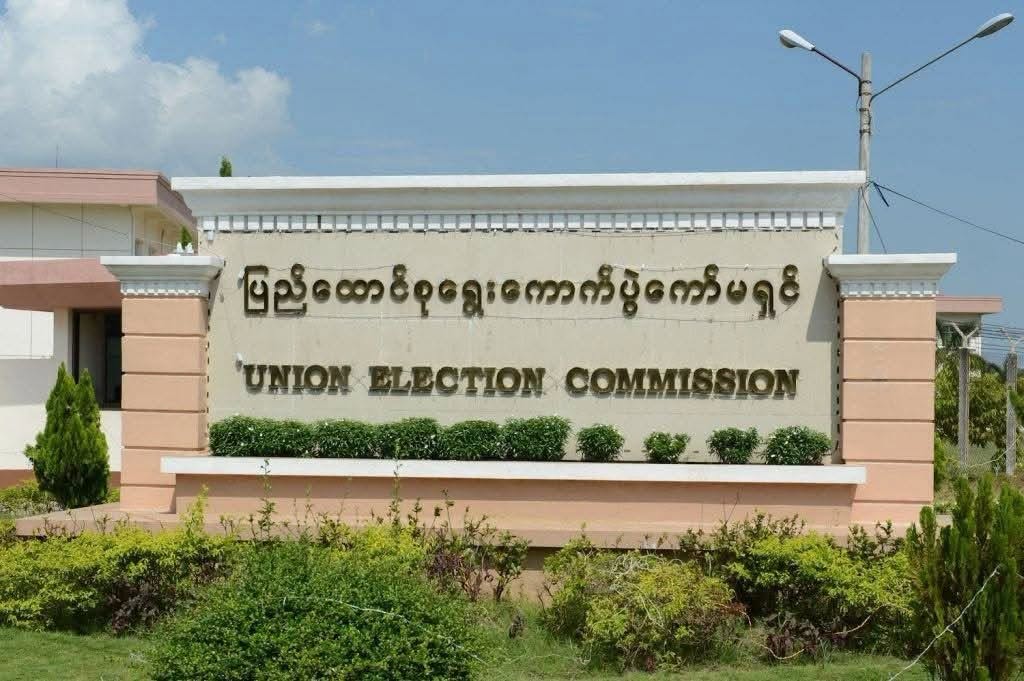
Military regime tightens educational qualifications for parliamentary candidates, requiring a degree
The interim government under the military regime has tightened the educational qualifications for parliamentary candidates who will contest in the upcoming sham elections, requiring them to have obtained a degree, it has
The interim government under the military regime has tightened the educational qualifications for parliamentary candidates who will contest in the upcoming sham elections, requiring them to have obtained a degree, it has been learned. The interim government released the draft law amending the election laws for the interim parliament for the seventh time on July 14, and it has been amended in Section 8(c) of the election laws for the People's Assembly, the National Assembly, and the State and Region Assemblies to read: "Must be a graduate from a university, degree college, or college recognized by the State." After the coup, the educational qualification for parliamentary candidates was set at passing the 10th grade, but it has now been raised and tightened to require a degree from a domestic college or university. "This is to block the young students of the CDM who have not yet finished school and the local politicians from ethnic areas who have revolted against their coup. Limiting it to those with a degree at a time when the education system has been destroyed after the military coup is a deliberate blow. It is an attempt to ensure that the power seized by force remains in the hands of the military forever," a veteran politician told the Irrawaddy Times. The draft law amending the People's Assembly Election Law for the seventh time, released today, has added Section 11-a, stating that if a representative party has its registration revoked under the Political Parties Registration Law, its status as a Member of Parliament will be automatically invalidated. However, if a party is dissolved or its registration is revoked, it must apply to transfer to another party within 60 days, and failure to do so will result in the loss of parliamentary status. Similarly, those who have been disqualified by the election tribunal for failing to submit their election expense statements have also been newly restricted under Section 11(d) to prevent them from contesting as candidates. Furthermore, changes have been made to the election campaign period and voting times. The voting time, which was previously set from 6 AM to 4 PM, has been changed to 7 AM to 5 PM in this amendment. Regarding advance voting, the phrase "2 days in advance" has been replaced with "3 days in advance," and "before 4 PM" has been replaced with "before 9 AM." This "interim government" is a group of military cronies, arbitrarily formed, which has held sham elections three times between 2025 and 2026, despite strong objections and rejections from the entire public and the international community, including the United Nations. By repeatedly amending the laws in this manner, the interim government is taking steps to arbitrarily control the central executive structure and regulations of political parties in the mock elections it plans to hold. Photo: MOI
多角的分析
人材育成は長期的な経済基盤に関わります。教育機会が広がれば労働力の質向上につながりますが、地域格差や政治的選抜が強まると効果は限定されます。
投資家にとって教育政策は短期材料ではありませんが、技能人材の供給力を測る指標です。若者政策が職業教育や地域産業に接続するかが重要です。
若者政策の意味は、式典の華やかさではなく、教育への接続にあります。軍が示す制度が地方の学校や家庭まで届けば、教育は統合の標語ではなく生活の選択肢になります。
家庭や学生にとっては、制度が実際の進学・就職機会につながるかが大切です。公式行事だけでなく、教育環境の改善が伴うかを見守る必要があります。
背景・歴史的文脈
このニュースは、ミャンマー政府が若者育成や国家人材づくりを公式に打ち出す文脈にあります。教育・青少年政策は将来の行政人材や社会統合と結びつきますが、政治状況が不安定な中では、制度の目的と現場の実感に差が出やすい分野です。
原文ソース
Ayeyarwaddy Times