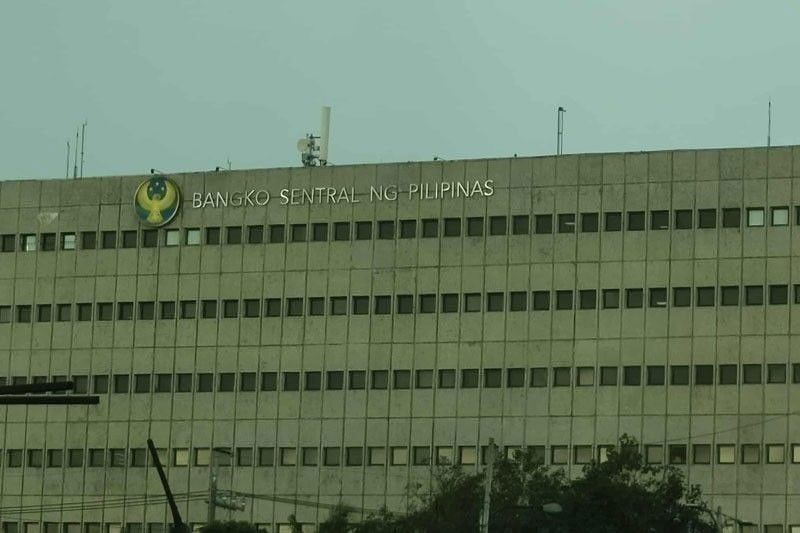
BSP raises BOP deficit forecasts for PH
Economy
2026年6月29日
5
Philstar Business

BSP raises BOP deficit forecasts for PH

AI サマリー

The Bangko Sentral ng Pilipinas (BSP) has revised upward its balance of payments deficit forecasts for 2026 and 2027, citing elevated global uncertainty, weaker capital inflows, and persistent energy price pressures. However, it narrowed its current account deficit projections for both years, anticipating tempered import growth due to softer domestic demand.

MANILA, Philippines — The Philippines is expected to post wider balance of payments deficits this year and next as elevated global uncertainty, weaker capital inflows and persistent energy price pressures continue to weigh on the country’s external position, the Bangko Sentral ng Pilipinas said. Based on its latest forecasts, the BSP now expects the BOP deficit to reach $10.7 billion in 2026, wider than the $7.8-billion shortfall projected in the first quarter. This is equivalent to -2.1 percent of gross domestic product (GDP), higher than the -1.5 percent previously. For 2027, the central bank raised its BOP deficit forecast to $11 billion from $8.5 billion, equivalent to -2.1 percent of GDP instead of the earlier projection of -1.6 percent. “The Philippines’ external position is expected to remain under pressure in 2026 to 2027, as cost-driven trade imbalances and tighter financial conditions continue to shape both current account and financing dynamics,” the BSP said. The BSP, however, narrowed its current account deficit projections for both years, reflecting expectations that softer domestic demand would help temper import growth. The current account deficit for 2026 was narrowed to $18 billion (-3.6 percent of GDP) from the previous projection of $20.3 billion (-4 percent of GDP). The 2027 forecast was likewise improved to a deficit of $19.7 billion, equivalent to -3.7 percent of GDP, from the earlier estimate of $21.9 billion or -4 percent of GDP. The improvement in the current account outlook largely reflected lower import projections. For 2026, the BSP cut its goods import growth forecast to four percent from six percent previously, while maintaining its goods export growth projection at three percent. Services export growth was also lowered to three percent from four percent, while services import growth was reduced to four percent from five percent. Cash remittance growth was trimmed slightly to 2.7 percent from three percent, while revenue growth from the business process outsourcing (BPO) industry was cut to 2.5 percent from four percent. Travel receipts growth remained unchanged at one percent. For 2027, the BSP retained its forecasts for goods export growth at four percent, goods import growth at five percent, travel receipts growth at two percent, services import growth at six percent and cash remittance growth at three percent. However, it lowered its services export growth projection to three percent from four percent and reduced its BPO revenue growth forecast to three percent from four percent. On the financing side, the BSP lowered its 2026 net foreign direct investment (FDI) forecast to $7 billion from $7.5 billion, while reducing its projection for net foreign portfolio investment (FPI) liabilities to $1.8 billion from $3.7 billion. For next year, the net FDI forecast was maintained at $8 billion, but the net FPI projection was trimmed to $3.3 billion from $4.1 billion. The BSP also downgraded its gross international reserves projections to $104 billion for end-2026 from $111 billion previously and to $105 billion for end-2027 from $112 billion. Looking ahead, the central bank said non-trade inflows are expected to provide only partial support as remittance growth slows, IT-BPM earnings moderate and tourism recovery remains gradual. It said that financing inflows would remain positive but subdued due to “tighter global liquidity, higher-for-longer interest rates, and increased investor selectivity.” Still, the BSP expects conditions to gradually improve beyond this year. “Although some recovery is anticipated in 2027 – supported by improving global conditions and structural catalysts such as bond index inclusion and sectoral investment pipelines – the rebound in inflows is likely to be gradual and uneven,” it added.

多角的分析

経済的影響

フィリピン経済は、国際的な金融引き締めとエネルギー価格の変動による輸入コストの上昇という二重の圧力に直面している。経常収支赤字の拡大予測は、輸出の伸び悩みと輸入の増加が続くと見込まれることを示唆している。特に、BPO産業や海外からの送金といった主要な外貨獲得源の成長鈍化は、外貨準備高への圧迫要因となりうる。国内需要の抑制による輸入の減速は、短期的には経常収支赤字の悪化を緩和する可能性はあるが、構造的な問題解決には繋がらない。これは、フィリピン経済がグローバルなショックに対して脆弱であることを示している。

投資家心理

投資家にとって、経常収支赤字の拡大と外貨準備高の減少予測は、フィリピンペソの安定性に対する懸念材料となる。特に、資本流入の鈍化は、外国からの直接投資やポートフォリオ投資の減少を示唆しており、これは市場のセンチメント悪化やリスク回避の動きに繋がる可能性がある。高金利環境が長期化するとの見通しは、借入コストの増加を意味し、企業の投資意欲を減退させる可能性がある。投資家は、フィリピン経済の回復力と、中央銀行による為替レート安定化策の効果を注視する必要がある。

社会的影響

経常収支赤字の拡大は、輸入物価の上昇を通じて国内のインフレ圧力を高める可能性がある。これは、特に低所得者層の購買力を低下させ、生活必需品の価格上昇という形で国民生活に直接的な影響を与える。海外からの送金成長の鈍化は、多くのフィリピン人家庭にとって重要な収入源であり、家計の安定に影響を及ぼす可能性がある。また、BPO産業の成長鈍化は、雇用創出への期待に影を落とし、若年層の就職機会に影響を与えることも懸念される。

市民の声

国民生活への直接的な影響としては、輸入物価の上昇に伴うインフレの加速が最も懸念される。食料品や燃料などの生活必需品の価格が上昇すれば、家計の負担が増大し、特に貧困層の生活はさらに苦しくなる。海外からの送金は、多くのフィリピン人家庭の生活を支える重要な柱であり、その成長鈍化は、教育費や医療費の捻出を困難にする可能性がある。また、BPO産業はフィリピンの主要な雇用創出分野の一つであり、その成長鈍化は、若年層の雇用機会の減少に繋がる恐れがある。

背景・歴史的文脈

フィリピンの経常収支は、伝統的に海外からの送金とBPO産業からの収入に大きく依存してきた。これらの外貨収入は、輸入コストの増加や資本流出を相殺する役割を果たしてきた。しかし、近年のグローバル経済の変動、特にエネルギー価格の高騰や国際的な金融引き締めは、これらの収入源の安定性に影響を与えている。2022年以降、世界的なインフレ圧力の高まりと、それに伴う主要中央銀行の利上げは、フィリピン経済にも波及し、輸入コストの増加と資本流出のリスクを高めてきた。今回のBSPの予測は、これらの構造的な課題と短期的な経済ショックが複合的に作用した結果と言える。

原文ソース

Philstar Business

原文を読む