General articles are free for 24 hours after publish.
Vietnam's Top Leader Emphasizes National Unity and Development at Hung Kings' Temple Anniversary
Vietnamese President and Party General Secretary To Lam, speaking at the 72nd anniversary of Ho Chi Minh's visit to Hung Kings' Temple, stressed the importance of national unity, development, and a peaceful foreign policy. He particularly called for balancing economic growth with national security and respecting citizens' rights and diversity.
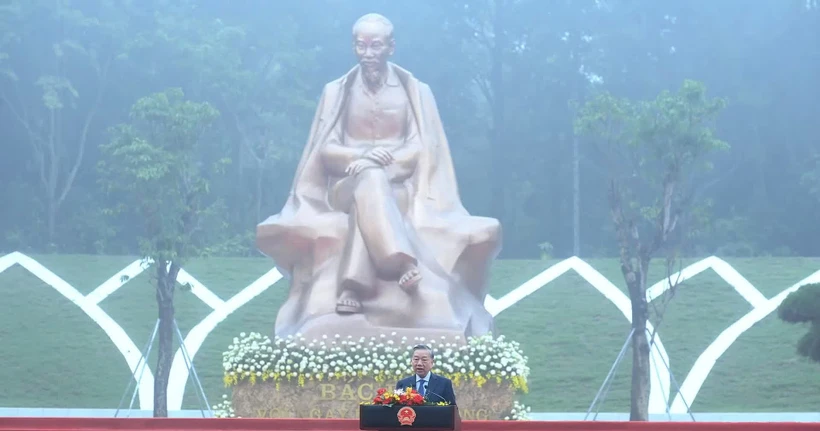
On September 19, General Secretary and President To Lam delivered a speech at the ceremony commemorating the 72nd anniversary of President Ho Chi Minh's visit to Hung Kings' Temple. The event also marked the inauguration of the "President Ho Chi Minh with the National Day" statue. Lam emphasized the importance of national unity, development, and safeguarding the nation's independence, sovereignty, and territorial integrity. Speaking at the sacred site of the Vietnamese nation's origin, Lam paid tribute to the Hung Kings, national heroes, and President Ho Chi Minh. He urged every generation of Vietnamese to uphold their responsibility in preserving the legacy of their ancestors and further developing the country. Lam highlighted that the independence, achieved through immense sacrifice, must be firmly protected, and the achievements of past generations should be continued by the present one to ensure peace and better development for future generations. Lam acknowledged the significant achievements made during the 40 years of "Doi Moi" (Renovation) under the Party's leadership. However, he also pointed out new challenges facing peace, development, and national self-reliance in a volatile world. He stressed the need to strongly promote internal strengths, seize opportunities, and closely combine national construction with defense, integrating national strength with the power of the era. He reiterated the commitment to resolutely and persistently protect independence, sovereignty, unity, and territorial integrity, as well as the Party, State, people, and socialist regime, following the path chosen by President Ho Chi Minh. Lam called for proactive defense from an early stage and from afar, building a strong national defense and public security posture based on the "will of the people." He stated that national defense strength must be built upon economic prowess, scientific and technological capabilities, and the solidarity of the entire nation. Vietnam, having experienced numerous sacrifices for independence, deeply understands the value of peace. The nation adheres to an independent, self-reliant, multilateral, and diversified foreign policy, resolving disagreements through peaceful means based on international law. Lam emphasized that maintaining peace for national construction and contributing responsibly to the international community are the interests and aspirations of the Vietnamese people. He stressed that sustainable national defense requires building an increasingly prosperous nation. This involves leveraging the intellect, talent, and creativity of the Vietnamese people, enhancing productivity, mastering technology, and building a competitive and resilient economy. Lam called for decisive action from today to achieve the goals of becoming a developing country with modern industry and high average income by 2030, and a developed, high-income country by 2045. He added that each step of progress must be linked to improving people's lives, protecting the environment, and preserving cultural identity. Lam highlighted the phrase "together" from President Ho Chi Minh's teachings, emphasizing the strength of great national solidarity. He stated that building and defending the nation is the cause of all Vietnamese people, both within the country and abroad. The bond of kinship and the sense of shared destiny must be nurtured through trust, sharing, and opportunities to contribute to the nation. Solidarity begins with listening to the people, promoting their right to self-mastery, ensuring fairness, and respecting the diversity of communities. Every individual should have the opportunity to develop their abilities, have their contributions recognized, and enjoy the fruits of development. He also stressed the need for practical care for people in remote areas and those facing difficulties, noting that when people see their future intertwined with the nation's future, the great solidarity becomes stronger.
Original source
Nhan Dan