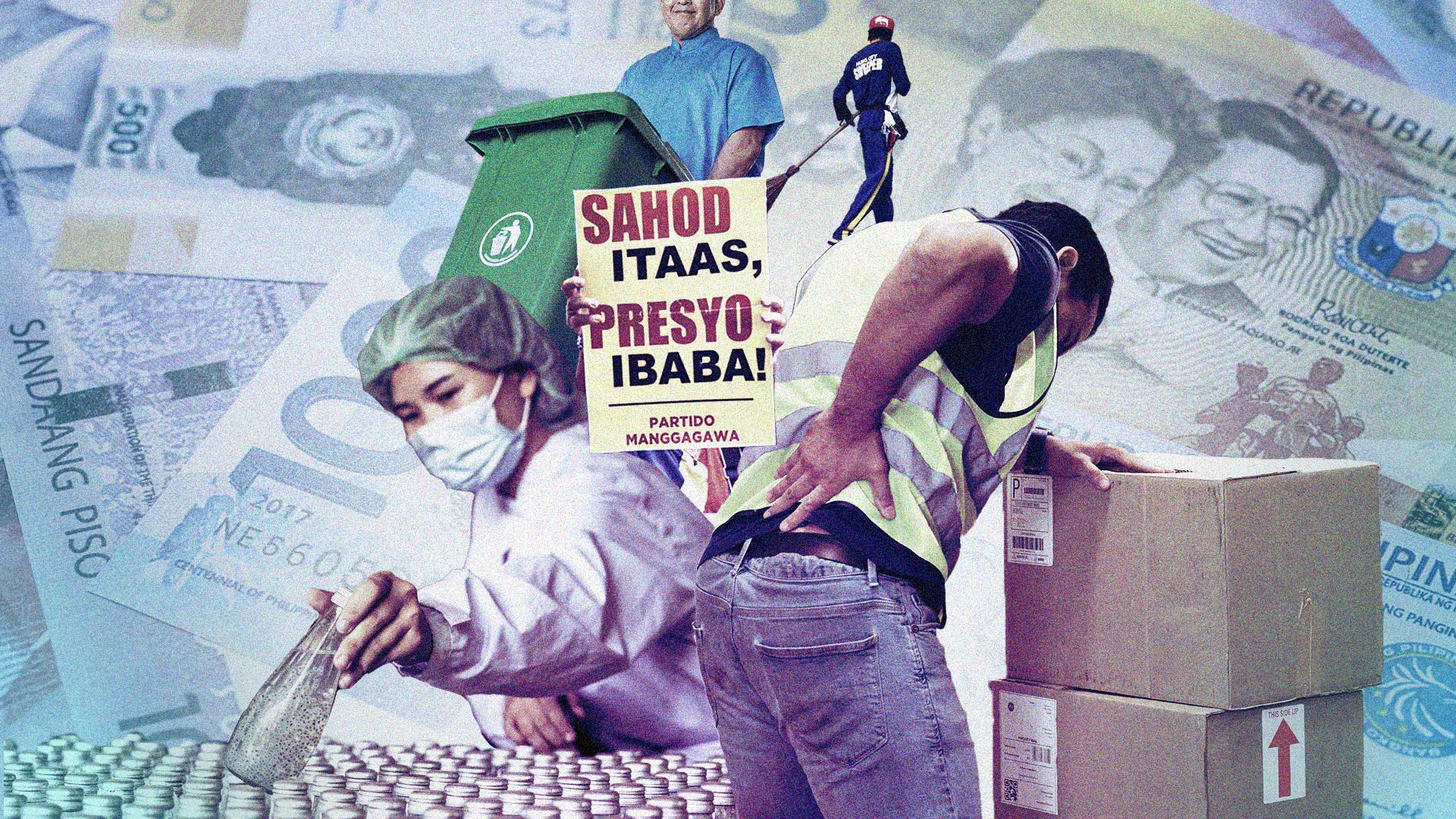
Metro Manila Workers to Get 'Historic' P85 Minimum Wage Hike
Minimum wage workers in Metro Manila, Philippines, are set to receive a historic P85 daily pay increase, the largest ever approved by the National Capital Region (NCR) wage board. The hike will be implemented in two tranches, raising the daily minimum wage for the non-agriculture sector to P780 by January 2027. However, labor groups argue it falls short of covering the rising cost of living.
MANILA, Philippines – Minimum wage workers in Metro Manila are set to receive a P85 daily pay increase, the largest ever approved by the National Capital Region (NCR) wage board. The Department of Labor and Employment (DOLE) described the wage increase as “historic,” saying it would benefit more than 1.1 million workers in the capital region. The increase, touted as the biggest single wage increase for NCR workers, will be rolled out in two tranches: P60 effective July 19, 2026, and another P25 effective January 20, 2027. The adjustment will raise the daily minimum wage in Metro Manila’s non-agriculture sector from P695 to P755 on July 19, 2026, then to P780 on January 20, 2027. For agriculture workers, retail and service establishments with 15 or fewer workers, and manufacturing firms with fewer than 10 workers, the daily minimum wage will rise to P718 on July 19, then to P743 on January 20. The increase comes as workers in the capital region grapple with steep living costs. PSA data show that families in Metro Manila recorded the highest average annual spending among all regions in 2023 at P385,050, well above the national average of P258,050. Must Read Why do minimum wages differ across regions? Is this now a liveable wage? Minimum wage debates are often a tug-of-war between workers seeking relief from rising prices and businesses warning against higher labor costs. At a House committee on labor and employment hearing that was ongoing when the announcement was made, Kamanggagawa party-list Representative Elijah San Fernando welcomed the increase but said it remained far below what workers need. “Salamat po’t may P85, pero barya pa rin po ‘yan (Thank you for the P85, but this is just spare change),” San Fernando said. San Fernando argued that Congress should still push through with a legislated P200 daily wage increase. (READ: Overworked, underpaid workers: The push and pull of achieving liveable wages) Akbayan Representative Perci Cendaña also said the wage board increase should not be used as an argument against pending wage hike bills. “Yes this is a good step, but this is just a first step,” Cendaña said. “This must be bolstered by a legislated wage hike to fully allow our workers to survive the onslaught of price increases.” IBON Foundation executive director Sonny Africa also said the wage hike would still fall short of the family living wage estimated by the think tank. IBON’s family living wage is not an official wage rate, but a think tank estimate of how much a family of five needs daily to live decently. Its latest May 2026 estimate puts the NCR family living wage at P1,279 per day, compared with the new P780 minimum wage. “It’ll fail to moderate worker unrest. Even if the hike is completely given today instead of staggered, the NCR minimum wage is still just 61% of the NCR family living wage,” Africa told Rappler. Africa also criticized the regional nature of the wage order, saying the increase benefits only NCR workers rather than minimum wage earners nationwide. “NCR workers benefit from their proximity to power – their mass actions have a more immediate political impact on Malacañang than workers outside the region,” he said. Business groups, meanwhile, have been more cautious about legislated wage increases. Philippine Chamber of Commerce and Industry national director for labor and employment Arturo Guerrero III warned lawmakers against treating a proposed P200 across-the-board wage hike as an ordinary wage adjustment. “We have a responsibility to ensure that the policies we enact today do not destroy the very jobs we seek to protect tomorrow,” Guerrero said. “A legislated P200 across-the-board wage increase is not just another wage adjustment. It is a structural change to the Philippine economy.” Guerrero said higher labor costs, if not matched by productivity gains, could be passed on to consumers through higher prices. He also warned that sharp wage increases could affect the Philippines’ competitiveness against other ASEAN economies and against automation. “Companies no longer have one option when labor becomes expensive. They can relocate to another country or they can eliminate jobs altogether through automation,” Guerrero said. – Rappler.com
多角的分析
今回の最低賃金引き上げは、フィリピン経済におけるインフレと実質賃金の低下という長年の課題に対する対応策である。しかし、引き上げ幅が生活費の上昇ペースに追いついていないという指摘は、経済の構造的な問題を示唆している。特に、生産性向上を伴わない賃上げは、企業にとってはコスト増となり、それが消費物価の上昇に転嫁されるインフレ・スパイラルを招くリスクがある。また、ASEAN諸国との競争力低下や、自動化による雇用喪失の可能性は、フィリピン経済の長期的な成長戦略に影響を与えうる。
最低賃金の段階的な引き上げは、特に中小企業にとって経営コストの増加要因となる。企業は、賃上げ分を吸収するために、生産性向上策を講じるか、価格転嫁を検討する必要に迫られる。しかし、価格転嫁は消費者の購買力を低下させ、内需の減退を招く可能性がある。また、フィリピンの労働コストが近隣諸国と比較して不利になる場合、海外からの直接投資(FDI)の誘致や、既存企業の事業拡大に影響を与えることも考えられる。投資家としては、企業がこれらのコスト増にどう対応できるか、生産性向上の取り組みや、価格設定戦略を注視する必要がある。
マニラ首都圏の労働者にとって、日額85ペソの賃上げは、日々の生活費の支払いにわずかながらも安心感をもたらす可能性がある。しかし、多くの労働者、特に IBON 財団が推計する「家族生計賃金」に遠く及ばない現状は、依然として多くの世帯が経済的な困難に直面していることを示している。特に、低賃金労働者は、食料品、交通費、住居費といった生活必需品の価格上昇の影響を直接的に受けるため、賃上げが実質的な生活水準の向上に繋がらない場合、社会的な不満が高まる可能性がある。また、地域間の賃金格差は、地方からの都市部への人口流入や、地域間の経済格差をさらに広げる要因となりうる。
マニラ首都圏で最低賃金で働く市民にとって、日額85ペソの賃上げは、確かに歓迎すべきニュースです。しかし、多くの市民は、食料品や交通費、家賃などの生活必需品の価格が、この賃上げ分をはるかに上回るペースで上昇していると感じています。例えば、市場で野菜や肉の値段が上がっているのを日々実感していますし、ジープニーやバスの運賃も値上げされることがあります。今回の賃上げは、日々の生活を少し楽にしてくれるかもしれませんが、IBON財団が言うように、家族が安心して暮らせるレベルにはまだ程遠いです。特に、子供の学費や医療費を考えると、さらなる収入の増加が切実に求められています。
背景・歴史的文脈
フィリピンにおける最低賃金引き上げの議論は、長年にわたりインフレと貧困問題と密接に関わってきた。過去の賃金委員会による決定は、しばしば労働組合の要求と経済界の懸念との間で妥協点を見出す形で行われてきた。特に、マニラ首都圏は国内経済の中心であり、その賃金水準は全国の他の地域に影響を与えるため、常に注目が集まる。2023年の年間家族支出データ(PSA)は、首都圏における生活費の高さを示しており、これが今回の賃上げ要求の背景にある。IBON財団のようなシンクタンクは、公式な賃金率ではなく「家族生計賃金」を算出し、労働者が最低限の生活を送るために必要な金額を提示することで、議論に新たな視点を提供している。
原文ソース
Rappler Business