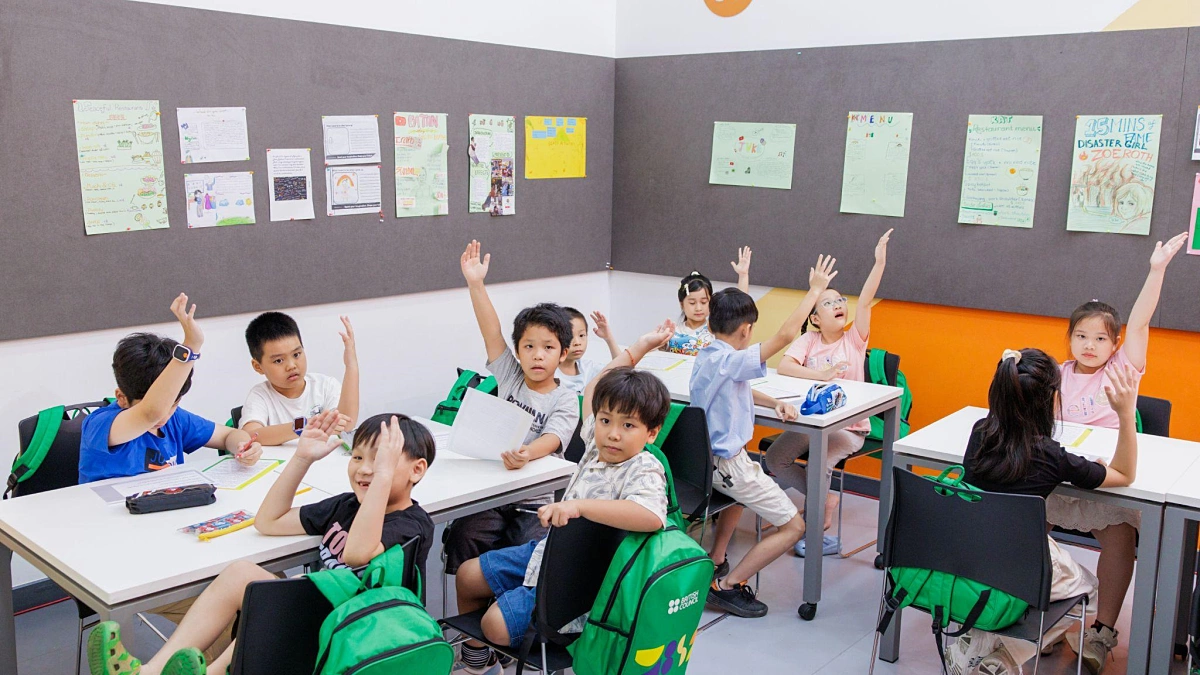
Vietnam's Education: Fostering Proactive Learning for the AI Era
Technology
2026年7月3日
6
VnExpress

Vietnam's Education: Fostering Proactive Learning for the AI Era

AI サマリー

Education in Vietnam is shifting towards a learner-centric approach in the AI era, moving beyond mere knowledge transfer. The British Council's methodology emphasizes critical thinking, self-expression, and fostering a safe, respectful learning environment to ignite students' proactivity.

In Vietnam, the education sector is undergoing a transformation in response to the rapid advancement of Artificial Intelligence (AI). Educational methods that foster students' critical thinking and proactivity, rather than just knowledge acquisition, are gaining attention. The British Council is promoting pedagogical approaches that encourage students to engage actively in their learning to adapt to this changing landscape. Through building an open learning atmosphere in the classroom, the British Council aims to ignite students' joy of learning and cultivate progressive thinking skills. A representative from the British Council notes that in the AI era, where students can easily access information through technology, teachers are no longer the sole "fountain of knowledge" but rather facilitators who create meaningful learning interactions. Teachers also act as companions helping students build a "filter" for critical thinking. By learning to ask questions, verify information, and process data with their own independent thinking, students can grow in the digital age. Tifany Cicilia, a teacher at the British Council in Ho Chi Minh City, states that teaching young children is not just about imparting knowledge but also a journey to help them adapt to a formal learning environment. Therefore, before expecting children to learn well, teachers need to create a space that is safe and rich in respect, allowing children to feel heard and focused. One of her methods involves playing the "Boundary song," a song about personal boundaries. Instead of explaining abstract concepts, she has students listen to music and watch illustrated scenarios, such as a child being pushed on a slide or feeling uncomfortable when someone sits too close. From these situations, she teaches them to say simple phrases like "Please stop, I don’t like that" or "Space." By repeating this song at the beginning of class, children gradually understand that discipline in the classroom begins with respecting the feelings of those around them. According to Tifany Cicilia, young children desire three things from adults: to be listened to, to be acknowledged, and to be empowered. Understanding that her young students enjoy praise, she designs achievable goals for them to conquer lessons step by step and receive stickers for rewards. Each sticker serves as encouragement, boosting their confidence and enthusiasm for learning. When children cry, lose focus, or refuse to follow instructions, she often bends down to their eye level and gently asks what is truly happening. For her, discipline does not begin with commands but with the ability to tune into the classroom's emotions. Regardless of age, Tifany believes students can only develop when they feel safe and respected. However, the way this feeling is created differs at each developmental stage. For middle schoolers, she often writes the lesson plan on the board to reduce anxiety and allows them to choose their preferred speaking practice methods, such as live presentations or self-recording via iPad. "I believe the best educational approach is to offer choices, allowing them to be proactive rather than imposing a single way of doing things," she says. Her educational approach reflects the British Council's educational philosophy, which emphasizes values of equality, safety, diversity, and inclusion. As a result, each learner is protected, respected as a unique individual, and free to develop at their own pace. The center also emphasizes that learning does not stop in the classroom. Parents are equally important companions. Parents can support their children by showing interest, asking about their lessons, having their child "teach" them a new word, or reading together books borrowed from the British Council library before bedtime. For Tifany, the success of a lesson is not measured by the number of words students remember but by whether they feel confident enough to try, make mistakes, and continue learning. This is also how the British Council nurtures independent learners, ready to adapt and thrive in a constantly changing world.

多角的分析

経済的影響

ベトナム経済は、製造業の成長と輸出拡大に牽引され、近年著しい経済成長を遂げています。この成長を支える重要な要素の一つが、若年人口が多く、教育への投資意欲が高いことです。AI時代に対応できる人材育成は、将来的な国際競争力の維持・向上に不可欠であり、教育分野への投資は、長期的な経済成長の基盤強化に繋がると考えられます。特に、批判的思考や問題解決能力を育む教育は、高度な技術やイノベーションを生み出すための土壌となります。ブリティッシュ・カウンシルのような国際機関による先進的な教育手法の導入は、ベトナムの人的資本開発に貢献し、経済のさらなる高度化を促進する可能性があります。

投資家心理

ベトナムの教育分野への投資は、長期的な視点で見ると、将来の労働力市場の質を高めるという点で魅力的です。AI時代に求められるスキルを持つ人材が増加すれば、ハイテク産業やサービス業への投資が促進される可能性があります。教育機関やEdTech(教育テクノロジー)分野への投資は、成長著しいベトナム市場において、新たなビジネスチャンスを生み出すかもしれません。ただし、教育制度の改革やカリキュラムの導入には時間がかかるため、短期的なリターンを期待する投資家にとっては、慎重な分析が必要です。教育への投資は、間接的にベトナム経済全体の魅力を高める要因となり得ます。

社会的影響

ベトナム社会では、伝統的に教育への高い価値観が存在しますが、AI時代における教育のあり方については、保護者や教育関係者の間で活発な議論がなされています。ブリティッシュ・カウンシルのような機関が提唱する、生徒の主体性や批判的思考を重視する教育法は、旧来の知識詰め込み型教育からの転換を促すものです。ホーチミン市で実践されているような、生徒の感情に寄り添い、安全で尊重される環境を作るアプローチは、子供たちの精神的な成長にも寄与すると考えられます。特に、個人の境界線や自己表現を学ぶことは、多様性が重視される現代社会において、子供たちが健やかに成長するために重要です。この教育手法がベトナム全土に広がることで、より開かれた社会の形成に貢献する可能性があります。

市民の声

ベトナムの市民、特に若い世代は、AIの台頭によって将来の仕事や学習方法がどのように変化するかに関心を持っています。ブリティッシュ・カウンシルのような機関が提供する、主体的な学びを促す教育は、子供たちが変化の激しい時代に適応するためのスキルを身につける助けとなると期待されています。保護者からは、子供が学校でどのように学び、どのようなスキルを習得しているかについての情報提供を求める声があるでしょう。また、教育の質が地域によって異なる場合、都市部と地方部での教育機会の格差が課題となる可能性も指摘されます。子供たちが自信を持って学び、自己表現できるようになることは、親にとって大きな喜びであり、将来への希望となります。

背景・歴史的文脈

ベトナムは、ドイモイ政策以降、経済成長を最優先課題としてきました。その一環として、教育分野への投資も拡大傾向にありますが、依然として知識伝達型の教育が主流でした。近年、AI技術の急速な発展は、教育のあり方そのものに問いを投げかけており、ベトナムも例外ではありません。国際社会では、生徒の主体性、批判的思考力、創造性を育む教育が重視されており、ブリティッシュ・カウンシルのような機関は、こうした先進的な教育手法をベトナムに紹介する役割を担っています。特に、都市部を中心に、変化する社会に対応できる人材育成へのニーズが高まっています。

原文ソース

VnExpress

原文を読む