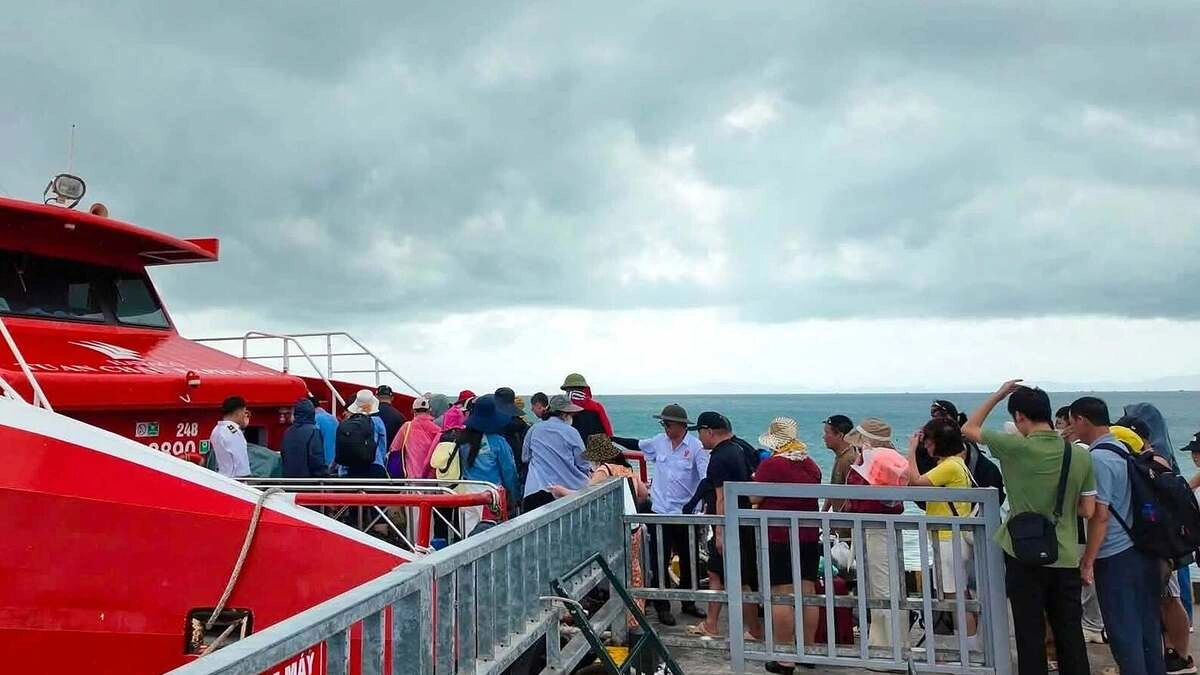
Thousands Evacuated as Typhoon Maysak Nears Vietnam Coast
In anticipation of Typhoon Maysak, thousands of residents and tourists in Co To Island and Van Don district, Quang Ninh province, Vietnam, have been evacuated to the mainland. Authorities are also relocating vessels and aquaculture facilities to safety and are on high alert.
As Typhoon Maysak approaches Vietnam's northern coast, large-scale evacuations of residents and tourists are underway in Co To Island and Van Don district, Quang Ninh province. On Co To Island, the local authorities have moved over 3,000 residents to the mainland. On the evening of July 3, the border guard used signal flares to warn vessels still at sea, and 452 boats and 33 floating houses on the island have relocated to safe havens. Additionally, 45 weak houses have been reinforced in preparation for strong winds. The remaining approximately 2,000 tourists on the island have been advised on safety measures at their accommodations. Around 700 staff members, along with rescue equipment, generators, and life jackets, are on standby for emergency response. Earlier, on the dawn of July 3, seven crew members from a fishing vessel that encountered distress due to rough seas were rescued. In Van Don district, local authorities, in coordination with various departments and community leaders, are inspecting and confirming vessels and aquaculture cages operated by 102 businesses and cooperatives. Authorities have prohibited habitation on floating houses during the typhoon's landfall and ordered residents to evacuate to higher ground. By the evening of July 3, 1,348 fishing boats and transport vessels in Van Don had moved to mooring areas, and 829 out of a total of 3,950 people had relocated to safety. The evacuation of the remaining population is ongoing. Tourists staying on the islands of Quan Lan, Minh Chau, and Ngoc Vung in Quang Ninh province have been informed about the typhoon's progress and advised on safety measures. According to the National Center for Hydro-Meteorological Forecasting, the typhoon is expected to enter the Tonkin Gulf and begin affecting the mainland around noon on July 4. Under the most probable scenario, the Tonkin Gulf, including Bach Long Vi, Van Don, Co To, Cat Hai, and Hon Dau islands, will experience strong winds of level 8-9 (17.2-20.7 m/s), with gusts up to level 11 (30.4-32.6 m/s), and waves reaching 2-4 meters. From noon on July 4, coastal areas of Quang Ninh, Hai Phong, and Hung Yen provinces will face strong winds of level 6-7 (10.8-13.8 m/s), with winds near the storm's center reaching level 8 (17.2-20.7 m/s) and gusts up to level 10 (24.4-28.4 m/s). Waves of 2-3 meters, combined with a storm surge of 0.2-0.4 meters, could cause localized flooding in river mouths and low-lying coastal areas.
多角的分析
台風接近による避難措置は、一時的な経済活動の停止を意味する。特に、観光業が盛んなコトー島やヴァン・ドン地区では、観光客の移動制限や施設の休業により、直接的な経済的損失が発生する。また、養殖業への被害も懸念され、長期的な漁業収入に影響を与える可能性がある。復旧作業やインフラ修繕にもコストがかかり、地域経済への負担となる。
投資家にとっては、自然災害リスクへの対応能力が改めて問われる。沿岸部のインフラ投資や観光関連事業への投資は、気候変動による自然災害のリスクを考慮する必要がある。今回の避難措置は、短期的な事業中断リスクを示唆するが、ベトナム政府の迅速な対応は、リスク管理能力の高さを示す側面もある。しかし、同様の災害が繰り返される場合、保険料の上昇や投資回収期間の長期化につながる可能性がある。
今回の避難措置は、住民の生命と安全を守るための重要な取り組みである。しかし、避難先の確保、食料や水の供給、医療体制など、被災者の生活再建に向けた支援が不可欠となる。特に、脆弱な家屋に住む人々や、経済的に困難な状況にある人々への配慮が求められる。また、観光客の安全確保は、ベトナムの観光イメージにも影響を与えるため、迅速かつ的確な情報提供と支援が重要となる。
台風接近による避難は、住民にとって生活基盤の一時的な喪失を意味する。特に、漁業や観光業で生計を立てている人々は、漁船や事業所の被害、観光客の減少による収入減に直面する可能性がある。避難生活の不便さや、自宅や財産への不安も大きい。行政による迅速な避難誘導や、避難後の生活再建支援が、住民の不安を軽減する鍵となる。
背景・歴史的文脈
ベトナムは、南シナ海に面した長い海岸線を持つため、台風や熱帯低気圧の影響を受けやすい国である。特に北部沿岸地域は、過去にも甚大な被害を受けてきた。近年、気候変動の影響により、台風の強度が増し、発生頻度も高まる傾向にある。このような状況下、ベトナム政府は、国民の生命と財産を守るため、早期警戒システムの強化、避難計画の策定・実施、インフラ整備などに力を入れている。今回のコトー島やヴァン・ドン地区での大規模避難も、こうした背景を踏まえた対応の一環と言える。
原文ソース
VnExpress