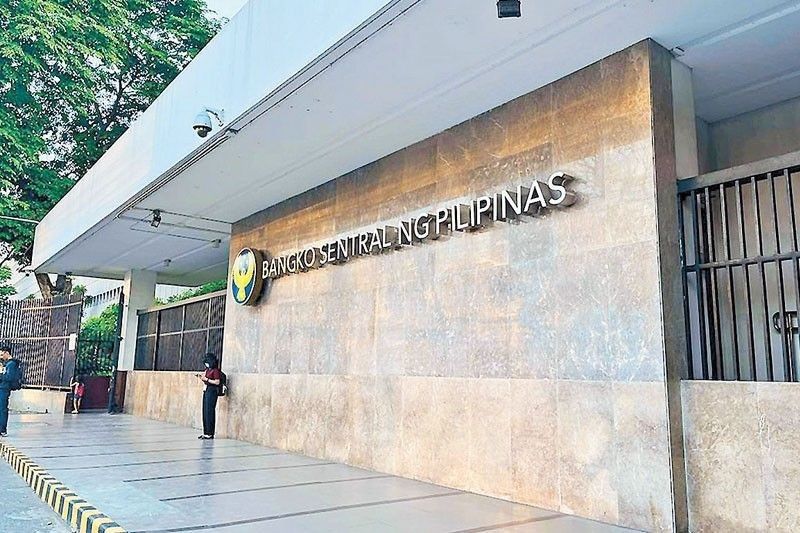
Philippines Enhances Digital Payment Infrastructure to Diversify Remittance and Payment Options
Business
2026年7月30日
5
Philstar Business

General articles are free for 24 hours after publish.

Philippines Enhances Digital Payment Infrastructure to Diversify Remittance and Payment Options

Share
AI Summary

The Bangko Sentral ng Pilipinas (BSP), in collaboration with the payments industry, has launched new digital payment services to facilitate bank transfers, e-wallet remittances, automated bill payments, and higher-value business transactions, aiming to promote financial inclusion and digital transaction adoption.

MANILA, Philippines — Filipinos will soon have more ways to move money between banks and e-wallets, automate recurring bills and make higher-value business payments as the Bangko Sentral ng Pilipinas (BSP) and the payments industry expand the country’s digital payment infrastructure. The BSP and Philippine Payments Management Inc. (PPMI) yesterday launched InstaPay Cash-In, InstaPay for Business and Direct Debit PH, three interoperable services designed to make everyday transactions easier for individuals and businesses. “Interoperability and lower fees do more than lift transactions. They bring in more people. This is what financial inclusion looks like,” BSP Governor Eli Remolona Jr. said. “More Filipinos sending and receiving money digitally. More Filipinos making the network stronger for everyone already on it.” For consumers, InstaPay Cash-In makes it easier to transfer money between accounts they own. A customer can link a bank account to another bank or e-wallet and pull money into the receiving account without having to switch applications and initiate a separate fund transfer. Eight institutions currently participate in the service: AllBank, Bank of the Philippine Islands (BPI), China Banking Corp., GoTyme Bank, GCash, MariBank Philippines Inc., ShopeePay and Union Bank of the Philippines. More banks and electronic money issuers are expected to join. InstaPay Cash-In has already processed 9.2 million transactions worth P36.39 billion as of June. The service currently retains InstaPay’s P50,000 limit for person-to-person transactions. Meanwhile, InstaPay for Business raises the ceiling for real-time transfers made by businesses to P500,000 per transaction. It is available 24/7 and can be used for payroll, loan disbursements as well as payments to suppliers and other businesses. Five institutions are currently listed as participants: Philippine National Bank, Wise Pilipinas, DCPay Philippines, GoTyme Bank and Rizal Commercial Banking Corp. (RCBC). Another 12 institutions had formally signaled their intention to join as of last week. Officials expect the network to expand rapidly, with almost all PPMI members potentially joining by 2027. “We’re confident that by 2027, everyone or almost every one of the PPMI members will be there. Big banks, small banks and even electronic money issuers,” InstaPay steering committee chairman Manuel Tagaza said. The third initiative, Direct Debit PH, seeks to make recurring bills easier by allowing customers to authorize a company to automatically collect payments from their bank or e-money account on agreed dates. The service can be used for utilities, subscriptions, loan payments, insurance premiums and other recurring obligations, offering a digital alternative to post-dated checks. Direct Debit PH is free for consumers, with the biller covering the transaction cost. “As a consumer, all you need to do is sign up for the mandate. Once you authorize and activate it, you are assured that your payments will be made on time, every time, at no cost to you,” PESONet and Direct Debit PH steering committee chairman Carlo Nazareno said. BDO Unibank Inc., BPI, Chinabank and RCBC piloted the system. Another 16 banks, including Metropolitan Bank & Trust Co. and Security Bank Corp., are developing their participation, while foreign banks have also expressed interest. Nazareno said around 26 banks are already testing or preparing to participate, while the longer-term goal is to bring all of PESONet’s more than 120 members into Direct Debit PH within the next one to two years. BSP Deputy Governor Mamerto Tangonan said the new services, combined with lower digital transfer fees, strengthened the BSP’s confidence that digital payments could account for 60 to 70 percent of retail transactions by 2028. “I’m more confident now that we will hit the 2028 Philippine Development Plan target.” “It makes me doubly confident that we will hit that target and even exceed it,” he said. Information source: Philstar Business

0

Original source

Philstar Business

原文を読む